
Loading, please wait...
LOT 0680
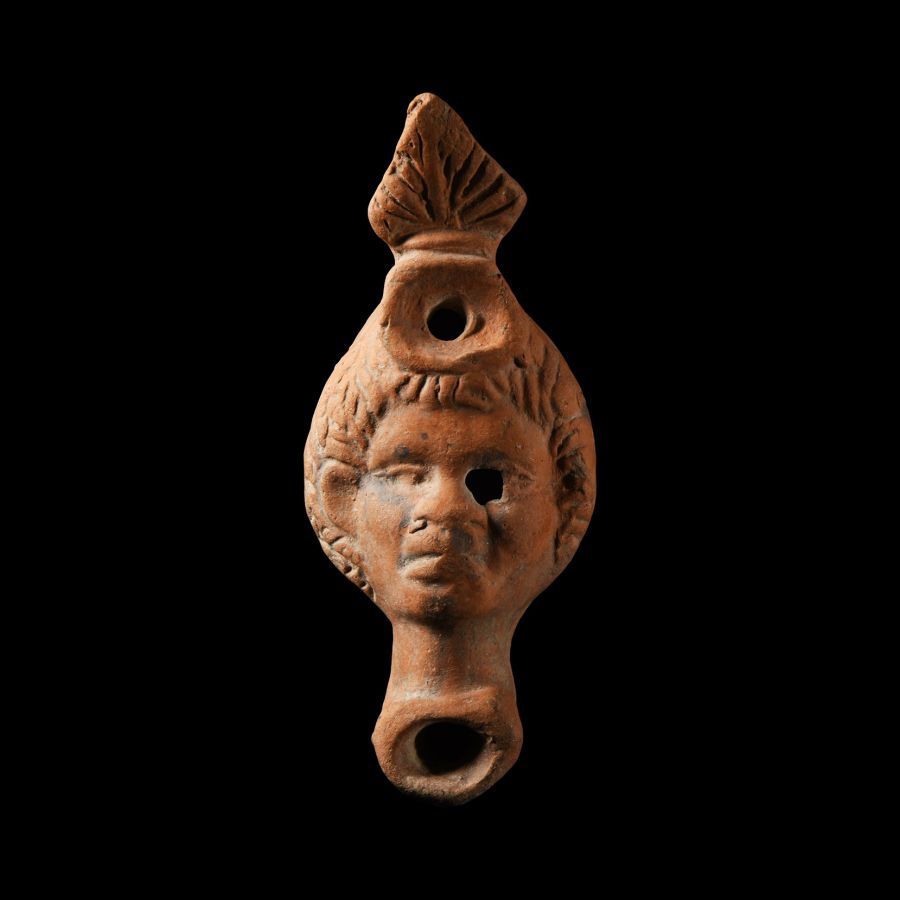
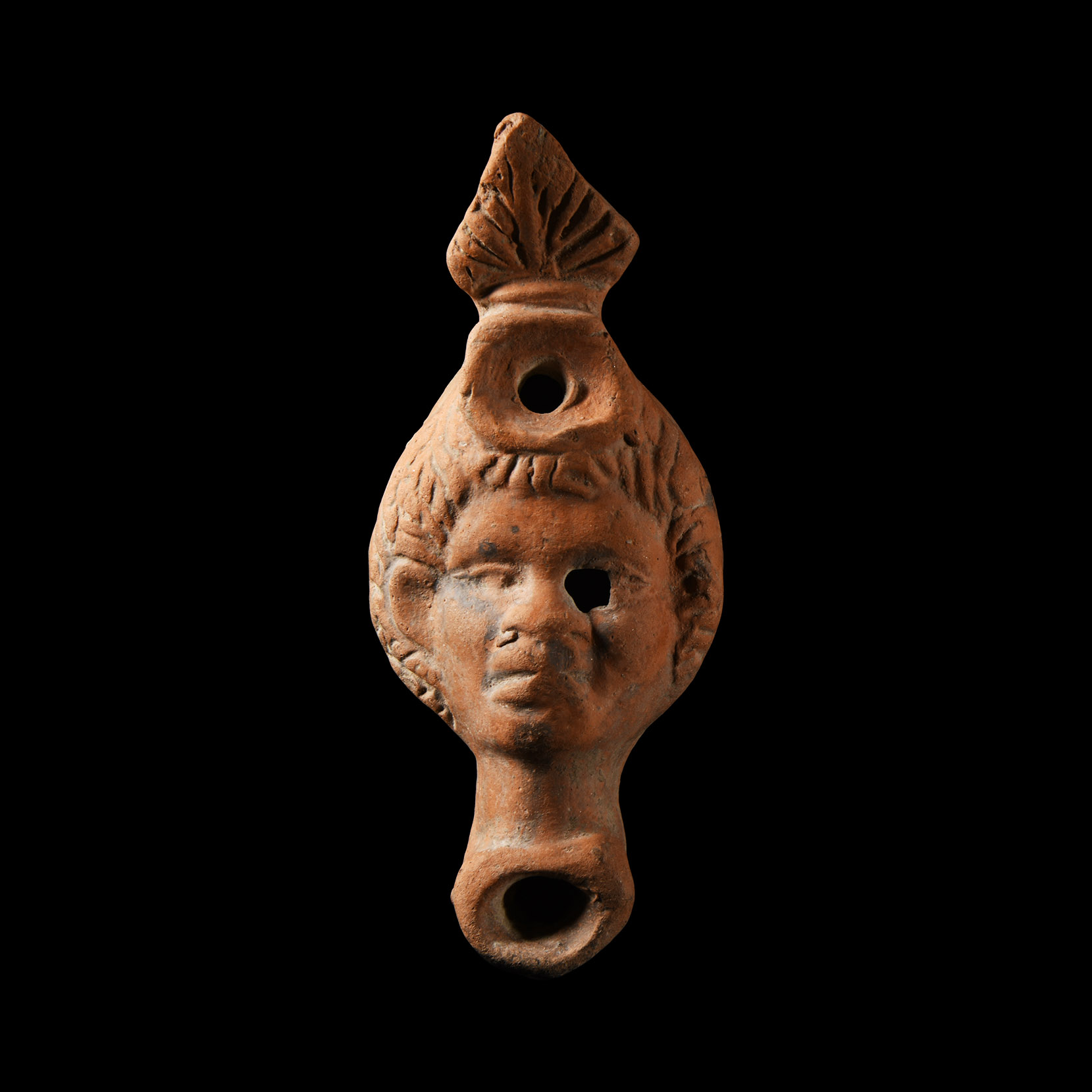
Roman Terracotta Oil Lamp with Face
LATE 2ND CENTURY B.C.-EARLY 1ST CENTURY A.D.
4 1/2 in. (87.6 grams, 11.6 cm).
Hollow-formed with a fan-shaped headdress for the handle, pierced disc plaque to the brow, nozzle beneath the neck; female bust with piled tresses; a double ring and 'YOP' maker's mark to the base.
ProvenanceAcquired 1960s-1990s.
From the late Alison Barker collection, a retired London barrister.
See Bémont, C., Lampes en Terre Cuite Antiques, Paris, 2007, for discussion; for the typology and similar specimens see Bussière, J., Lindros Wohl, B., Ancient Lamps in the J. Paul Getty Museum, Malibu, 2017, p.440, nos.602-603.
FootnotesLamps with figurines first appear in the Hellenistic period, possibly originating in Athens. Found in all parts of the Mediterranean
basin, they were particularly popular during the first and second centuries A.D. For the most part no exact parallels are found in the published literature, thus their dating is often conjectural, based mainly on the shape of the nozzle.
TimeLine Auctions follows a vetting process to ensure the authenticity and legality of all items, reinforcing our commitment to integrity and responsible trading. Each antiquity, antique, and coin lot undergoes thorough examination by a vetting committee of at least ten external specialists, professional trade association members, scientists, and archaeologists: Our Vetting Process
AUCTIONS:
TimeLine is a leading auction house specialising in antiquities, ancient art, collectables, natural history, coins, medals, and books. Our auctions offer museums, collectors, historians, and enthusiasts the opportunity to acquire unique and historically significant pieces.
LOT 0680
Roman Terracotta Oil Lamp with Face
Estimate £250 - 350€290 - 410 (for guidance only)$340 - 470 (for guidance only)
-
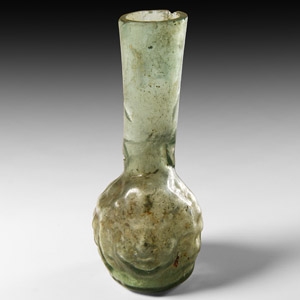
Roman Glass Janus Head Flask
Circa 3rd century A.D.Estimate: £150 - 200 (+bp*)
Opening Bid: £75
Formed as two addorsed heads with a flaring cylindrical neck and mouth; both heads with very similar detailing to the hair and face; restored. 41 grams, 99 mm high
Acquired 1969-1999. London collection of the late Mr S.M., thence by descent. -
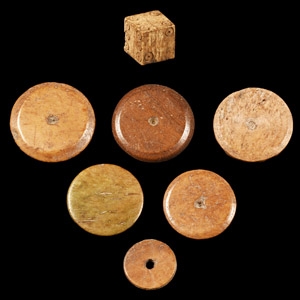
Roman 'Thames' Bone Gaming Piece and Dice Group
1st-4th century A.D.Sold for (Inc. bp): £124
Comprising six polished discoid counters and a single dice, the latter configured: 1:6; 2:5; 3:4 in punched ring-and-dot markers. 8 grams total, 7-18 mm
Found Billingsgate spoil from the Thames foreshore, London, UK. -
.jpg)
Roman Silver-Gilt Military Strap End
Circa late 3rd century A.D.Sold for (Inc. bp): £624
Comprising scalloped outer faces, shallow dashed borders framing scrolling vines with gilt leaves to one face and horizontal bar of conjoined ellipses with pelta finial and pecked borders to the other, also with gilt elements. 39.8 grams total, 64-65 mm
Ex German art market in the late 1990s.
