
Loading, please wait...


LOT 0106
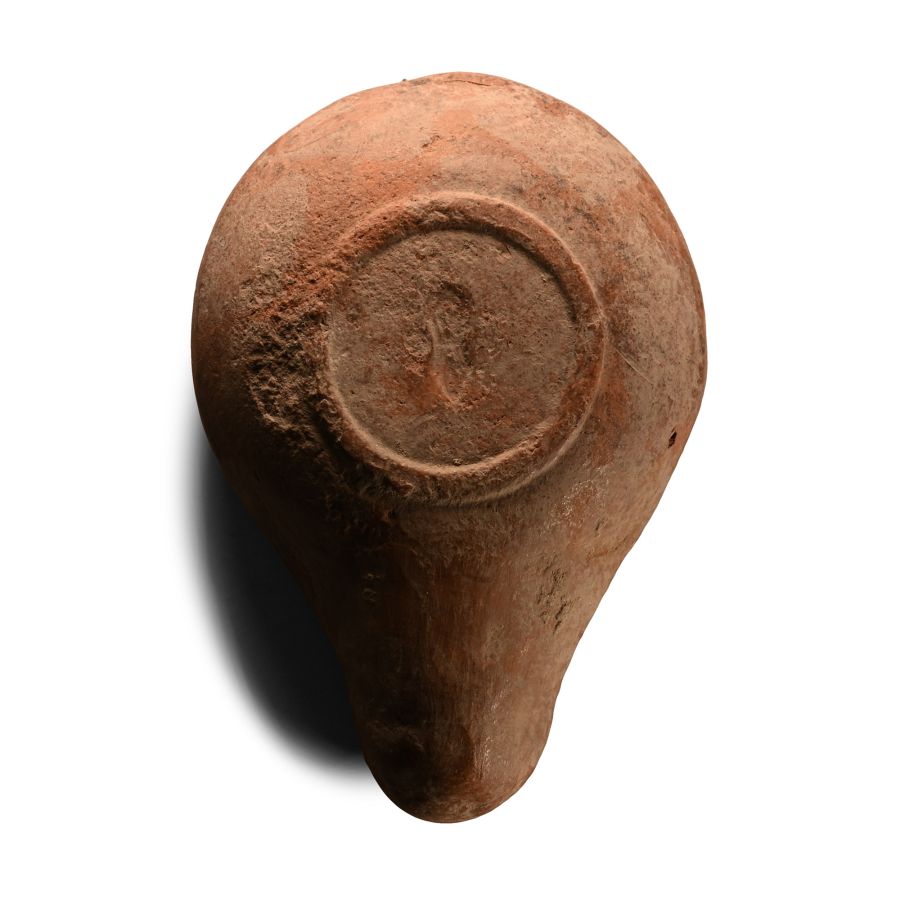
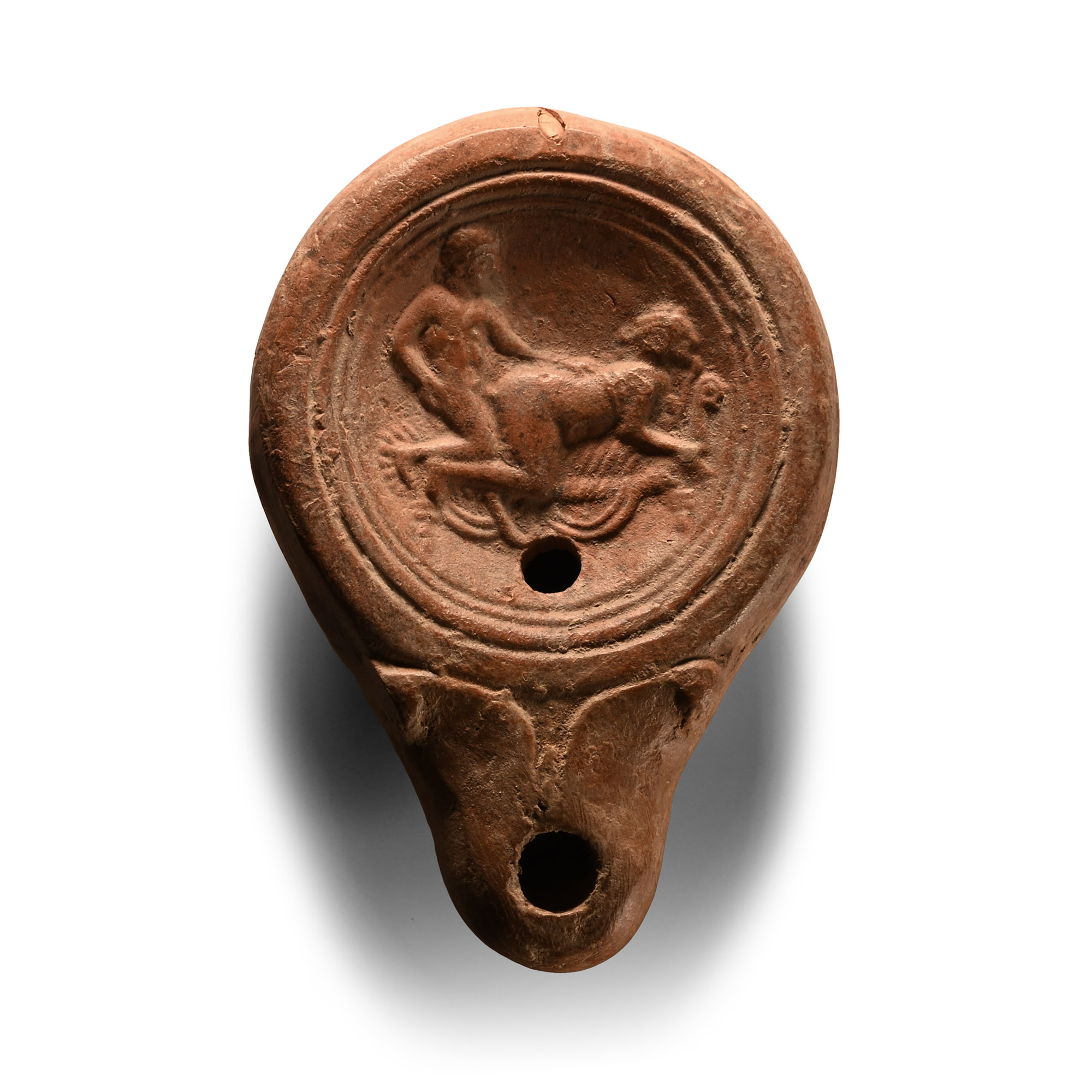
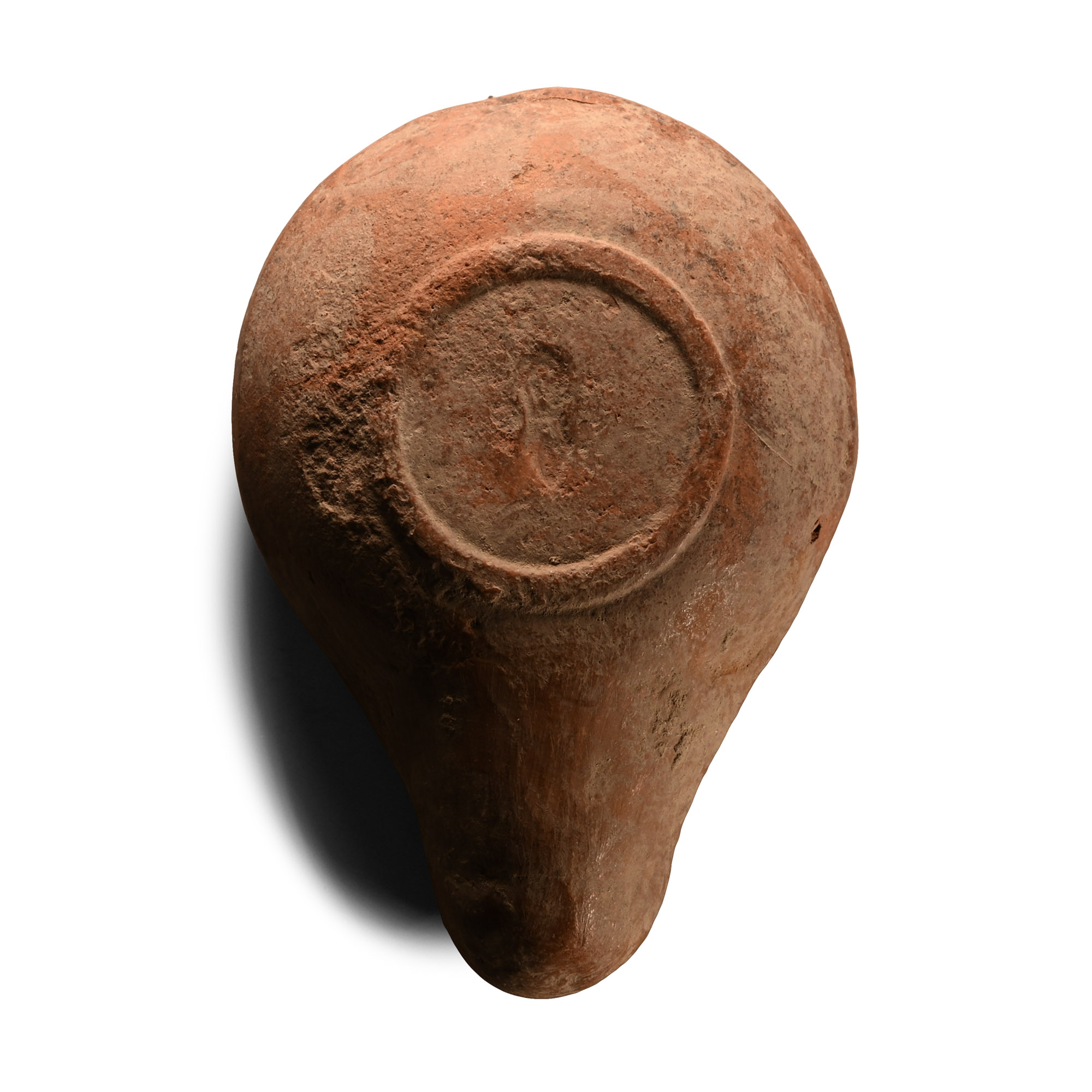
Roman Terracotta Oil Lamp with Erotic Scene
2ND CENTURY A.D.
3 7/8 in. (68 grams, 98 mm).
With ribbed shoulder and short nozzle flanked by volute scrolls, low-relief scene with two lovers on a lectus couch.
ProvenanceFrom a London collection of erotica, formerly in the collection of the late Mr S.M., London, UK.
LiteratureCf. Bémont, C., Lampes en Terre Cuite, Paris, 2007, item D.187, for type.
CONDITIONTimeLine Auctions follows a vetting process to ensure the authenticity and legality of all items, reinforcing our commitment to integrity and responsible trading. Each antiquity, antique, and coin lot undergoes thorough examination by a vetting committee of at least ten external specialists, professional trade association members, scientists, and archaeologists: Our Vetting Process
AUCTIONS:
TimeLine is a leading auction house specialising in antiquities, ancient art, collectables, natural history, coins, medals, and books. Our auctions offer museums, collectors, historians, and enthusiasts the opportunity to acquire unique and historically significant pieces.
-
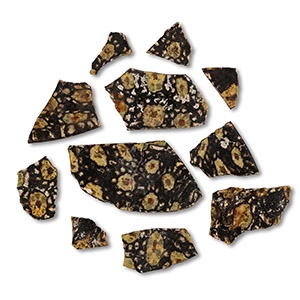
Roman Mosaic Glass Fragment Collection
1st century B.C.-1st century A.D.Sold for (Inc. bp): £111
Comprising fragments of black glass decorated with green and yellow rosettes surrounded by white pellets, from the same plate. 40.7 grams total, 16-65 mm
From the collection of Mr N.A., Brussels, 1970s. -
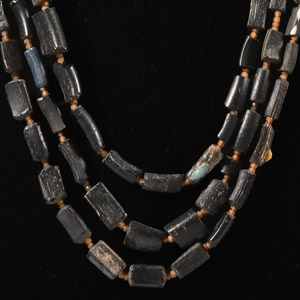
Roman Amber and Black Glass Bead Necklace Group
1st-4th century A.D. and laterSold for (Inc. bp): £221
Comprising three necklaces restrung from beads of drilled ancient glass bangle fragments. 37 grams total, 67-71 cm
UK gallery, early 2000s. -
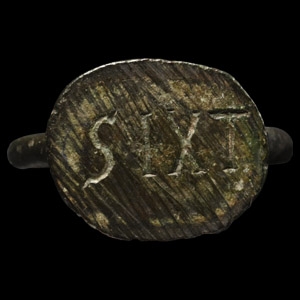
Roman Bronze Ring for 'Sixtus'
2nd-4th century A.D.Sold for (Inc. bp): £416
Ellipsoid bezel with 'SIXT' in seriffed capitals. 3.34 grams, 21.50 mm overall, 18.12 mm internal diameter (approximate size British O, USA 7, Europe 14.98, Japan 14)
Ex German art market, 2000s. Acquired from an EU collector living in London. From the collection of Surrey, UK, gentleman.
The Roman personal name 'Sixtus' is usually assumed to be an adaptation of Greek 'Ξυστος' meaning 'polished. However, in Latin, it originally indicated the sixth child born in the family.
