
Loading, please wait...
_900x900.jpg "Roman Terracotta Oil Lamp with Erotic Scene")
_200x200.jpg "Roman Terracotta Oil Lamp with Erotic Scene")
.jpg "Roman Terracotta Oil Lamp with Erotic Scene")
LOT 0105
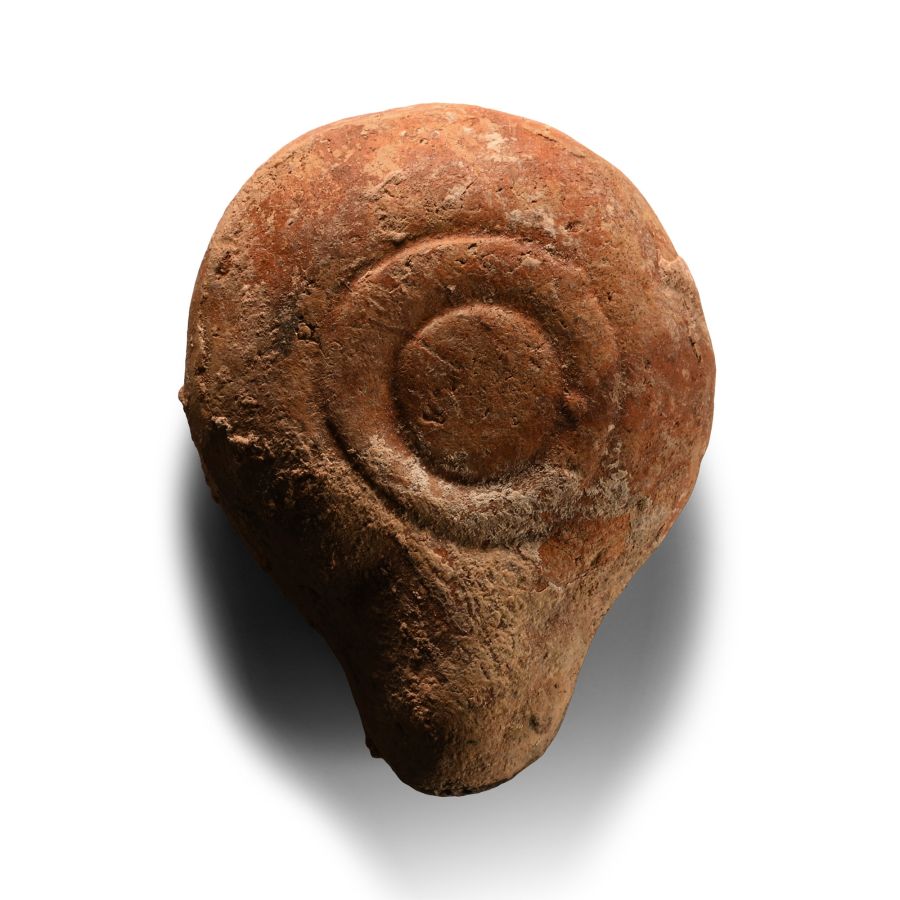
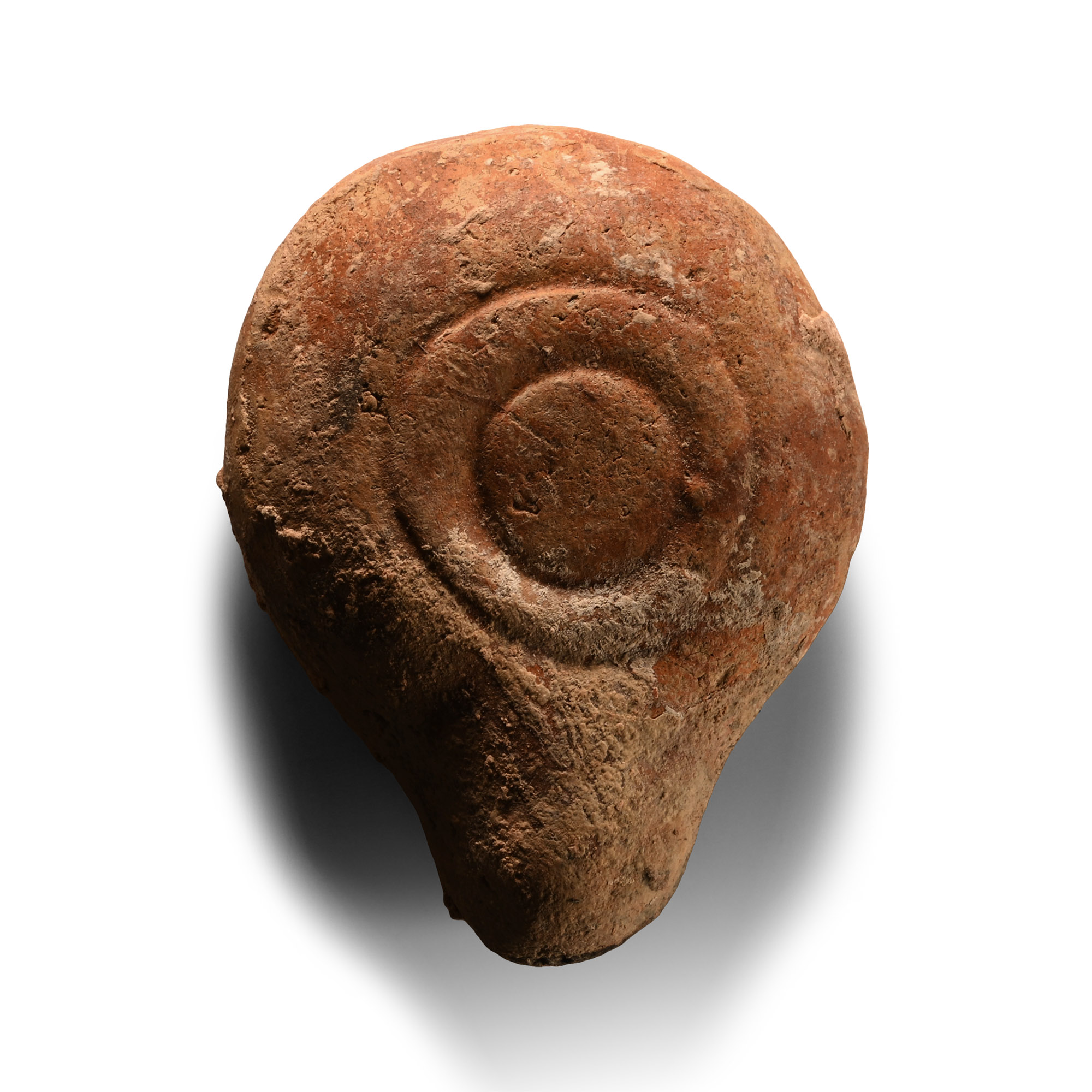
Roman Terracotta Oil Lamp with Erotic Scene
2ND CENTURY A.D.
3 3/8 in. (66 grams, 85 mm).
With broad discus and short nozzle, low-relief scene with two lovers on a bed.
ProvenanceFrom a London collection of erotica, formerly in the collection of the late Mr S.M., London, UK.
LiteratureCf. Bémont, C., Lampes en Terre Cuite, Paris, 2007, item D.187, for type.
CONDITIONTimeLine Auctions follows a vetting process to ensure the authenticity and legality of all items, reinforcing our commitment to integrity and responsible trading. Each antiquity, antique, and coin lot undergoes thorough examination by a vetting committee of at least ten external specialists, professional trade association members, scientists, and archaeologists: Our Vetting Process
AUCTIONS:
TimeLine is a leading auction house specialising in antiquities, ancient art, collectables, natural history, coins, medals, and books. Our auctions offer museums, collectors, historians, and enthusiasts the opportunity to acquire unique and historically significant pieces.
-
.jpg)
Roman Deep Blue Glass and Other Bead Necklace String
1st century A.D. and laterSold for (Inc. bp): £156
Restrung to a Y-shape with mainly blue glass beads. 13.8 grams, 56 cm long
UK gallery, early 2000s. -
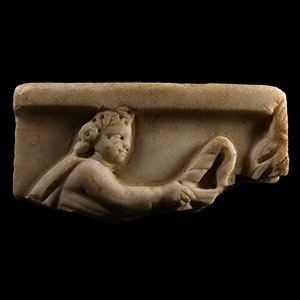
Roman Marble Relief Fragment with Phaethon
2nd-3rd century A.D.Sold for (Inc. bp): £468
Portion of a carved frieze with reserved border to the upper edge; panel with high-relief carving of youthful Phaethon in profile with mantle and himation, mop of curly hair, right arm extended holding reins extending to the mane of the horse at the right edge; drilled to accept mounting pegs. 1.05 kg, 17.2 cm
Private UK collection. Acquired in the 1980s. Property of a Cambridgeshire gentleman.
In the story, which appears in several versions, Phaethon was the son of Helios the sun-god who asked to validate his parentage by driving his father's chariot. Helios tried to dissuade him, but the youngster would not listen and eventually managed to take control, but was unable to master the horses and the celestial vehicle veered out of control - too close to the ground where it started fires and then too distant so that the ground froze. Eventually, Zeus took remedial action and hurled a thunderbolt, which killed the boy. His dead body fell into the river Eridanus, and his sisters, the Heliades, were turned to black poplar trees while they mourned him. -
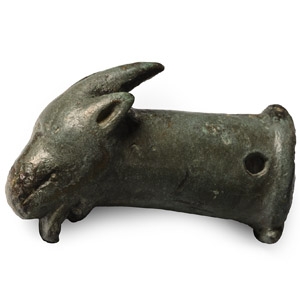
Roman Bronze Ram's Head Terminal
2nd-3rd century A.D.Sold for (Inc. bp): £130
Hollow-formed with ribbed mouth to the socket. ram-head finial with swept horns, pierced to accept an attachment stud. 43.1 grams, 44 mm
Ex German art market, 2000s. Acquired from an EU collector living in London. From the collection of Surrey, UK, gentleman.
