
Loading, please wait...
LOT 0118
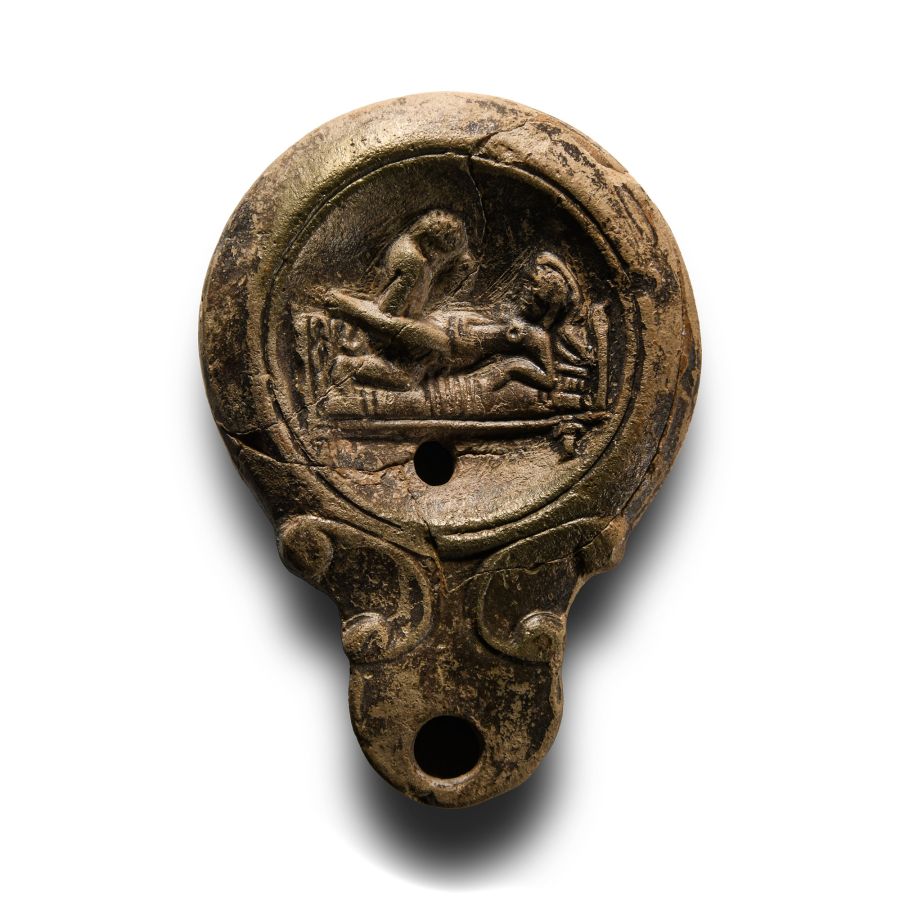
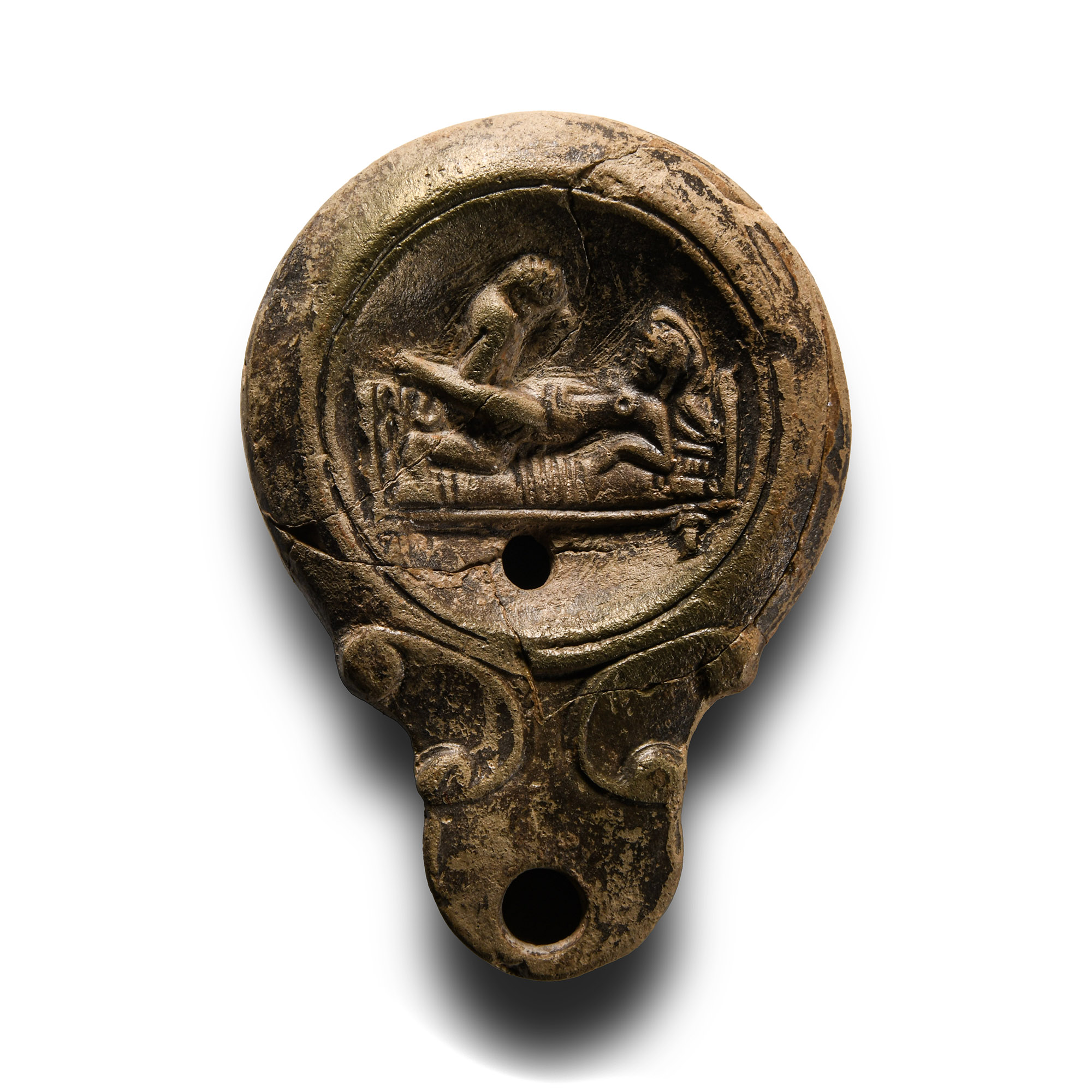
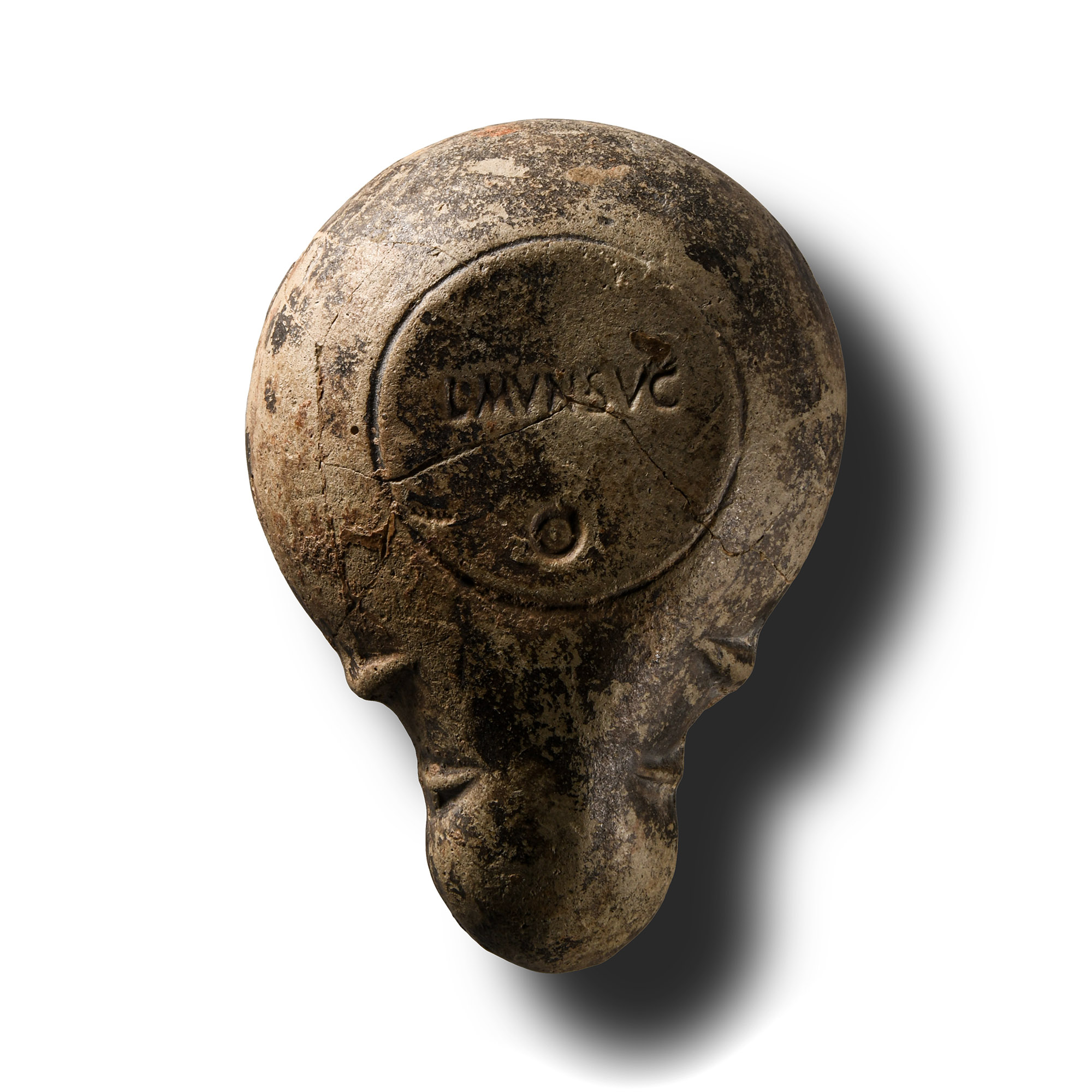
Roman Terracotta Oil Lamp with Erotic Scene
CIRCA 2ND CENTURY A.D.
3 3/4 in. (64 grams, 95 mm).
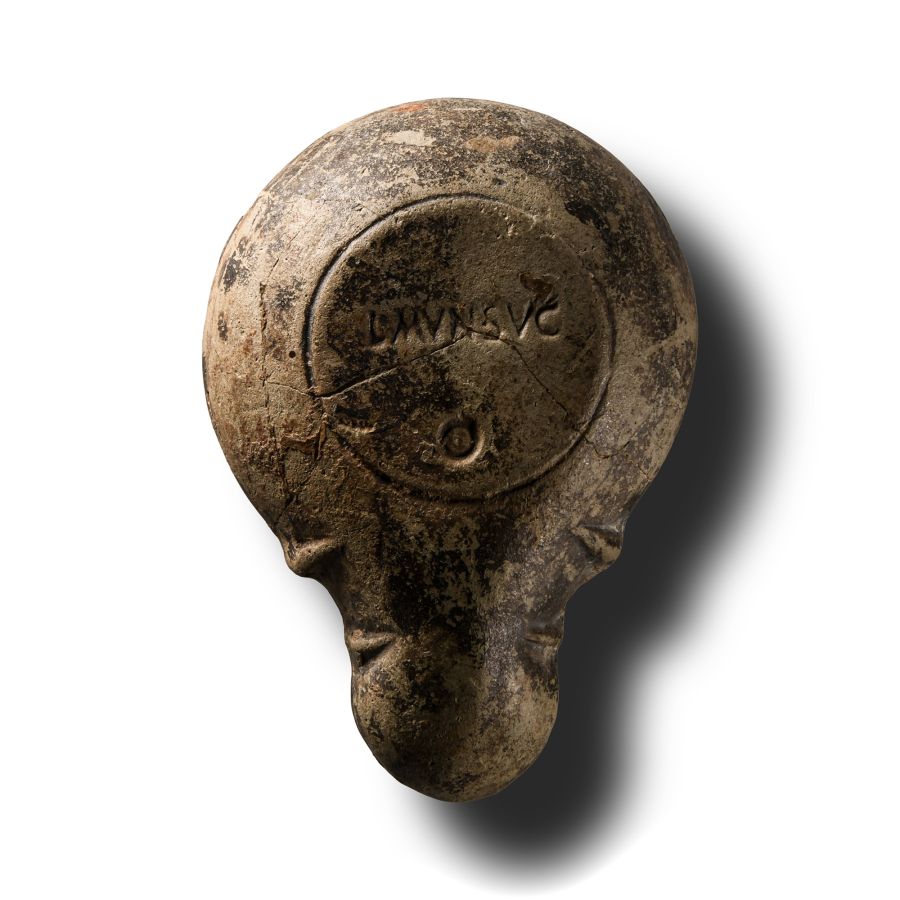
Squat burnished pottery lamp with stub nozzle, high-relief scene of two lovers on a couch; maker's mark 'LMVNSVC' to the underside.
ProvenanceFrom the collection of French archaeologist Suzanne Gozlan (1921-2022).
LiteratureCf. Bussière, J., Lindros Wohl, B., Ancient Lamps in the J. Paul Getty Museum, Los Angeles, 2017, figs.181-183, for similar.
FootnotesThe lamp belongs to the Bailey type B group ii (Loeschke type IV), usually dated from Tiberian to Trajanic times. Erotic lamps were particularly popular before the Christianisation of the Roman Empire. Roman sexuality differed considerably from later Christian European attitudes. Roman religion promoted sexuality as one of the fundamental aspects of prosperity for the entire state; individuals could turn to private religious practice, or even magic, to improve their erotic life or health and reproductive capacity; moreover, prostitution in ancient Rome was legal, public and widespread. Artistic subjects that today we would define without hesitation as pornography, were present among the art collections of the most respectable and high status Roman families.
CONDITIONTimeLine Auctions follows a vetting process to ensure the authenticity and legality of all items, reinforcing our commitment to integrity and responsible trading. Each antiquity, antique, and coin lot undergoes thorough examination by a vetting committee of at least ten external specialists, professional trade association members, scientists, and archaeologists: Our Vetting Process
AUCTIONS:
TimeLine is a leading auction house specialising in antiquities, ancient art, collectables, natural history, coins, medals, and books. Our auctions offer museums, collectors, historians, and enthusiasts the opportunity to acquire unique and historically significant pieces.
-
.jpg)
Roman Bronze Hand-Shaped Military Standard Finial
1st-3rd century A.D.Estimate: £5,000 - 7,000 (‡+bp*)
Opening Bid: £2,500
Hollow-formed with fine detailing to the fingers and nails; with fixing points for a military standard (signum) used by each unit under a centurion, originally fixed with the palm facing forwards inside a wreath. 718 grams, 21 cm
Generally intact and good defined, except for the lower part.
Acquired in Europe before 2000. European private collection. Accompanied by an academic report by Dr Raffaele D'Amato. This lot has been checked against the Interpol Database of stolen works of art and is accompanied by a search certificate number no.12003-211851.
Roman military signa decorated by phalerae and surmounted by a right hand are visible since the Late Consular Age. The hand (manus) symbolised the fides, i.e. the allegiance between the soldiers and the Res Publica. It is also possible that the hand belonged to a statue in which it was extended as a sign of silence, to allow the speaker to speak. However, the iconography of military hands, and also the resemblance with a bronze hand (military signum) preserved in the Vindonissa museum (Windisch), support the possibility that the object was part of a military standard. -
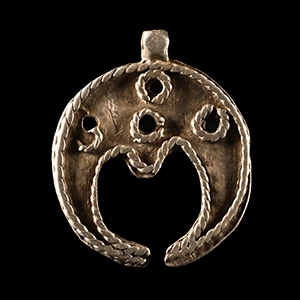
Late Roman Silver Lunar Pendant
5th-6th century A.D.Sold for (Inc. bp): £111
Crescent-shaped with applied filigree framing to both faces of the plaque and four holes. 2.99 grams, 28 mm
Ex German art market, 2000s. Acquired from an EU collector living in London. From the collection of Surrey, UK, gentleman. -
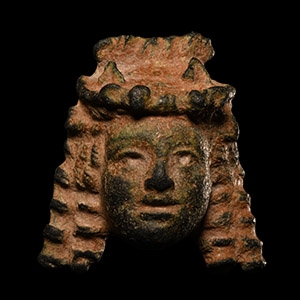
Roman Bronze Mask Appliqué
2nd century B.C.-1st century A.D.Estimate: £400 - 600 (‡+bp*)
Opening Bid: £200
With rounded fleshy face and hair in tiered bands, sockets to the eyes to accept silver inserts; diadem to the brow with foliage detailing; hollow to the reverse. 56 grams, 42 mm
Private collection of Mr S.A., Switzerland, 1990s, thence by descent.
