
Loading, please wait...
LOT 0812
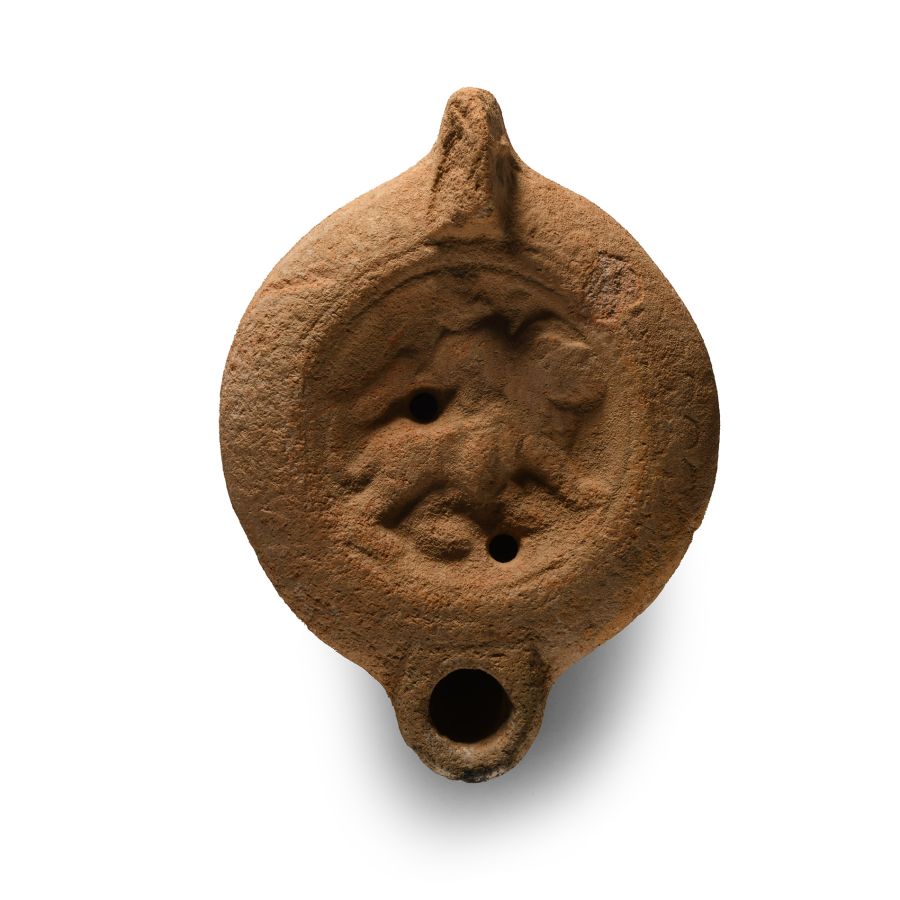
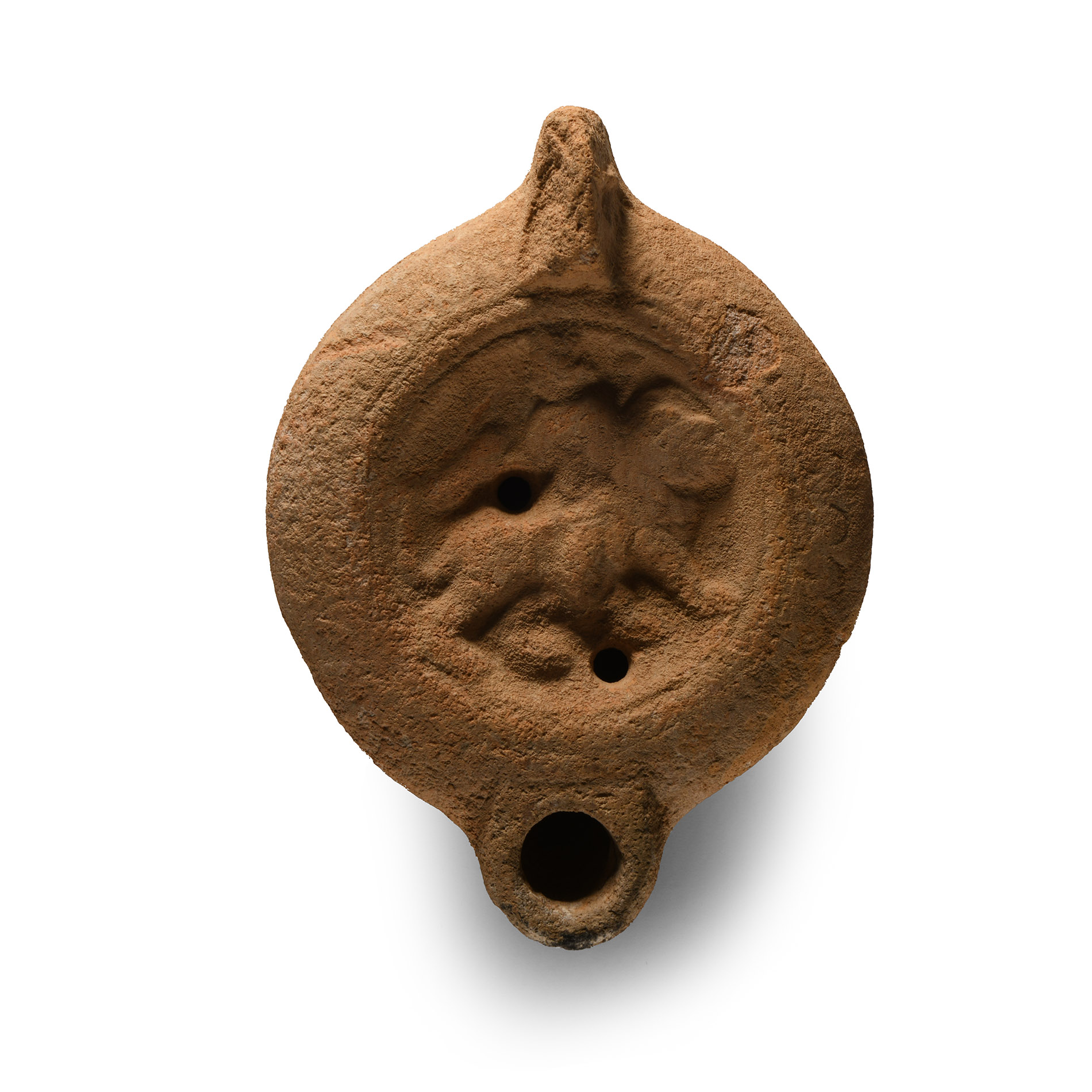
Roman Terracotta Oil Lamp with Cybele Riding a Lion
2ND-3RD CENTURY A.D.
4 3/4 in. (172 grams, 12 cm).
Lug handle to the rear, shallow discus with filling holes and a low-relief image of goddess Cybele riding on her frequent companion, a lion.
ProvenanceAcquired on the European art market, 1980s.
English private collection.
See The Getty Museum, inv.no.83.AK.438.418, for similar in Bussière, J., Lindros Wohl, B., Ancient Lamps in the J. Paul Getty Museum, Malibu, 2017, no.358, p.252, type Loeschcke VIII; Bussière form D IX.
FootnotesThis lamp belongs to the group of Provincial African lamps with a plain shoulder and a heart-shaped nozzle. The shoulder form of the lamps (irrespective of African, Italic, or eastern place of manufacture or origin) varies widely. Some of them had undecorated shoulders, like our example. Discus decors include mythology, amphitheatre, daily life, animals (our example), geometric patterns and plain discus.
CONDITIONTimeLine Auctions follows a vetting process to ensure the authenticity and legality of all items, reinforcing our commitment to integrity and responsible trading. Each antiquity, antique, and coin lot undergoes thorough examination by a vetting committee of at least ten external specialists, professional trade association members, scientists, and archaeologists: Our Vetting Process
AUCTIONS:
TimeLine is a leading auction house specialising in antiquities, ancient art, collectables, natural history, coins, medals, and books. Our auctions offer museums, collectors, historians, and enthusiasts the opportunity to acquire unique and historically significant pieces.
-
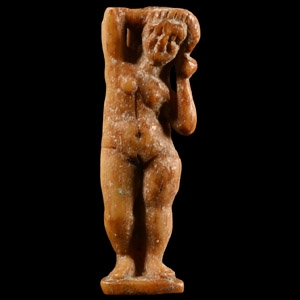
Roman Bone Venus Statuette
2nd-3rd century A.D.Sold for (Inc. bp): £195
Modelled in the round, Venus standing nude with hands raised to dress her hair; dorsal pillar pierced at shoulder height for suspension. 4.9 grams, 40 mm
From a collection acquired on the UK art market from various auction houses and collections mostly before 2000. From an important Cambridgeshire estate; thence by descent.
The iconography of Venus Anadyomene was one of the most commonly used images of the goddess in classical sculpture, and was still popular during the late Roman Empire. The best example of this is the Louvre Venus Anadyomene (Ma 3537) of the 4th century A.D., found in the 19th century at Saint George de la Montagne near Bordeaux, inside a rich aristocratic house and coming from Aphrodisias, an ancient place of statuary production for export. -
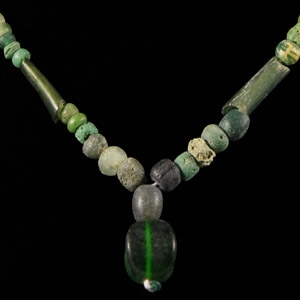
Roman Green Glass Bead Necklace String
1st century A.D. and laterSold for (Inc. bp): £91
Graduated group of tubular, annular and other beads with later lampwork bead centrepiece. 16.8 grams, 38 cm long
Acquired 1980-2015. Ex Abelita family collection. -
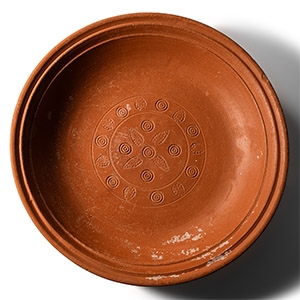
Large Roman Decorated Redware Serving Bowl with Grape Bunches
Circa 4th century A.D.Sold for (Inc. bp): £468
In perfect condition with stepped rim, impressed stylised bunches of grapes and concentric circles within a roundel to the interior. 1.13 kg, 31 cm
Acquired in the 1990s. From the Greer collection, Oxford, UK.
