
Loading, please wait...
LOT 0817
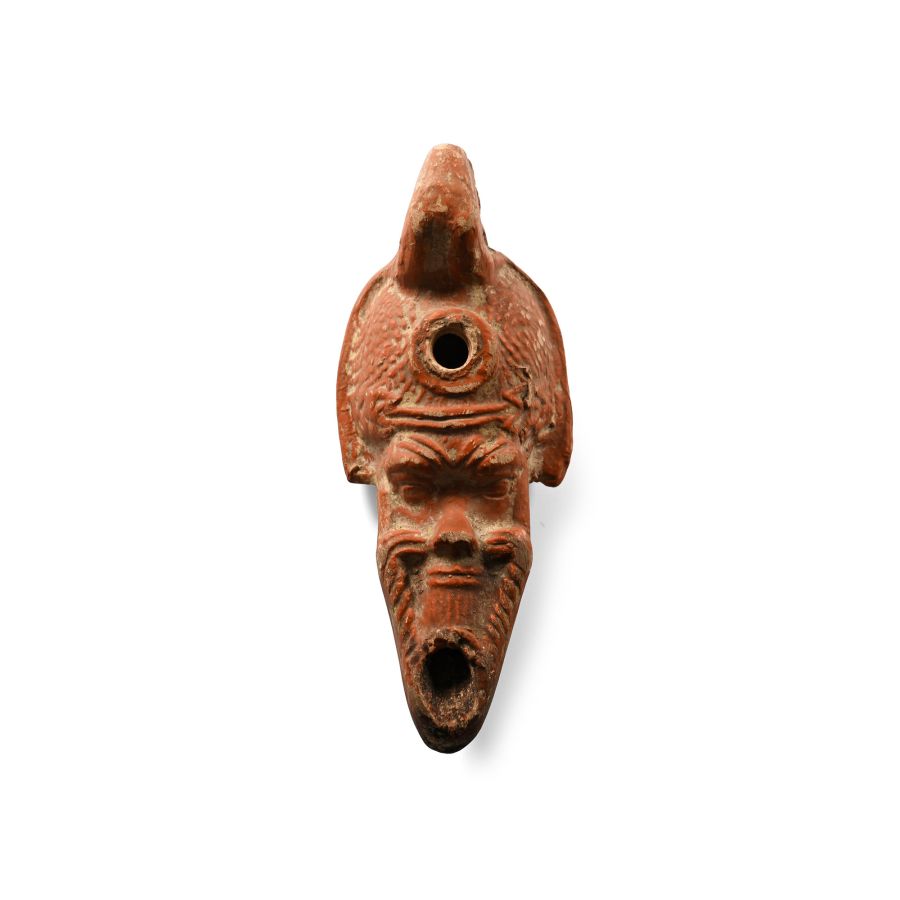
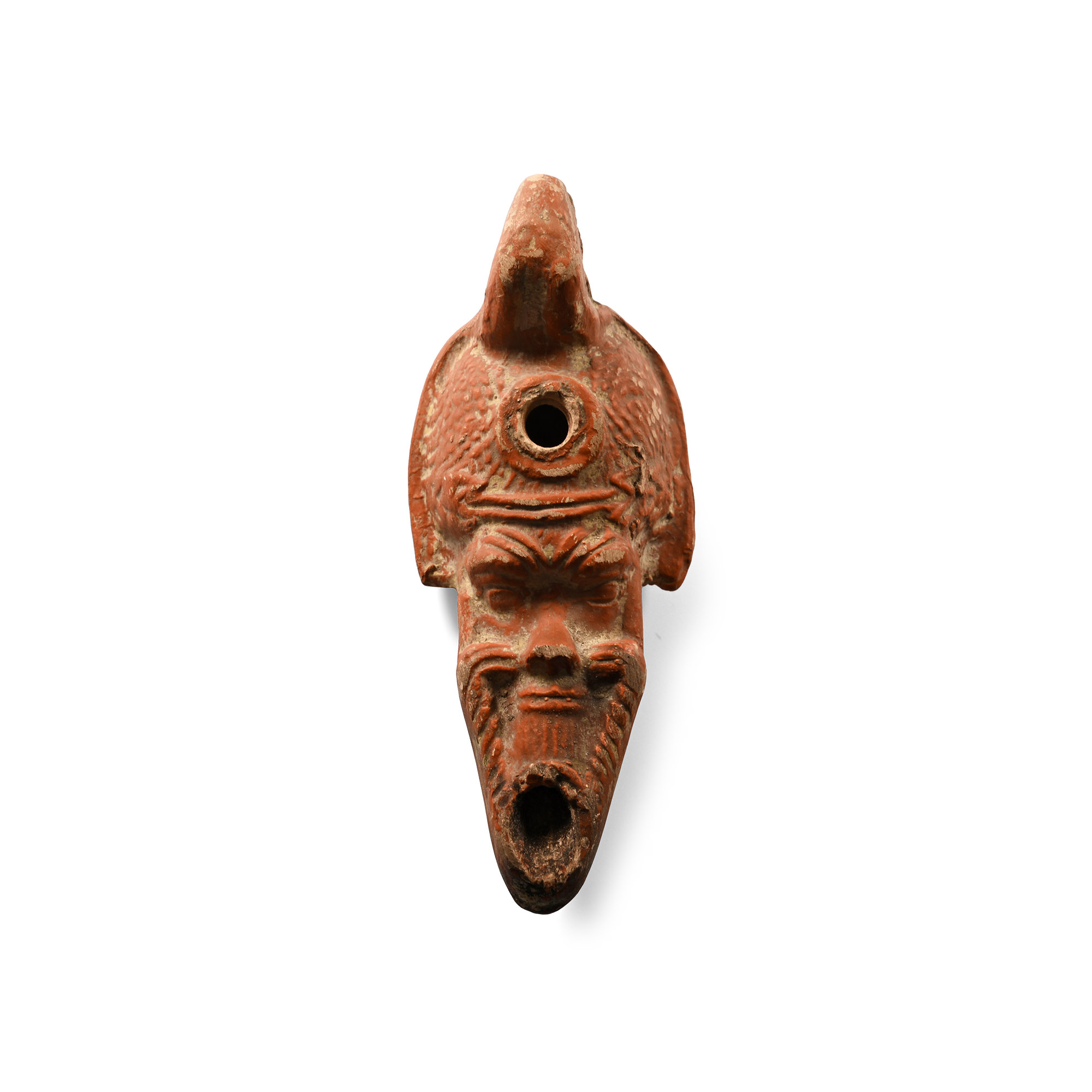
Roman Terracotta Oil Lamp of Head of Silenus
LATE 1ST CENTURY B.C.-EARLY 1ST CENTURY A.D.
4 3/4 in. (82 grams, 12.1 cm).
Mould-made with the upper half of the body in the form of a male head with well-defined features, long moustache and beard, possibly a representation of the god Silenus; ring handle at the rear.
ProvenancePreviously Cambridge, UK, private collection, circa 2010.
Ex London, UK, gallery.
This lot is accompanied by an illustrated lot declaration signed by the Head of the Antiquities Department, Dr Raffaele D'Amato.
See Hayes, J.W., Ancient Lamps in the Royal Ontario Museum, item 99, for a similar example.
FootnotesPlastic lamps with figurines first appear in the Hellenistic period, possibly originating in Athens. Found in all parts of the Mediterranean basin, they were particularly popular during the first and second centuries AD.
CONDITIONTimeLine Auctions follows a vetting process to ensure the authenticity and legality of all items, reinforcing our commitment to integrity and responsible trading. Each antiquity, antique, and coin lot undergoes thorough examination by a vetting committee of at least ten external specialists, professional trade association members, scientists, and archaeologists: Our Vetting Process
AUCTIONS:
TimeLine is a leading auction house specialising in antiquities, ancient art, collectables, natural history, coins, medals, and books. Our auctions offer museums, collectors, historians, and enthusiasts the opportunity to acquire unique and historically significant pieces.
-
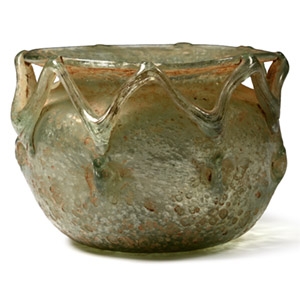
Roman Glass Jar with Zig-Zag Trail
4th century A.D.Sold for (Inc. bp): £312
Squat with a wide everted rim and broad base indented towards the centre; applied zig-zag trail connecting the flange rim to the shoulder, seven pinched projections below; green weathering and some iridescence. 93 grams, 78 mm wide
Acquired from a North London, UK, gentleman. Ex Times Ancient, Bristol, UK, with stock no.K422. This lot is accompanied by an illustrated lot declaration signed by the Head of the Antiquities Department, Dr Raffaele D'Amato. -
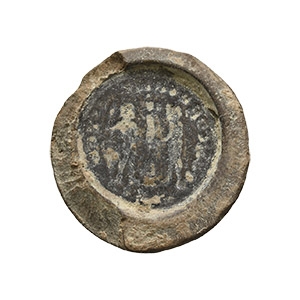
Roman Diocletian Terracotta Forger's Coin Mould
Late 3rd century A.D.Sold for (Inc. bp): £124
Terracotta disc with Diocletian (284-305 A.D.) coin impression to each face from which to cast counterfeit coins. 5.3 grams, 27 mm
From the collection of a gentleman, acquired on the London art market in the 1990s. This lot is accompanied by an illustrated lot declaration signed by the Head of the Antiquities Department, Dr Raffaele D'Amato. -
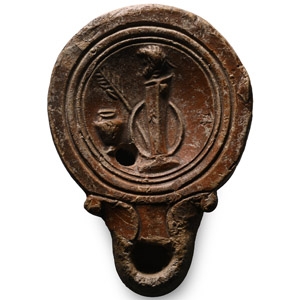
Roman Terracotta Oil Lamp with Herm
2nd century A.D.Sold for (Inc. bp): £234
Short nozzle with volute scrolls, low discus with concentric circles, central motif of a male bust atop a column, a palm branch behind and an amphora before the column. 54 grams, 92 mm
with Galerie Rhéa, Zurich, Switzerland. This lot is accompanied by an illustrated lot declaration signed by the Head of the Antiquities Department, Dr Raffaele D'Amato.
