
Loading, please wait...
LOT 0136
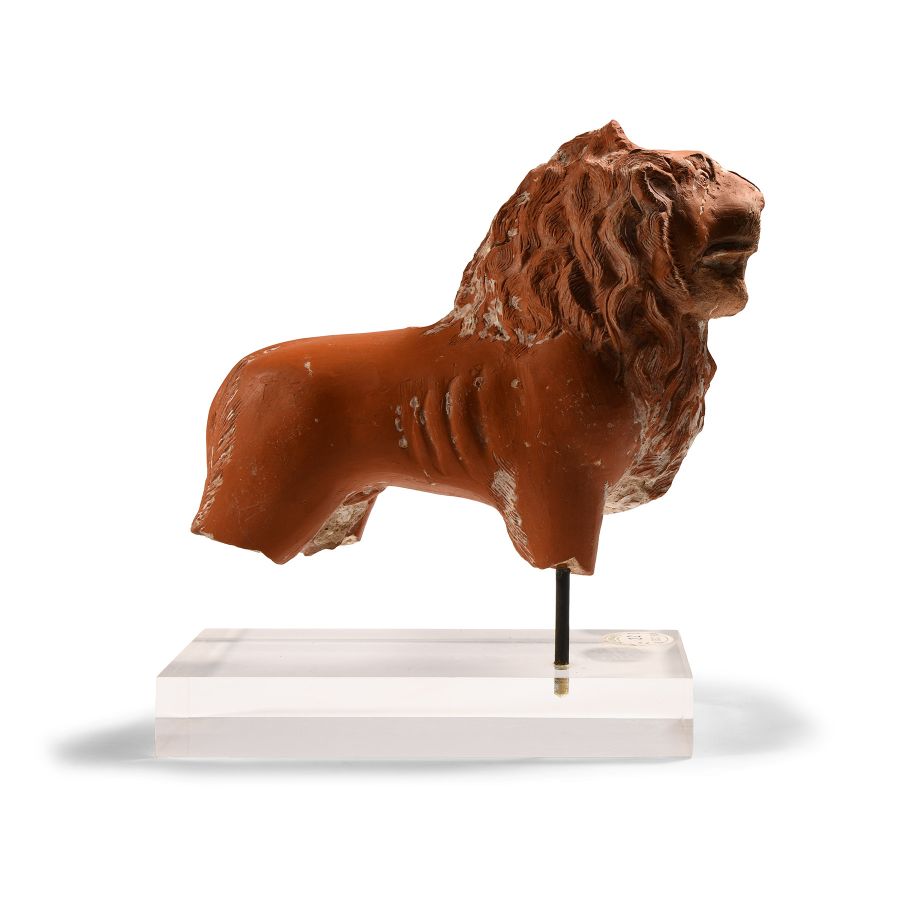
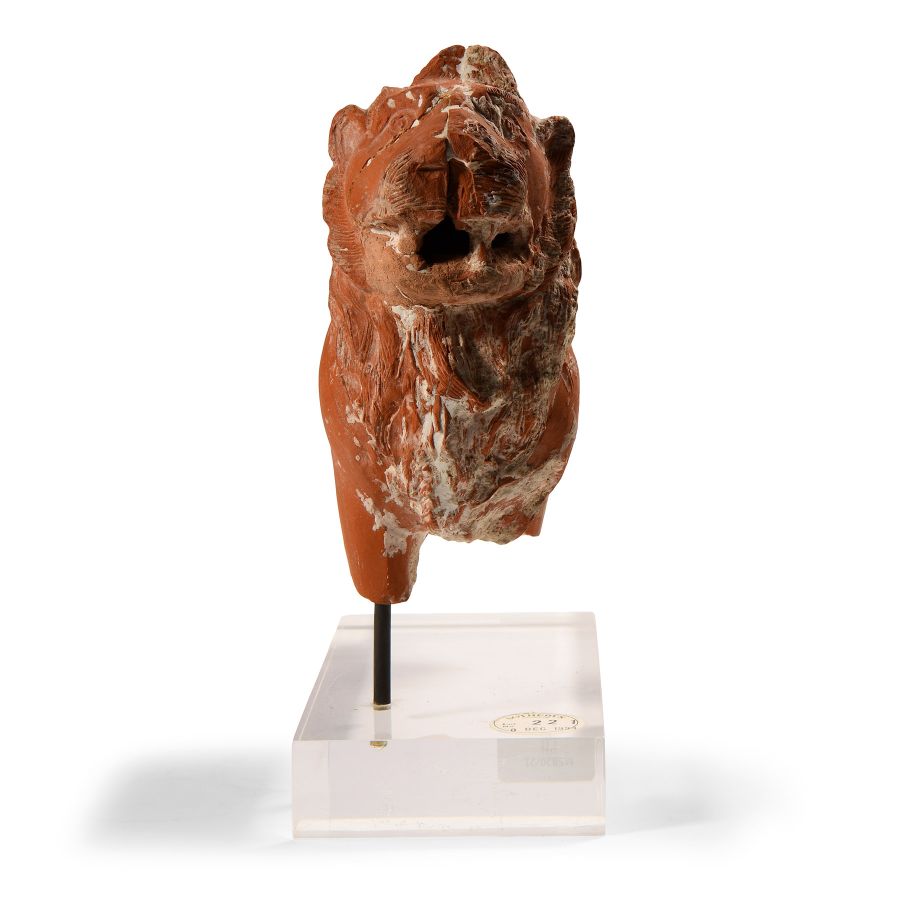
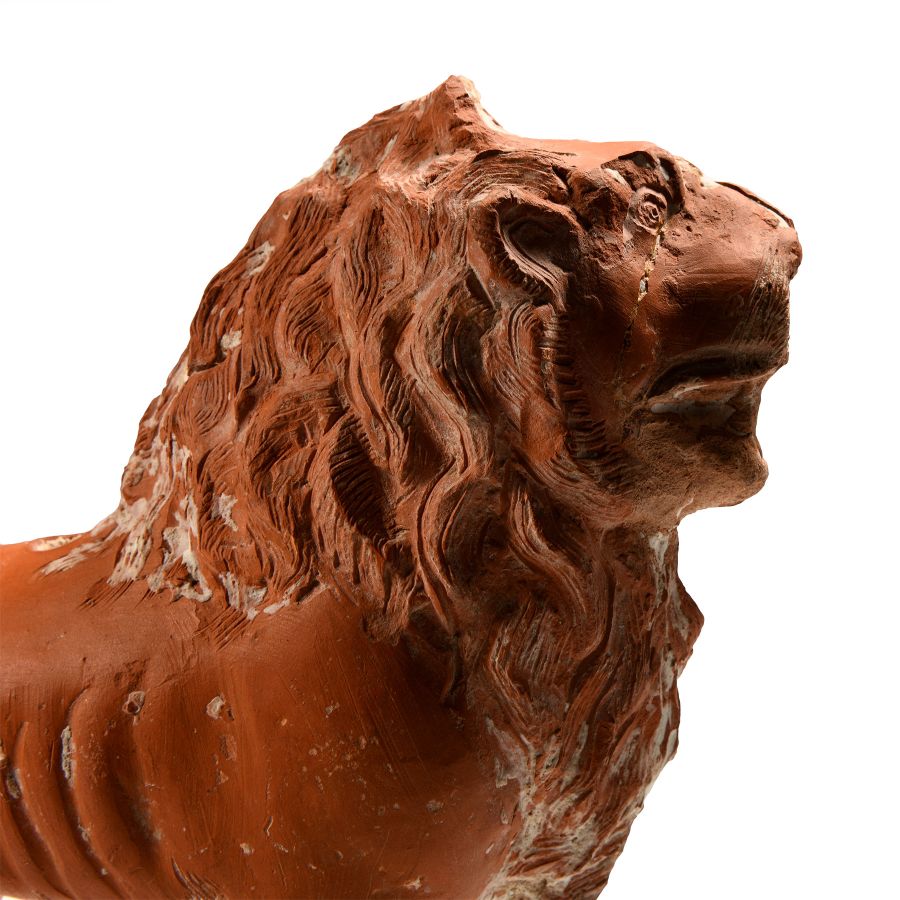
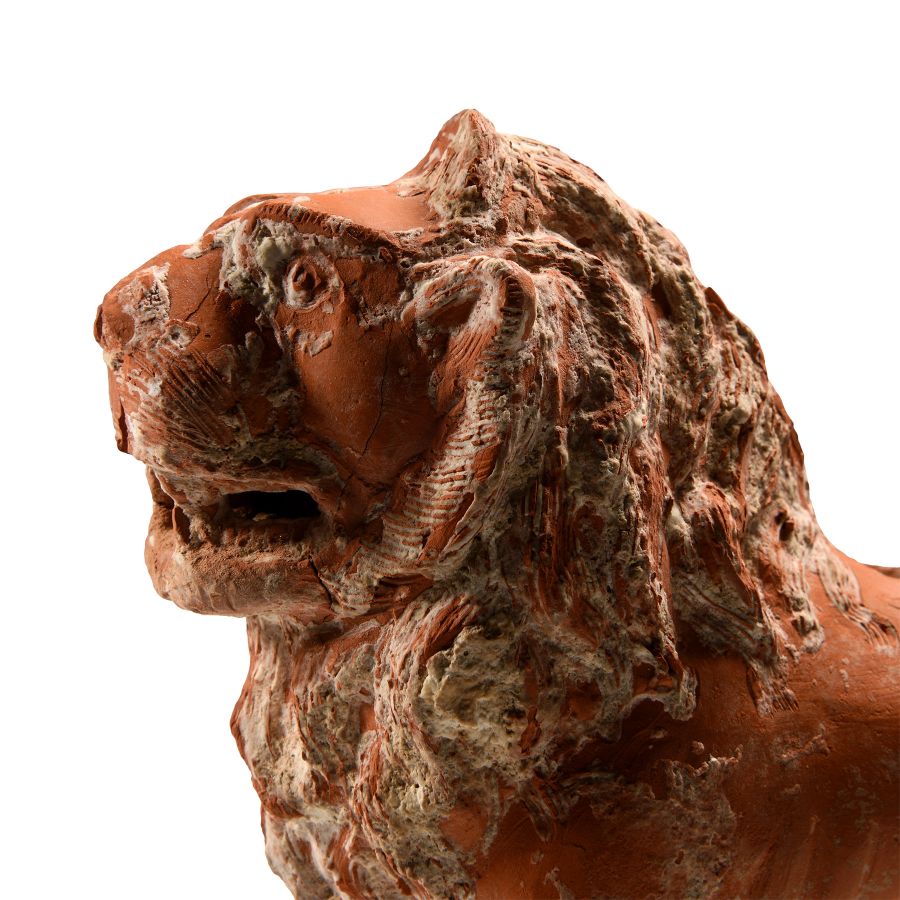
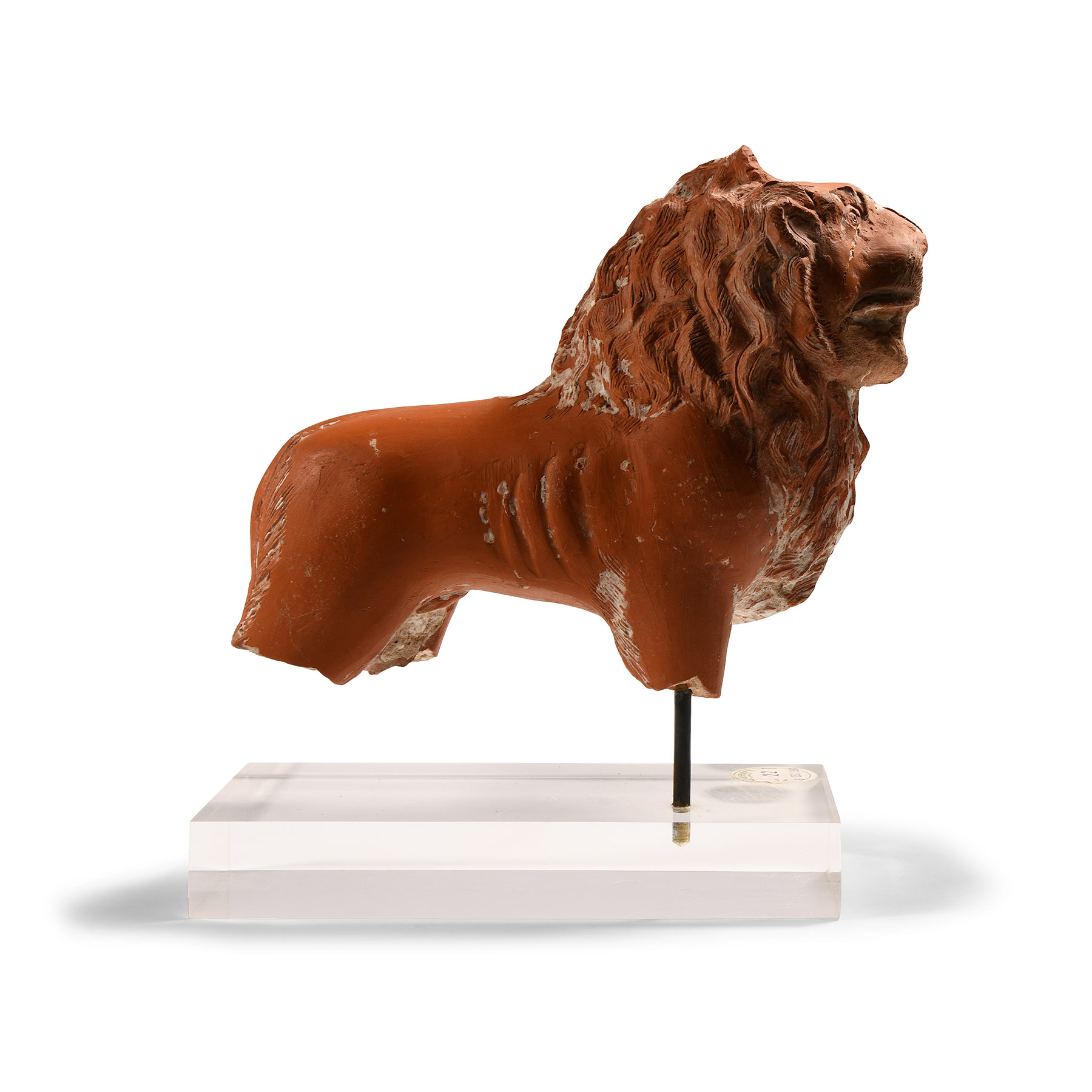
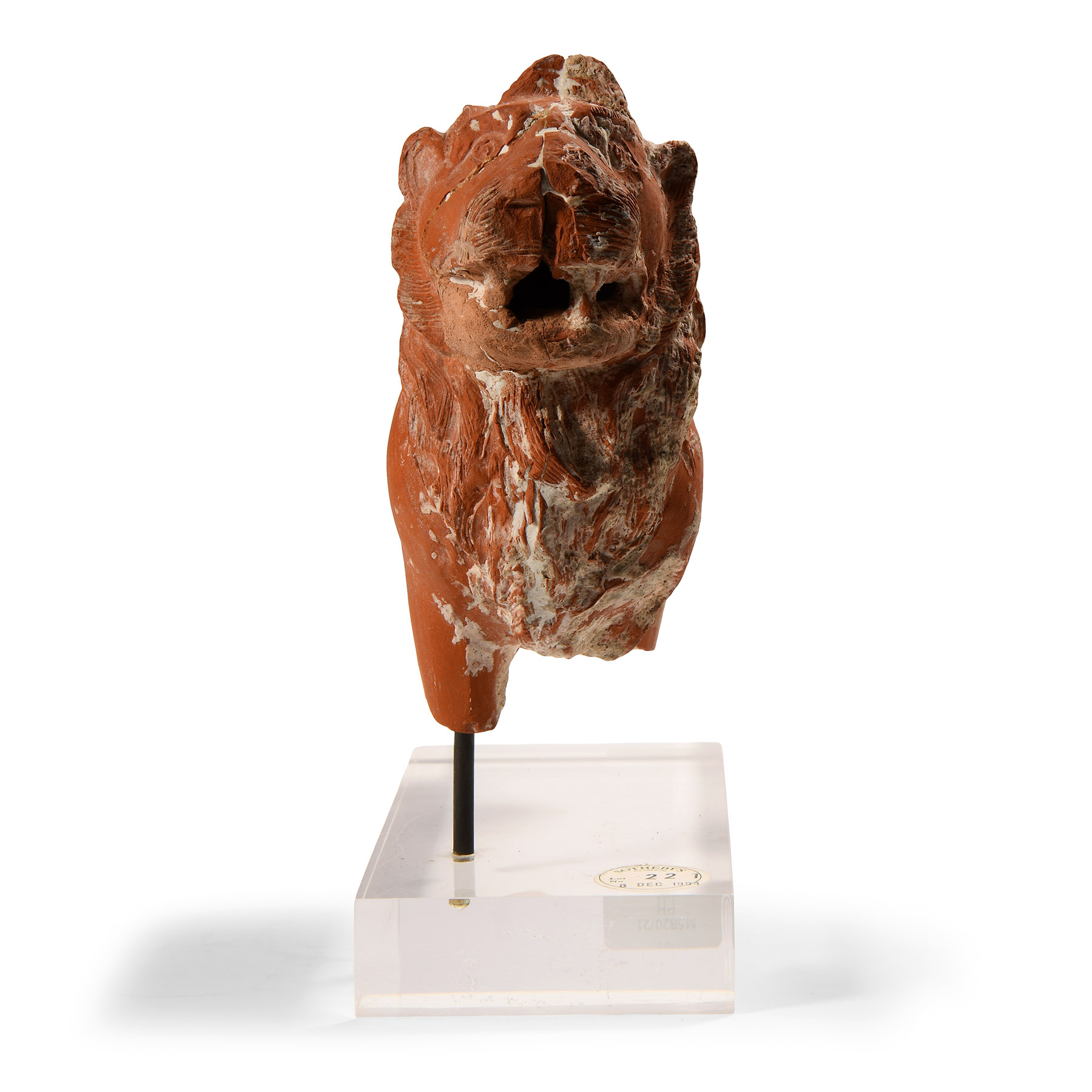
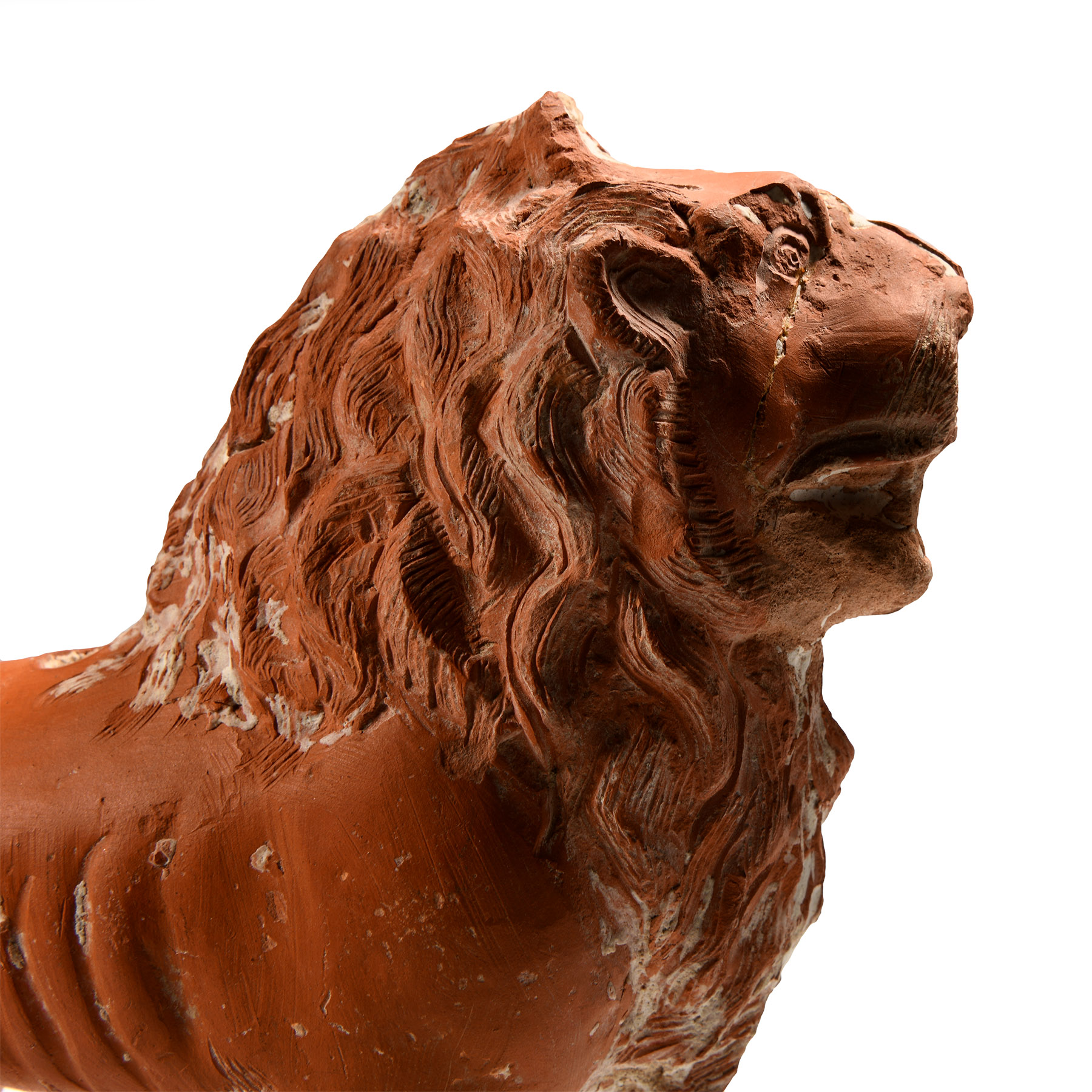
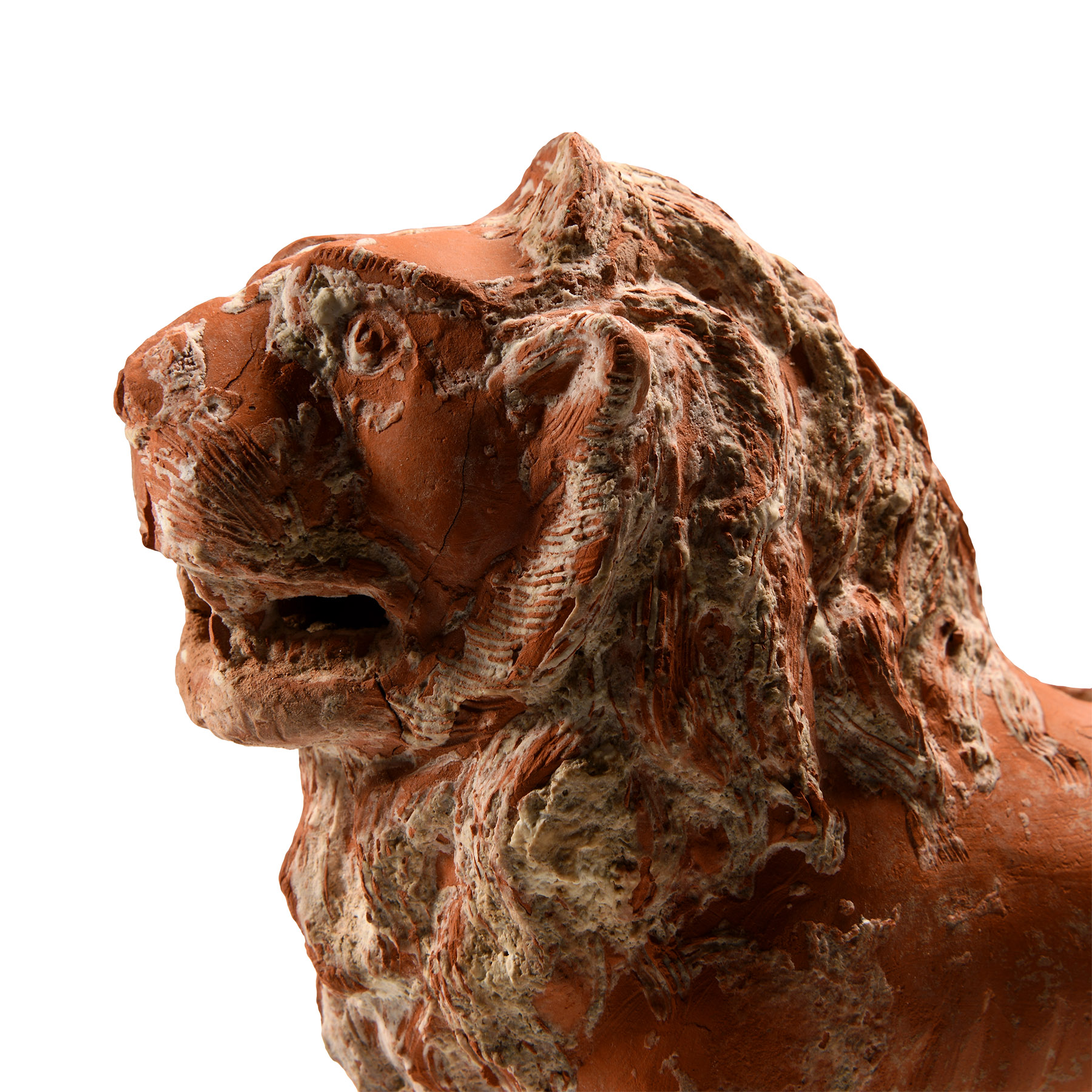
Roman Terracotta Lion Rhyton
LATE 2ND-EARLY 3RD CENTURY A.D.
8 in. (1.5 kg total, 20.5 cm high including stand).
Modelled naturalistically in the round in an advancing pose with face, muzzle and tooth detailing within the open mouth, the tufts of the animal's mature mane individually rendered; filling hole on the back; the mouth open acting as a spout; North African workmanship; mounted on a custom-made display stand.
Provenancewith Sotheby’s London, 9 December 1994, no.221.
Accompanied by an academic report by Dr Raffaele D’Amato.
Accompanied by copies of relevant Sotheby's catalogue pages.
This lot has been checked against the Interpol Database of stolen works of art and is accompanied by search certificate number no.11797-206532.
Cf. Richter, G.M.A., Animals in Greek Sculpture, Oxford, 1930, pp.3ff; Toynbee, J.M.C., Tierwelt der Antike, Mainz-Rhine, 1983, pp.54ff.; Padgett, J.M. (ed.), Roman Sculpture in the Art Museum Princeton University, Princeton, 2001, p.257, no.97; Liverani, P., Spinola, G., Vaticano, La Sala degli animali nel Museo Pio-Clementino, City of Vatican, 2003.
FootnotesThe lion was famously featured in many ancient myths, perhaps the most famous being that of Hercules (Herakles) slaying the Nemean lion for his first labour, but it was also linked with the cult of the goddess Cybele, where it is usually represented sculptured in relief on either side of her throne.
CONDITIONTimeLine Auctions follows a vetting process to ensure the authenticity and legality of all items, reinforcing our commitment to integrity and responsible trading. Each antiquity, antique, and coin lot undergoes thorough examination by a vetting committee of at least ten external specialists, professional trade association members, scientists, and archaeologists: Our Vetting Process
AUCTIONS:
TimeLine is a leading auction house specialising in antiquities, ancient art, collectables, natural history, coins, medals, and books. Our auctions offer museums, collectors, historians, and enthusiasts the opportunity to acquire unique and historically significant pieces.
LOT 0136
Roman Terracotta Lion Rhyton
Estimate £5,000 - 7,000€5,800 - 8,120 (for guidance only)$6,750 - 9,450 (for guidance only)
-
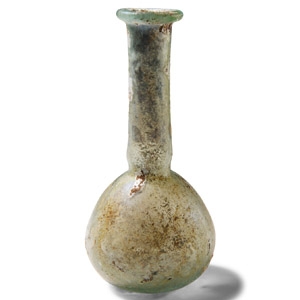
Roman Glass Unguentarium
1st-4th century A.D.Sold for (Inc. bp): £117
Bulbous body with flattened underside, tall tubular neck with rolled and folded rim. 43 grams, 11.5 cm
Acquired 1980-2015. Ex Abelita family collection. -
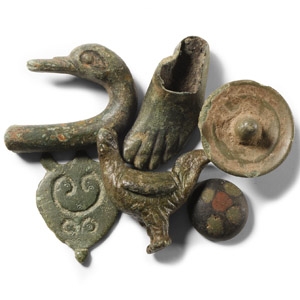
Roman Bronze Artefact Group
Mainly 1st-2nd century A.D.Sold for (Inc. bp): £72
Including a foot from a statuette, la Tène style military mount, mosaic glass gaming counter and other items. 124 grams total, 18-43 mm
Property of a Gloucestershire, UK, collector. Property of an East Sussex, UK, gentleman. -
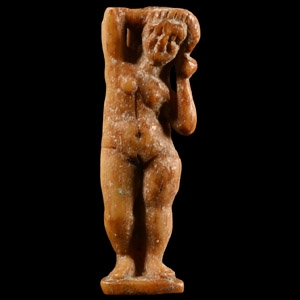
Roman Bone Venus Statuette
2nd-3rd century A.D.Sold for (Inc. bp): £195
Modelled in the round, Venus standing nude with hands raised to dress her hair; dorsal pillar pierced at shoulder height for suspension. 4.9 grams, 40 mm
From a collection acquired on the UK art market from various auction houses and collections mostly before 2000. From an important Cambridgeshire estate; thence by descent.
The iconography of Venus Anadyomene was one of the most commonly used images of the goddess in classical sculpture, and was still popular during the late Roman Empire. The best example of this is the Louvre Venus Anadyomene (Ma 3537) of the 4th century A.D., found in the 19th century at Saint George de la Montagne near Bordeaux, inside a rich aristocratic house and coming from Aphrodisias, an ancient place of statuary production for export.
