
Loading, please wait...
LOT 0767
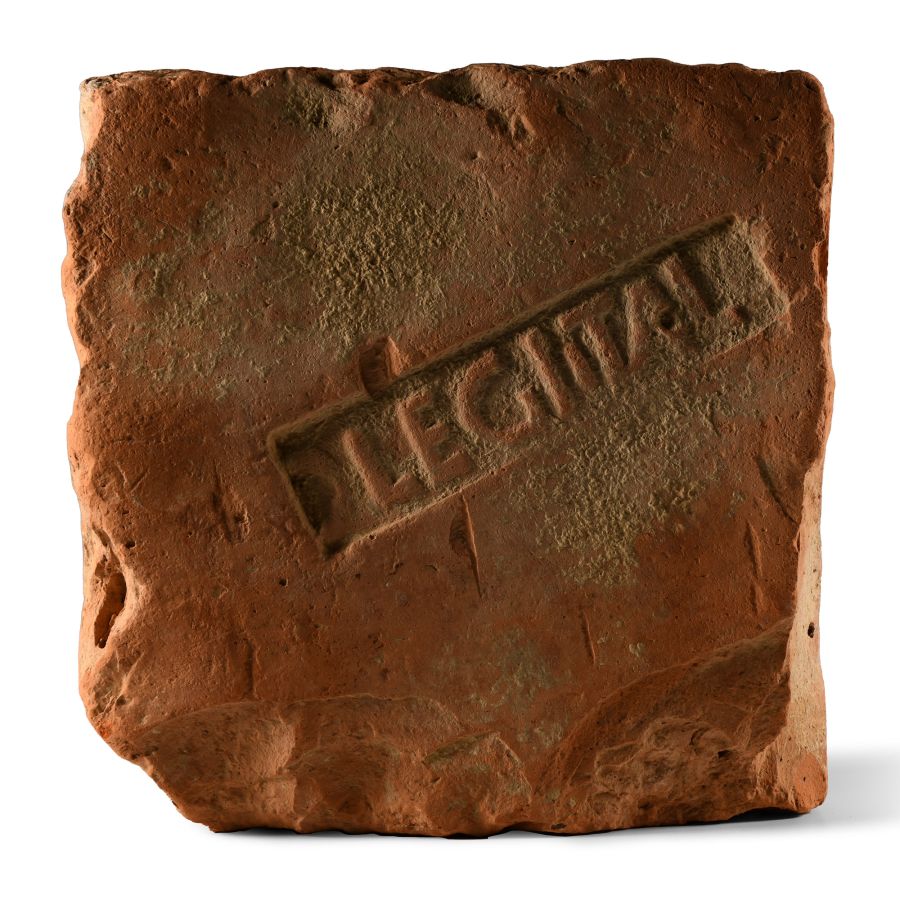
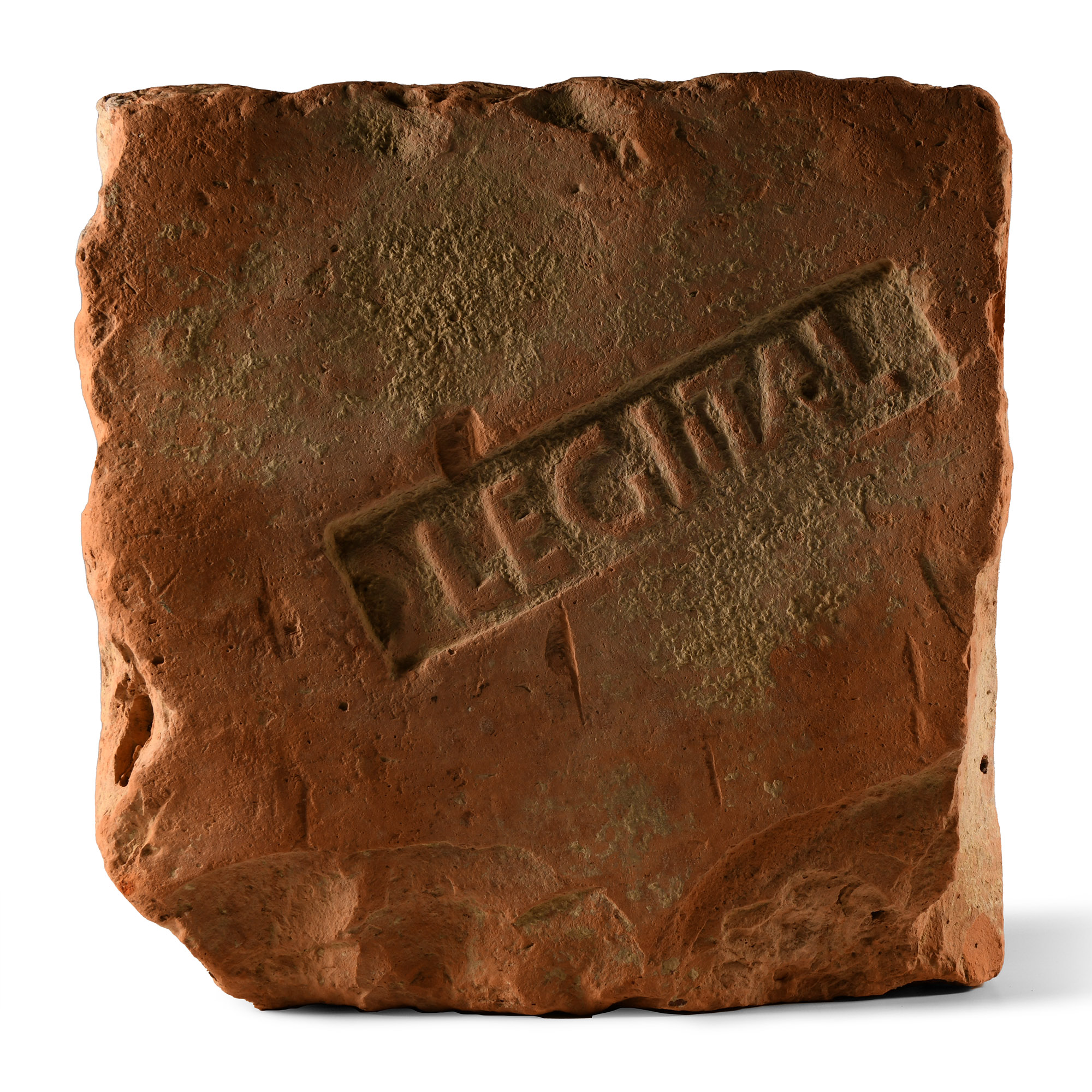
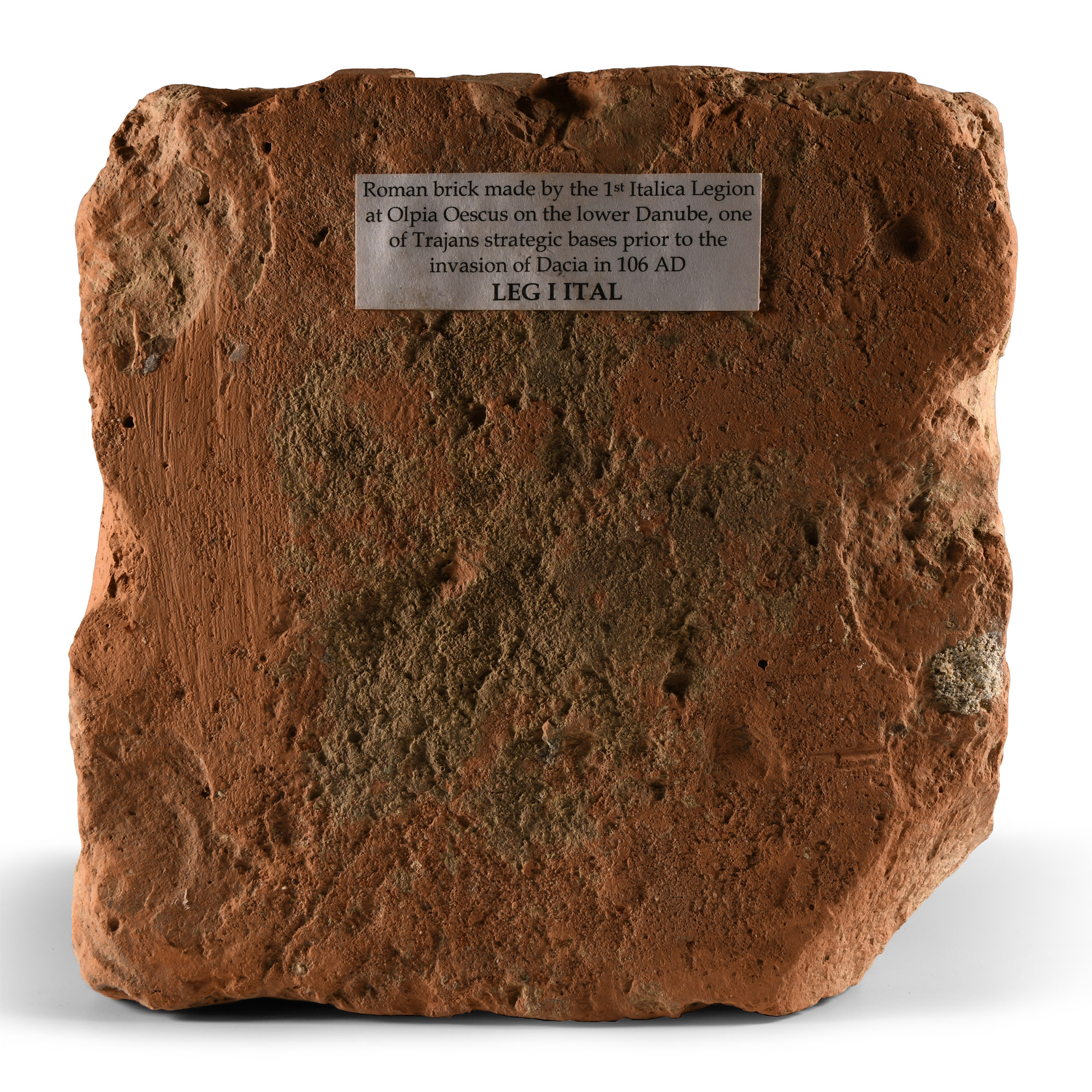
Roman Terracotta LEG I ITAL Legionary Stamped Tile
LATE 1ST CENTURY A.D.
7 1/2 in. (4.35 kg, 19 cm).
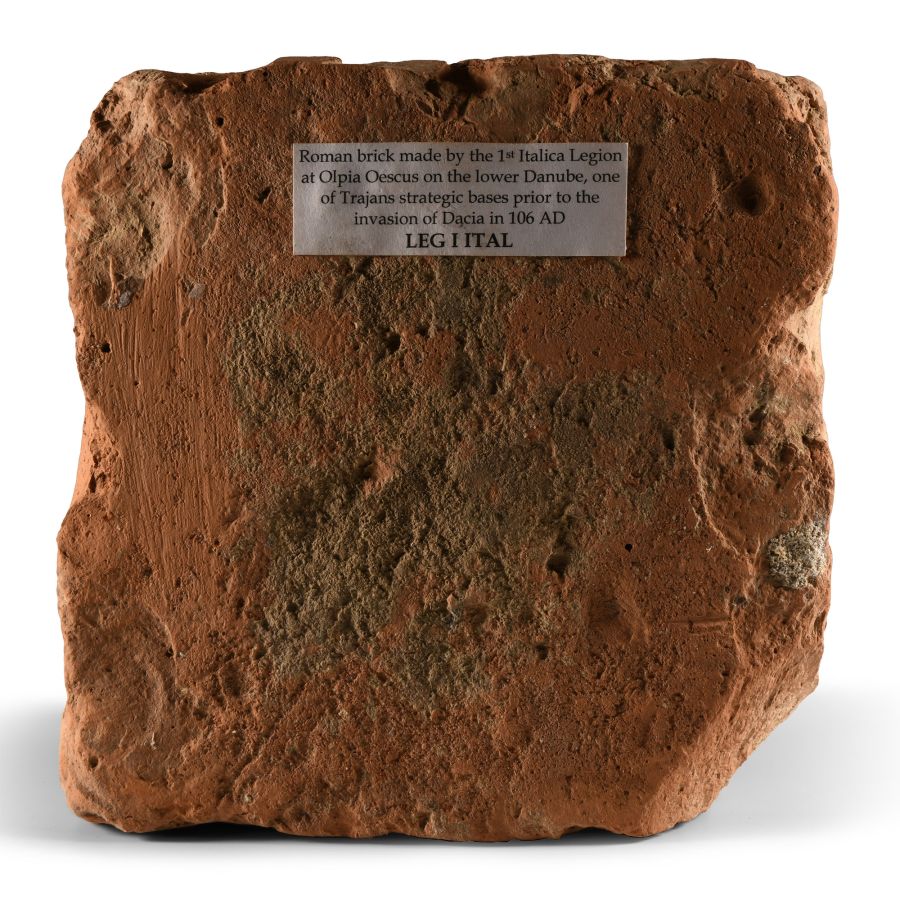
A rectangular block with stamped mark 'LEGT I ITAL' (Legio I Italica) for 1st Legion 'Italic'; with collector's label 'Roman brick made by the Ist Italica Legion at Olpia Oescus on the lower Danube, one of Trajan's strategic bases prior to the invasion of Dacia in 106 AD. LEG I ITAL' [No Reserve]
ProvenanceFrom the collection of a late East Anglian teacher and antiquarian who retired to the Isle of Wight in Hampshire, UK.
He amassed a large collection of objects between the 1960s-1980s.
Accompanied by a previous catalogue identification card.
See Sarnowski, T., 'Die Ziegelstempel aus Novae' in Archaeologia, Warszawa, 1983, 43, pp.17-61; Kurzmann, R., 'Soldier, Civilian and Military Brick Production' in Oxford Journal of Archaeology, 24 (4), 2005, pp.405-414.
FootnotesThe Legio I Italica ("of Italy") was a Roman legion formed by Nero on September 20, 66 or 67 AD and active until the 5th century AD. Its emblems were the boar and sometimes the bull.
There are many sources which name army officials employed in supervision of the construction and reconstruction of temples, baths, city walls, towers and gates. CIL VIII 2728, for example, is a letter by evocatus Augusti who was sent to solve engineering problems on a badly surveyed aqueduct at Saldae in the province of Numidia. Pliny (Epistulae X 17b, 39, 41, 61) repeatedly requested an army architect to be sent from Lower Moesia to help inspect some Bithynian building projects. Therefore it is not strange that tiles marked as belonging to a legion should be found all over the provinces.
TimeLine Auctions follows a vetting process to ensure the authenticity and legality of all items, reinforcing our commitment to integrity and responsible trading. Each antiquity, antique, and coin lot undergoes thorough examination by a vetting committee of at least ten external specialists, professional trade association members, scientists, and archaeologists: Our Vetting Process
AUCTIONS:
TimeLine is a leading auction house specialising in antiquities, ancient art, collectables, natural history, coins, medals, and books. Our auctions offer museums, collectors, historians, and enthusiasts the opportunity to acquire unique and historically significant pieces.
-
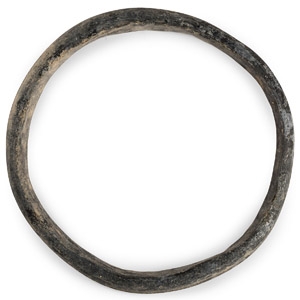
Large Roman Blue Glass Bracelet
1st-3rd century A.D.Sold for (Inc. bp): £130
Comprising an annular D-section hoop with a raised band to the outer face. 22.4 grams, 82 mm
From the property of late Mr SM, London, UK, 1969-1999. -
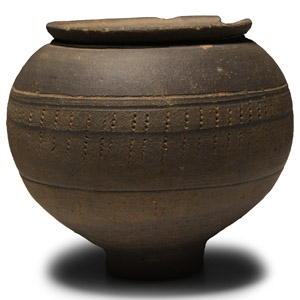
Romano-British Grey Ware Vessel
1st-4th century A.D.Sold for (Inc. bp): £325
With broad body and narrow foot, everted rim; incised bands flanking the median panel with vertical groups of points. 252 grams, 11.5 cm wide
Found UK. From the collection of a late East Anglian teacher and antiquarian who retired to the Isle of Wight in Hampshire, UK. He amassed a large collection of objects between the 1960s-1980s. -
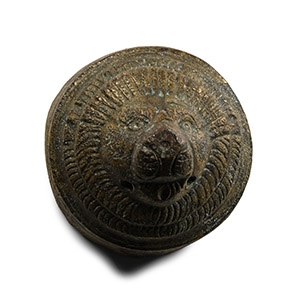
Roman Bronze Lion's Head Casket Mount
2nd-3rd century A.D.Sold for (Inc. bp): £91
Domed in profile with concentric stepped tiers and hatched fur texture, central lion-mask with lateral piercings for the muzzle, slightly flared rim; lead plug to interior. 168 grams, 55 mm
Found Wiltshire, UK, before 1974.
