
Loading, please wait...
LOT 0117
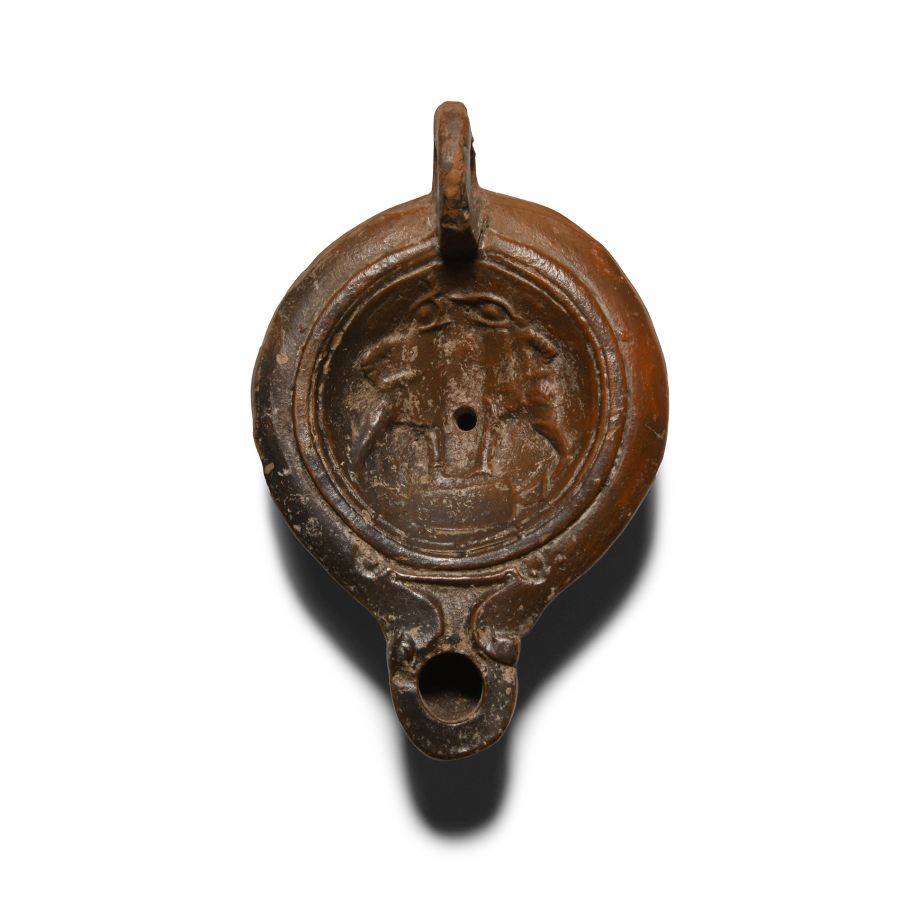
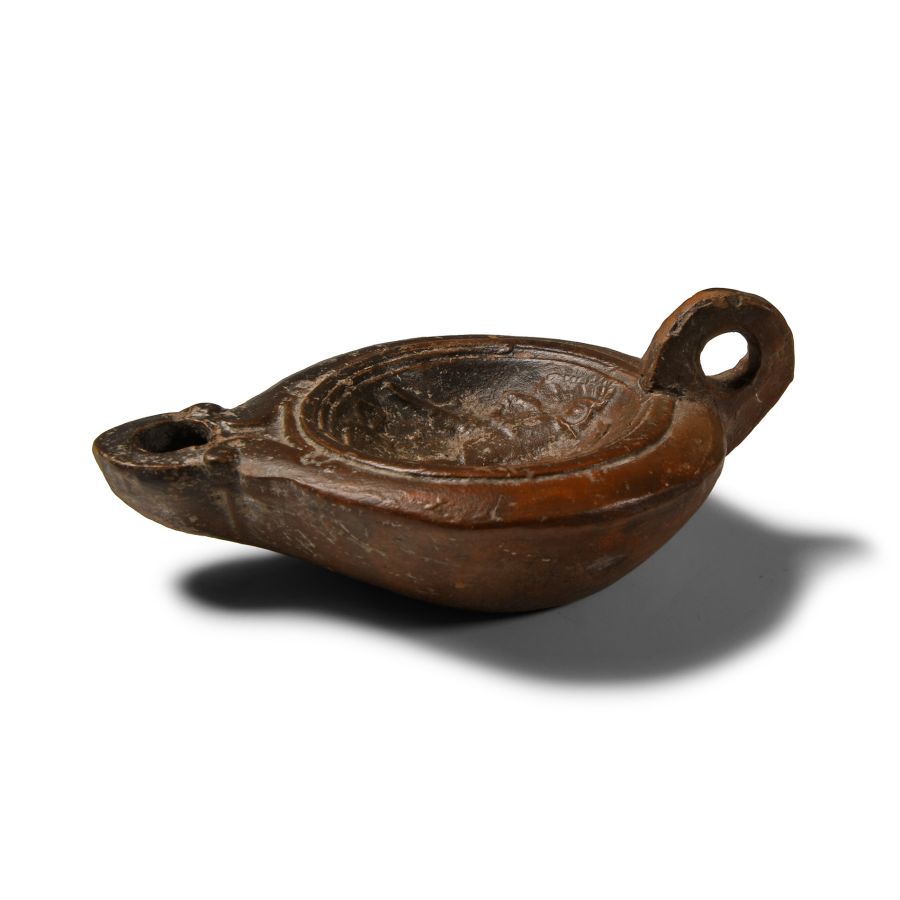
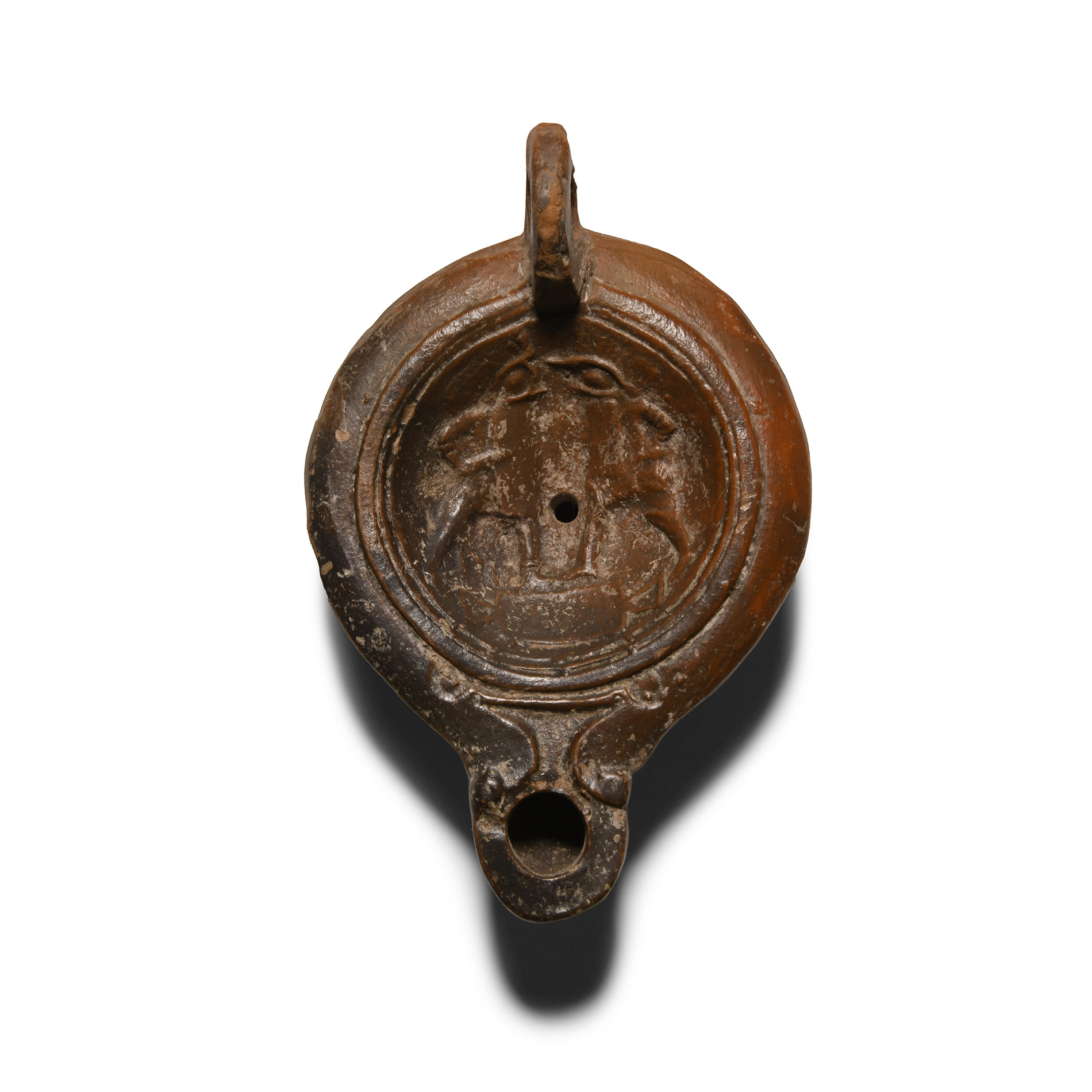
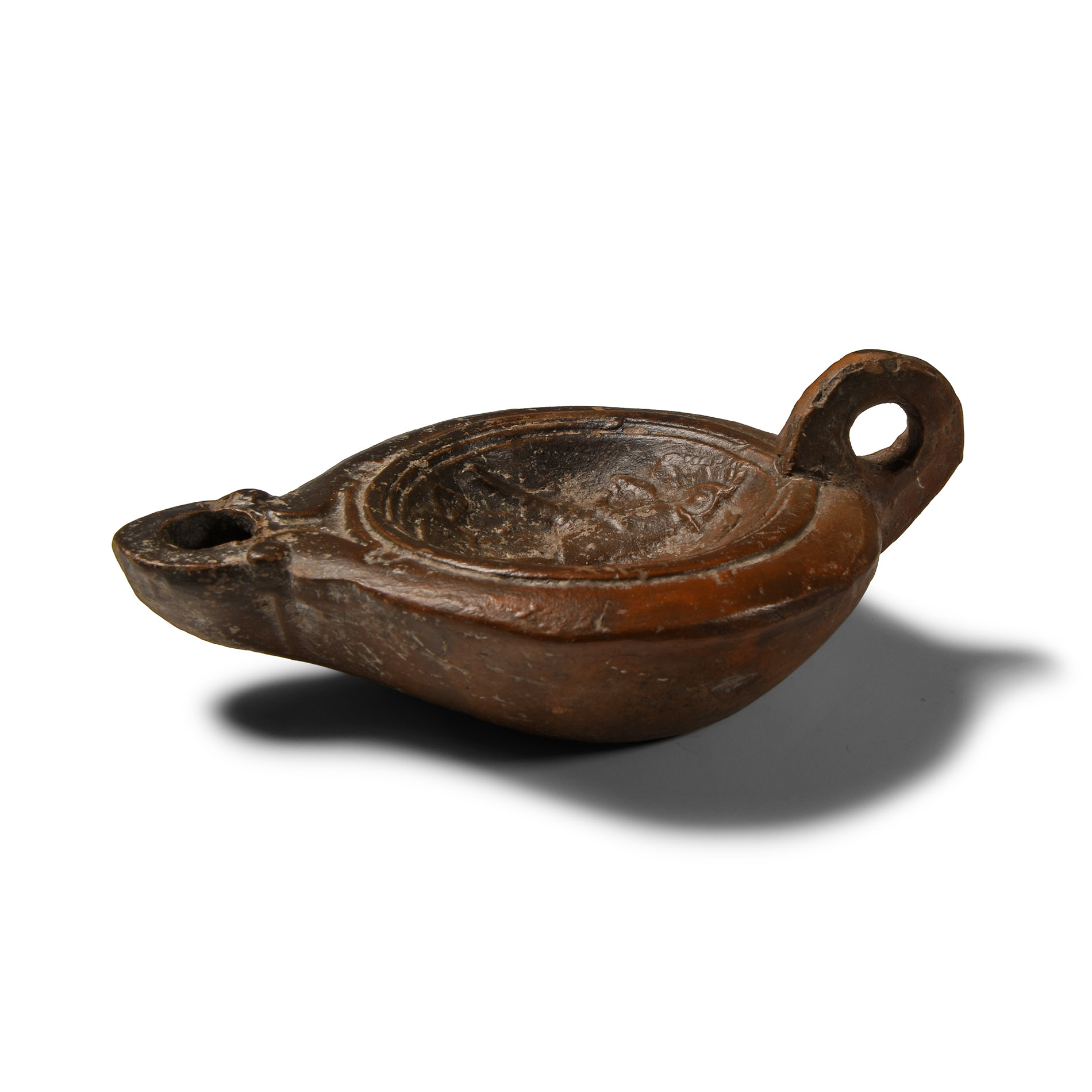
Roman Terracotta Lamp with Fighting Gladiators
1ST-2ND CENTURY A.D.
4 7/8 in (84 grams, 12.4 cm).
Composed of a discoid body with sunken discus bearing a scene of two gladiators in combat in relief, tabula ansata below, ring handle and roughly D-shaped nozzle with volutes; old crack to base.
ProvenanceFrom a German collection.
Ex Cambridge, UK, collection, 1980s.
Cf. Gilbert, F., Devenir Gladiateur, la vie quotidienne á l'ecole de la mort, La Capelle-Marival, 2013, pp.30-31, for similar lucernae.
FootnotesThe two gladiators seem to be wearing the armaturae of murmillones. All gladiators began their career as provocatores; the learning of their combat technique was polyvalent and allowed the fighters to specialise as a large shield-bearer (the scutati) like murmillones, or as a small shield-bearer, parmati, like the oplomachus.
CONDITIONTimeLine Auctions follows a vetting process to ensure the authenticity and legality of all items, reinforcing our commitment to integrity and responsible trading. Each antiquity, antique, and coin lot undergoes thorough examination by a vetting committee of at least ten external specialists, professional trade association members, scientists, and archaeologists: Our Vetting Process
AUCTIONS:
TimeLine is a leading auction house specialising in antiquities, ancient art, collectables, natural history, coins, medals, and books. Our auctions offer museums, collectors, historians, and enthusiasts the opportunity to acquire unique and historically significant pieces.
LOT 0117
Roman Terracotta Lamp with Fighting Gladiators
Estimate £1,000 - 1,400€1,160 - 1,620 (for guidance only)$1,350 - 1,890 (for guidance only)
-
Roman Terracotta Oil Lamp with Frontal Bust
2nd century A.D.Sold for (Inc. bp): £286
With brown slip, loop handle to the rear, the discus with a facing bust of a young woman within a concentric circle border; maker's mark 'LCΛPΓ' within tabula ansata-shaped stamp. 63 grams, 10.2 cm
Acquired on the European art market, 1980s. English private collection.
The discus decorations of these lamps are various: Diana, Dioscuri, Sol and Luna, Africa, Lares, and griffin; portraits of Domitian, Hadrian, male head, bust of a young man, bust of a young woman (our specimen), bust of a bearded old man, fisherman, and an aulete; scorpion, boar, and lion with crocodile; etc. They were an African production and not less than seven worskshops have been individuated: M N O V I V, M N O V I V S T (our case) , M N O V I V S T I , I V N I A L E X I, C C O R V R S , E X F N A / LV C C E I O R V M . Here we can add LCAPIT (Lucius Capito). -
Roman Gold Pendant with Beads
1st-4th century A.D.Sold for (Inc. bp): £195
Vertical gold shank with loop above, cell with inset garnet cabochon and three annular beads. 0.62 grams, 22 mm
From a late Japanese specialist collector, 1970-2000s. -
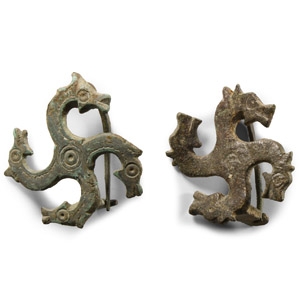
Roman Horse-Headed Plate Brooch Group
3rd-4th century A.D.Sold for (Inc. bp): £130
Gammadion brooches each with horse-head finials and central ring-and-dot motif. 26 grams total, 37-40 mm
UK art market, acquired prior to 1980. Property of a Scottish collector, acquired in 2013.
