
Loading, please wait...
LOT 0066
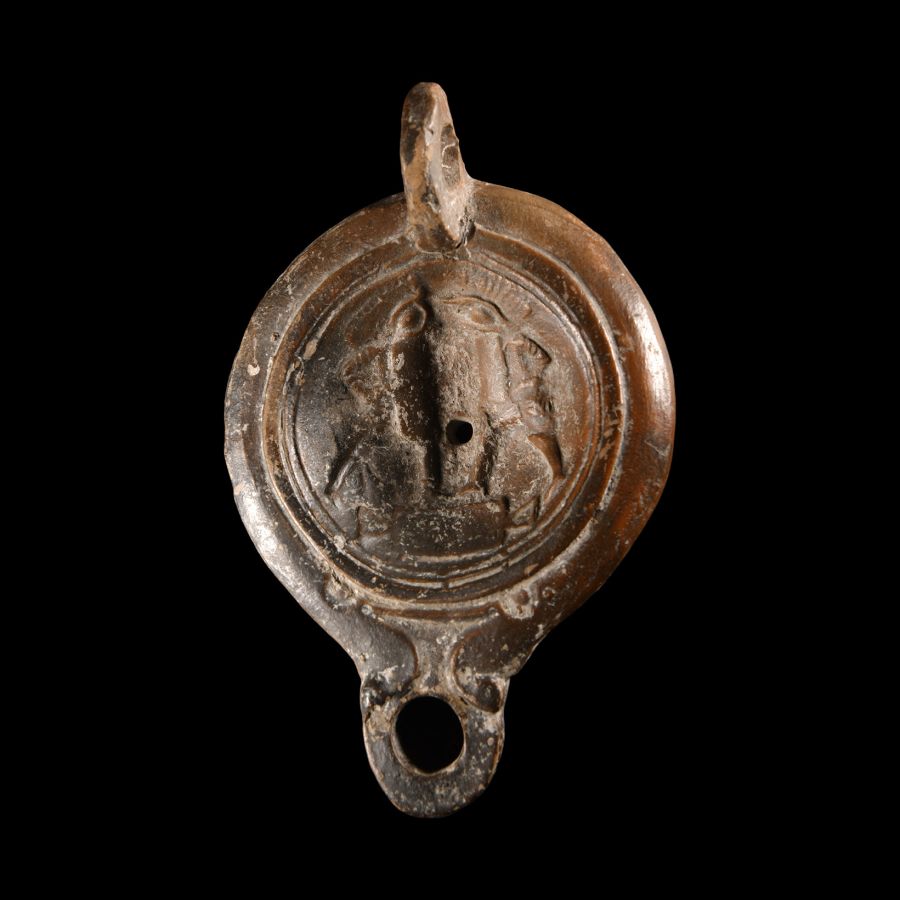
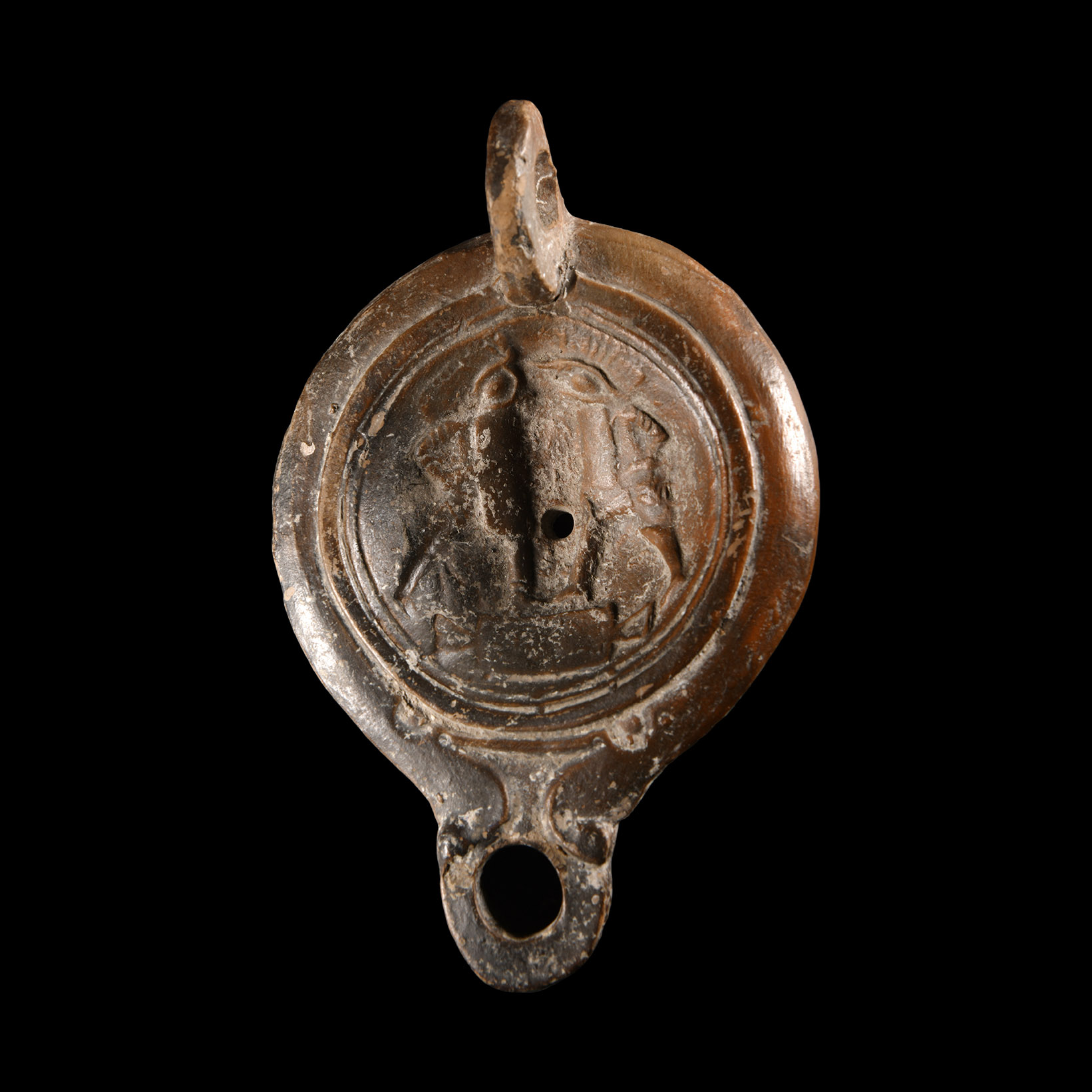
Roman Terracotta Lamp with Fighting Gladiators
1ST-2ND CENTURY A.D.
4 7/8 in. (84 grams, 12.4 cm).
Composed of a discoid body with sunken discus bearing a scene of two gladiators in combat in relief, tabula ansata below, ring handle and roughly D-shaped nozzle with volutes; old crack to base.
ProvenanceFrom a German collection.
Ex Cambridge, UK, collection, 1980s.
Cf. Gilbert, F., Devenir Gladiateur, la vie quotidienne á l'ecole de la mort, La Capelle-Marival, 2013, pp.30-31, for similar lucernae.
FootnotesThe two gladiators seem to wear the armaturae of murmillones. All gladiators began their career as provocatores; the learning of their combat technique was polyvalent and allowed the fighters to specialise as a large shield-bearer (the scutati) like murmillones, or as a small shield-bearers, parmati, like the oplomachus.
CONDITIONTimeLine Auctions follows a vetting process to ensure the authenticity and legality of all items, reinforcing our commitment to integrity and responsible trading. Each antiquity, antique, and coin lot undergoes thorough examination by a vetting committee of at least ten external specialists, professional trade association members, scientists, and archaeologists: Our Vetting Process
AUCTIONS:
TimeLine is a leading auction house specialising in antiquities, ancient art, collectables, natural history, coins, medals, and books. Our auctions offer museums, collectors, historians, and enthusiasts the opportunity to acquire unique and historically significant pieces.
-
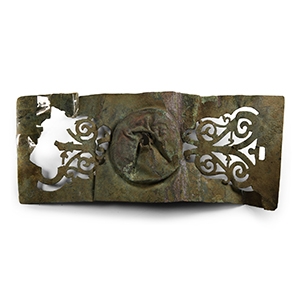
Large Roman Bronze Military Mount
2nd-3rd century A.D.Estimate: £200 - 300 (+bp*)
Opening Bid: £80
Composed of a central domed boss and openwork volutes to the sides; for a sword belt or a chariot. 69 grams, 14 cm wide
Good condition, very rare
Acquired 1960s-1990s. Late Alison Barker collection, a retired London barrister. -
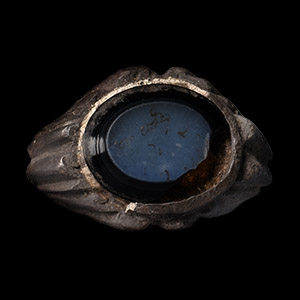
Roman Silver Ring with Gemstone
2nd-3rd century A.D.Sold for (Inc. bp): £156
Hoop with angled shoulders with fluting; inset with a polished and chipped agate stone; setting damaged. 33.07 grams, 33.29 mm overall, 18.64 mm internal diameter (approximate size British K 1/2, USA 5 1/2, Europe 10.58, Japan 10)
Private collection, Germany, 1970s. Acquired 2009. -
.jpg)
Roman Gemstone with Fisherman
Circa 1st century A.D.Estimate: £150 - 200 (+bp*)
Opening Bid: £75
Engraved on a circular carnelian stone, displaying a seated fisherman with a fish on his line; accompanied by a museum-quality impression. 1.15 grams, 13 mm
Acquired on the European art market in the late 1960s-early 1970s.
