
Loading, please wait...
LOT 0571
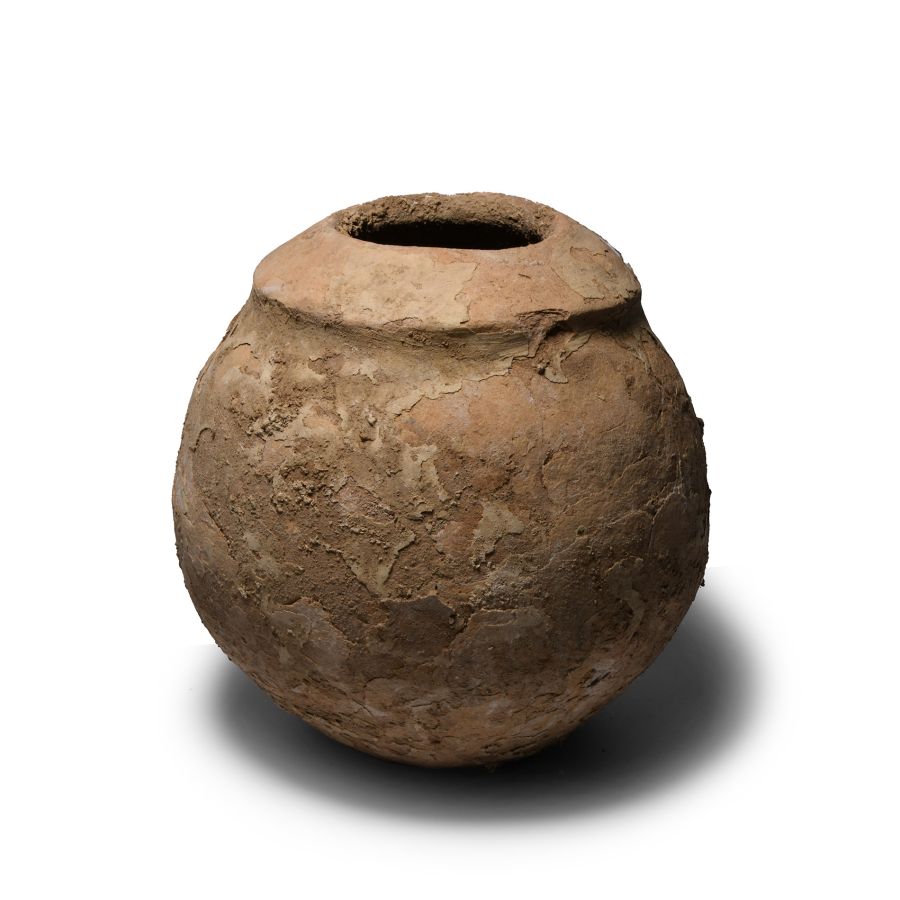
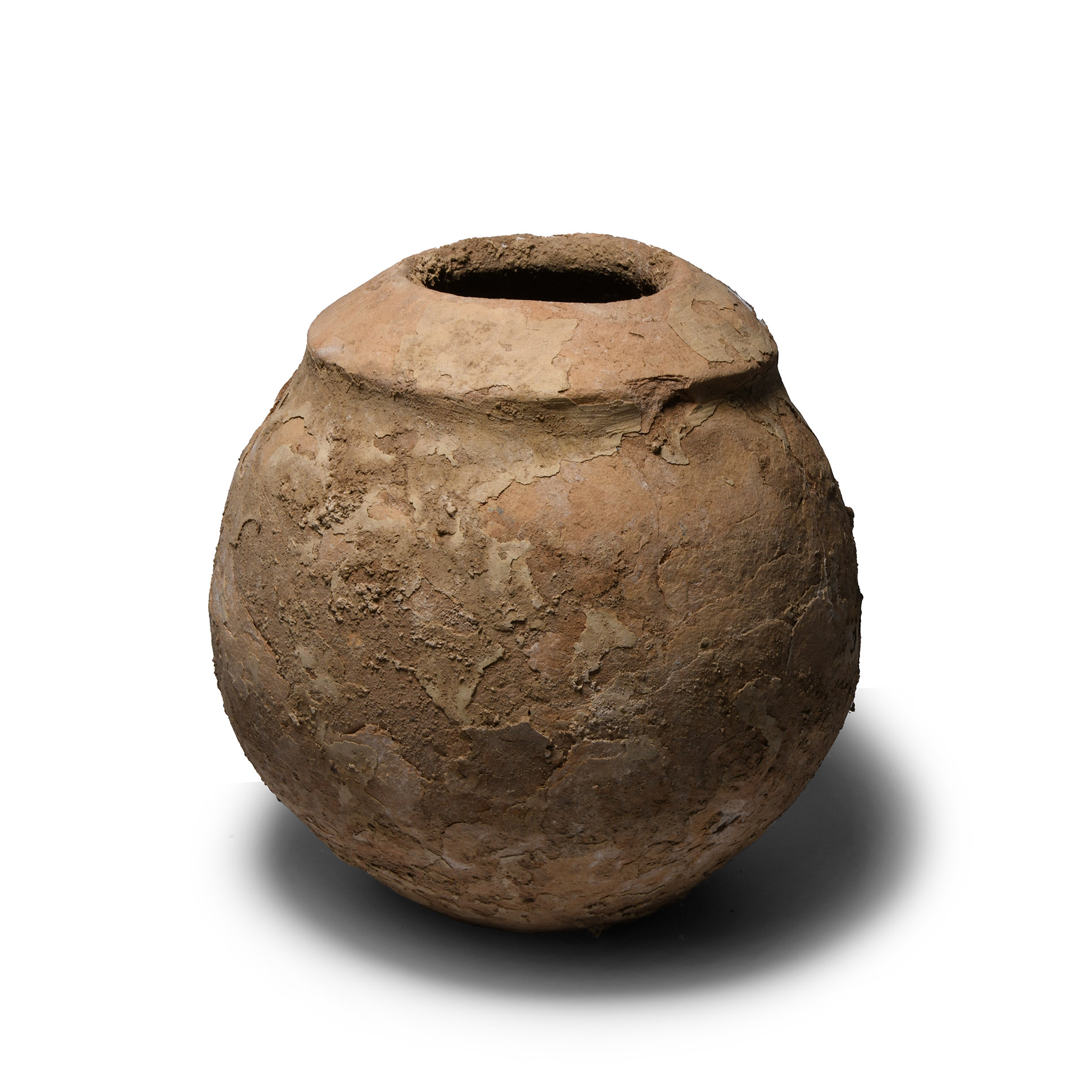
Roman Terracotta Jar
CIRCA 1ST-4TH CENTURY A.D.
7 1/2 in. (2.17 kg, 19 cm high).
Composed of a bulbous body and inverted rim. [No Reserve]
ProvenanceAcquired 1990s-early 2000s.
East Anglian private collection.
TimeLine Auctions follows a vetting process to ensure the authenticity and legality of all items, reinforcing our commitment to integrity and responsible trading. Each antiquity, antique, and coin lot undergoes thorough examination by a vetting committee of at least ten external specialists, professional trade association members, scientists, and archaeologists: Our Vetting Process
AUCTIONS:
TimeLine is a leading auction house specialising in antiquities, ancient art, collectables, natural history, coins, medals, and books. Our auctions offer museums, collectors, historians, and enthusiasts the opportunity to acquire unique and historically significant pieces.
-
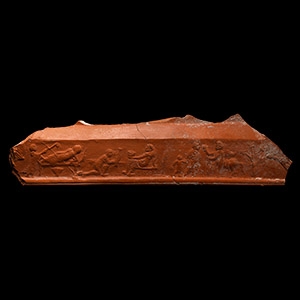
Roman Figural Redware Fragment
Circa 4th century A.D.Sold for (Inc. bp): £390
Displaying figures at a banquet (symposium) in relief, reclining on couches and being attended by servants; a centaur on the right; repaired. 358 grams, 30 cm
Acquired 1990s-early 2000s. East Anglian private collection.
Possibly part of a flanged rectangular vessel, like some specimens found in Cilicia. The presence of a centaur in the scene could evoke the famous mythological fable of the centaurs at the banquet of the Lapiths, when the latter, together with the Athenian hero Theseus, offended by the immoral behaviour of the centaurs who had attempted to kidnap the women, slaughtered them all. -
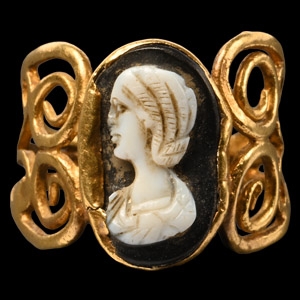
Roman Gold Ring with Portrait Cameo
Circa 1st century A.D.Sold for (Inc. bp): £2,340
Openwork heart-shaped shoulders and reef-knot to the underside, ellipsoid cell with inset cameo. 5.03 grams, 20.13 mm overall, 15.77 mm internal diameter (approximate size British G 1/2, USA 3 1/2, Europe 5.55, Japan 5)
Acquired in the 1980s. American private collection. with Bonhams, London, 23 October 2013, lot 163. Accompanied by a previous dealer's catalogue and price card (£3,750.00). This lot has been checked against the Interpol Database of stolen works of art and is accompanied by search certificate no.203078. -
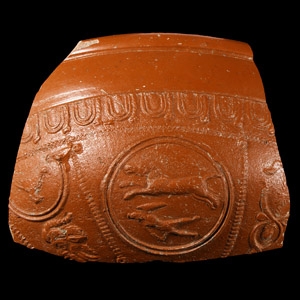
Roman Red Ware Bowl Fragment with Gladiator
2nd century A.D.Sold for (Inc. bp): £208
From the upper part of a vessel, displaying a bird, a satyr head and a caduceus, a leaping wild horse and a gladiator within a roundel. 71.9 grams, 98 mm
Acquired 1960s-1990s. From the late Alison Barker collection, a retired London barrister.
These kind of fragments are often found in military camps. In addition to simple cooking pots, jugs, plates and mortars, the household effects of a contubernium (the smallest organised unit of soldiers in the Roman army composed of eight legionaries) also included finer eating and drinking utensils. To avoid confusion, many soldiers marked their dishes with their names and, if necessary, repaired them with the help of lead clips.
