
Loading, please wait...
LOT 0763
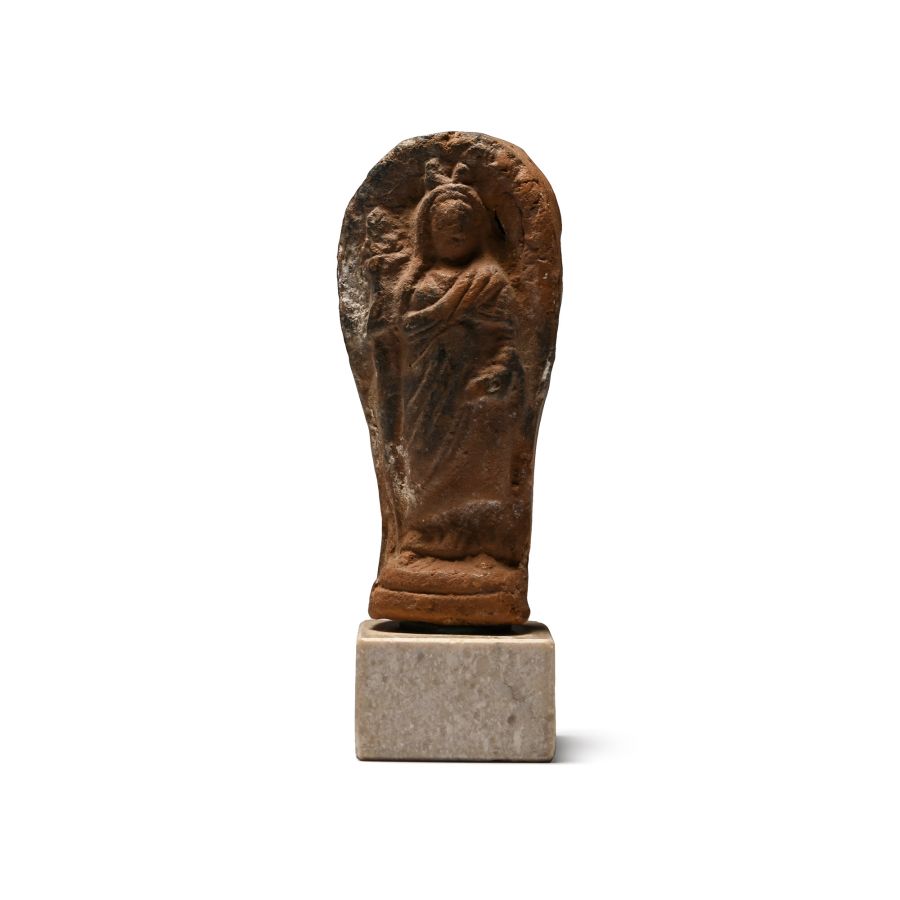
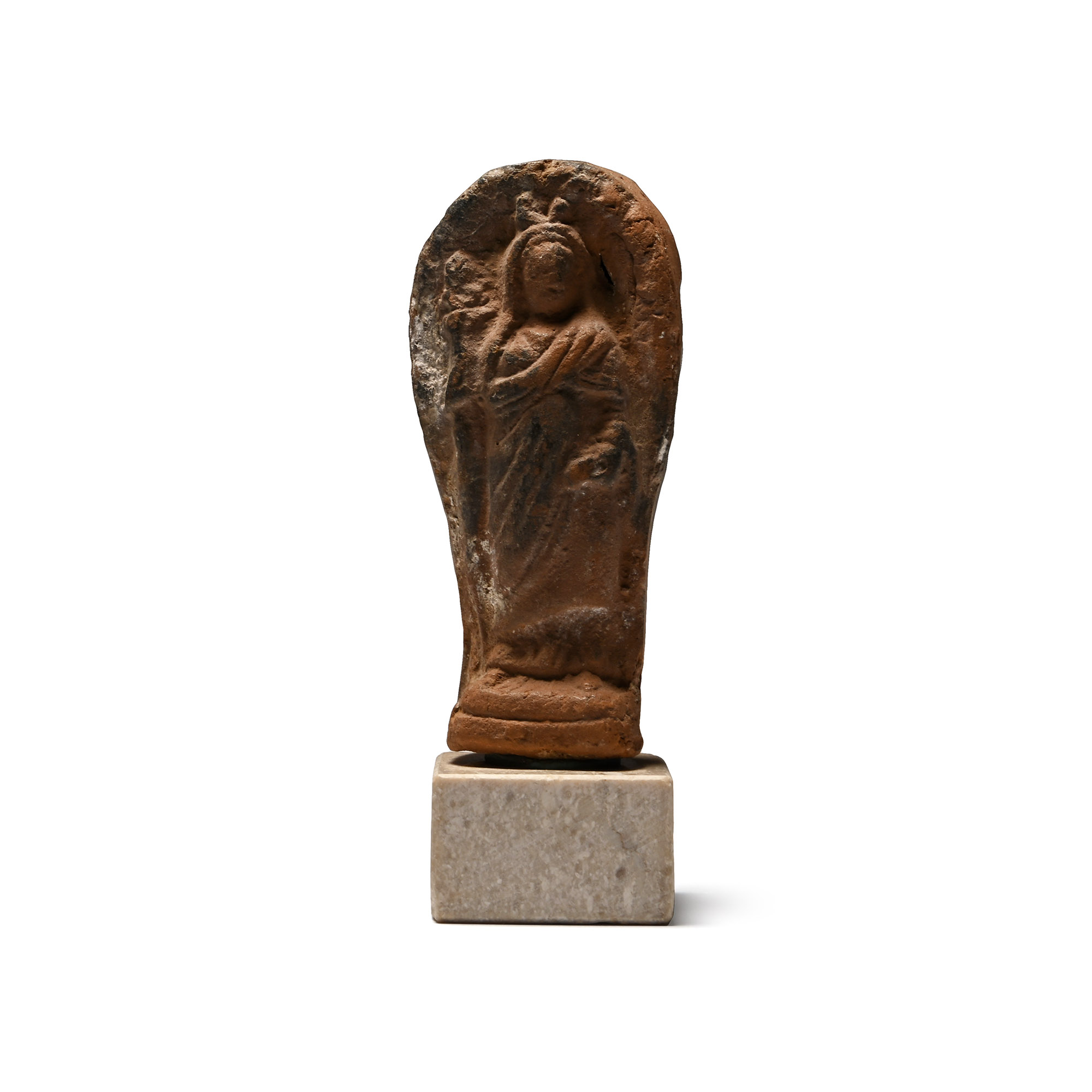
Roman Terracotta Figure of Isis
1ST-2ND CENTURY A.D.
3 1/4 in. (56.6 grams total, 82 mm including stand).
Hollow-formed piriform moulded figurine with standing female modelled in the half-round wearing a draped stola covering her head and gathered in her left hand, tiered base and decorative arched frame; mounted on a custom-made stand. [No Reserve]
ProvenanceFrom the collection of a gentleman, acquired on the London art market in the 1990s.
This lot is accompanied by an illustrated lot declaration signed by the Head of the Antiquities Department, Dr Raffaele D'Amato.
TimeLine Auctions follows a vetting process to ensure the authenticity and legality of all items, reinforcing our commitment to integrity and responsible trading. Each antiquity, antique, and coin lot undergoes thorough examination by a vetting committee of at least ten external specialists, professional trade association members, scientists, and archaeologists: Our Vetting Process
AUCTIONS:
TimeLine is a leading auction house specialising in antiquities, ancient art, collectables, natural history, coins, medals, and books. Our auctions offer museums, collectors, historians, and enthusiasts the opportunity to acquire unique and historically significant pieces.
-
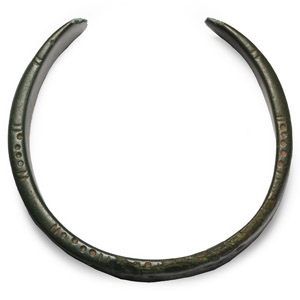
Roman Bronze Armilla Bracelet
3rd-4th century A.D.Sold for (Inc. bp): £59
Flat-section thick penannular body with rounded terminals, the upper body and sides divided into segments with vertical lines, each segment with punched pellet decoration. 34.6 grams, 56 mm
Ex German art market, 2000s. Acquired from an EU collector living in London. From the collection of a Surrey, UK, gentleman. This lot is accompanied by an illustrated lot declaration signed by the Head of the Antiquities Department, Dr Raffaele D'Amato. -
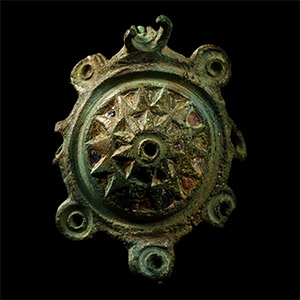
Roman Enamelled Bronze Umbonate Brooch
Circa 100-250 A.D.Sold for (Inc. bp): £65
Domed body decorated with two concentric circles of narrow, inward pointing triangles with traces of blue enamel, small bosses to the outer rim; pin-lugs and remains of pin to the reverse. 10.37 grams, 38 mm
Found Braintree, Essex, UK. Accompanied by a copy of the British Museum's Portable Antiquities Scheme (PAS) report no.ESS-CB128D. This lot is accompanied by an illustrated lot declaration signed by the Head of the Antiquities Department, Dr Raffaele D'Amato. -
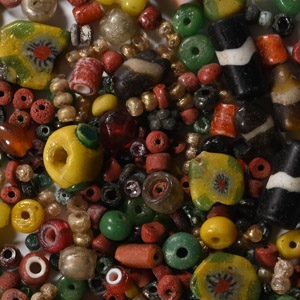
Roman Mixed Glass Bead Group
1st-4th century A.D. and laterSold for (Inc. bp): £111
Including oblate, fusiform, tabular, mosaic and other types. 15 grams total, 2-13 mm
UK gallery, early 2000s. This lot is accompanied by an illustrated lot declaration signed by the Head of the Antiquities Department, Dr Raffaele D'Amato.
The mass production of glass in Ancient Rome prompted the development of glass jewellery of unique qualities. The ancient Romans considered jewellery to be an essential accessory, being a public display of the wealth of high social classes. Roman jewellery at first followed trends set by the Etruscans, using gold and glass beads, but as the power and spread of the Roman Empire increased, jewellery designs became increasingly elaborate, incorporating elements from different cultural styles.
