
Loading, please wait...
LOT 0877
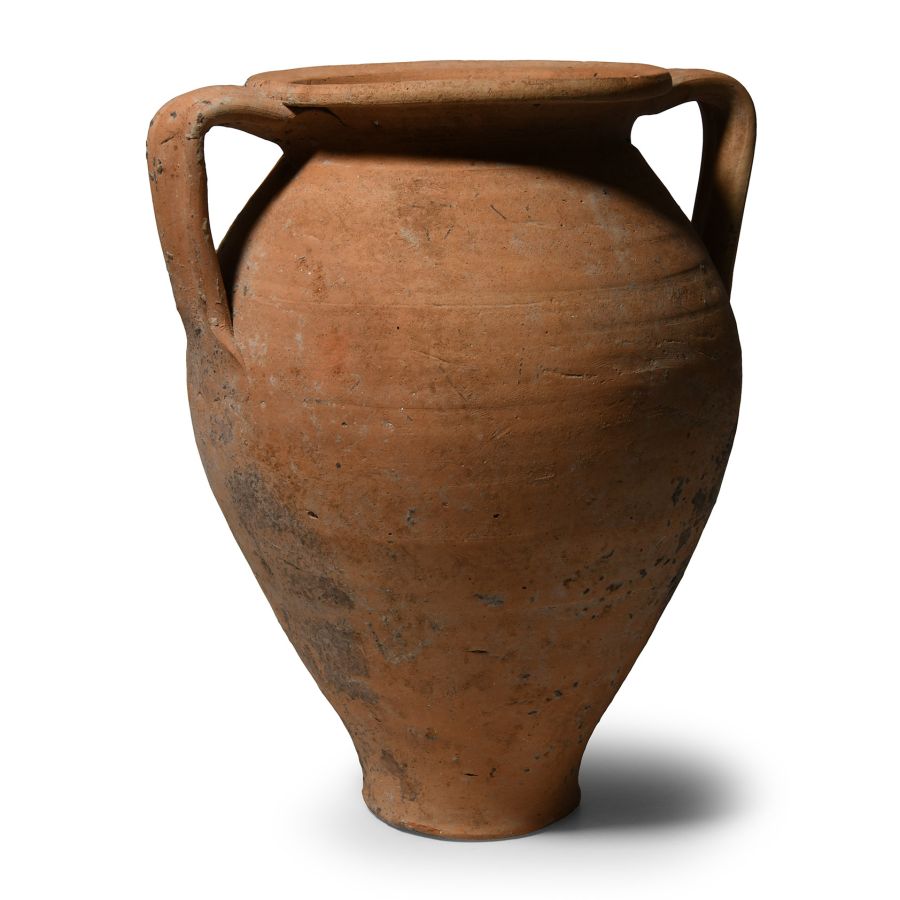
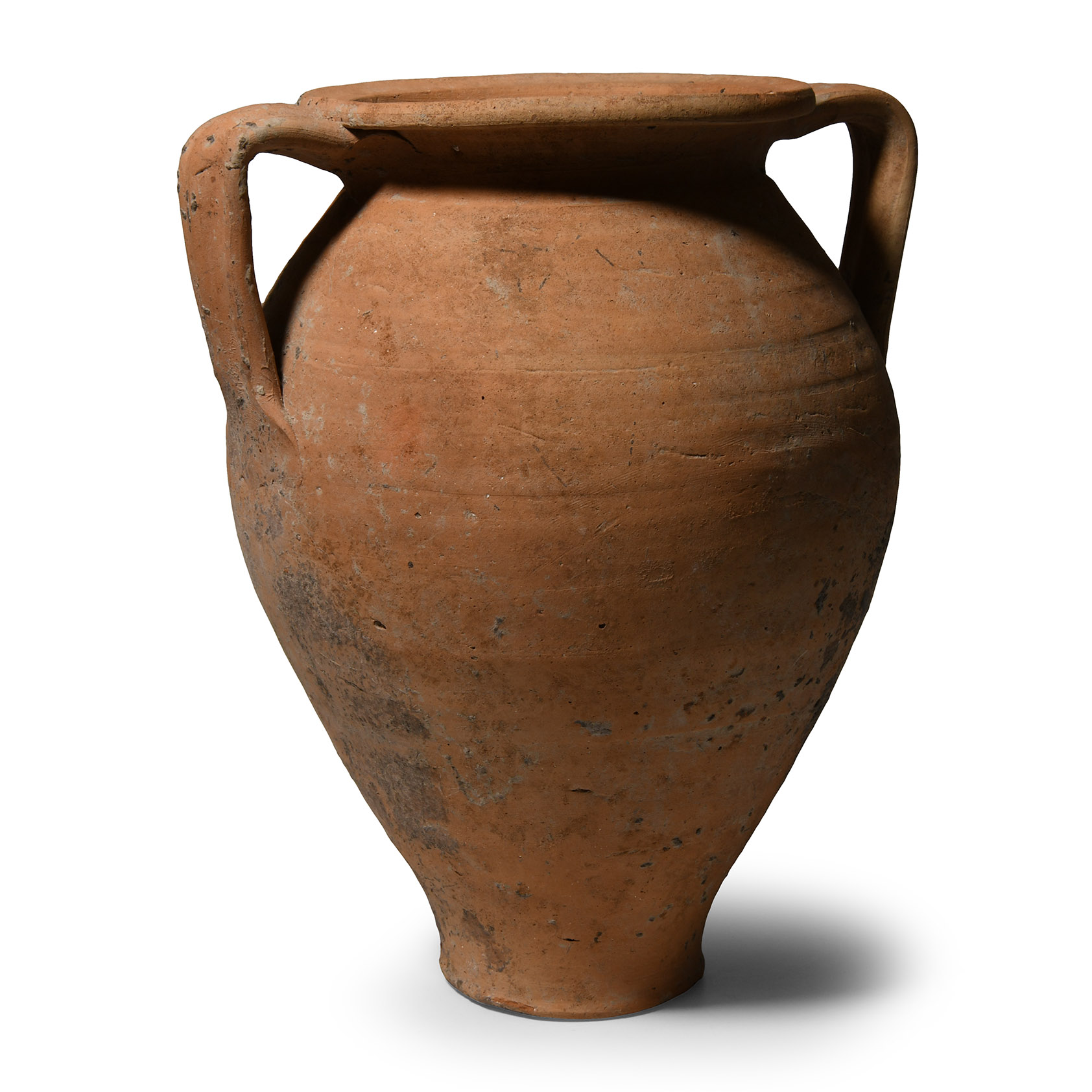
Roman Terracotta Double-Handled Jar
2ND-3RD CENTURY A.D.
8 7/8 in. (843 grams, 22.7 cm).
Piriform in profile with broad everted flange rim, lateral strap handles.
ProvenanceAcquired before 2000.
From an English private collection.
TimeLine Auctions follows a vetting process to ensure the authenticity and legality of all items, reinforcing our commitment to integrity and responsible trading. Each antiquity, antique, and coin lot undergoes thorough examination by a vetting committee of at least ten external specialists, professional trade association members, scientists, and archaeologists: Our Vetting Process
AUCTIONS:
TimeLine is a leading auction house specialising in antiquities, ancient art, collectables, natural history, coins, medals, and books. Our auctions offer museums, collectors, historians, and enthusiasts the opportunity to acquire unique and historically significant pieces.
-
Roman Bronze Statue of Mars Gradivus
2nd century B.C.Sold for (Inc. bp): £4,940
Modelled in the round as a young beardless warrior hero with muscular body and rounded shoulders; wearing a high-crested pseudo-Attic helmet with a diadem; the hair arranged in orderly locks over his brow; the bent left hand would originally have held a shield and the extended right hand a spear. 278 grams, 13.5 cm high
Ex collection of Dr Djafari (1900-1981), Kaiserslautern, Germany. Accompanied by an academic report by Dr Raffaele D'Amato. This lot has been checked against the Interpol Database of stolen works of art and is accompanied by search certificate number no.11812-206498.
This statue of Mars Gradivus, the marching god of war, was probably a cult offering. The statuette still presents an archaic Etruscan hairstyle, being part of the Italic statuettes of the god produced as votive offering to the temples or for private lararia. A Gallo-Roman period temple dedicated to the cult of Mars with a similar statuette has recently been found in Brittany. -
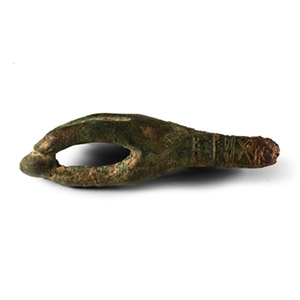
Roman Bronze Key Handle in the Shape of a Hand Holding Fruit
1st-3rd century A.D.Estimate: £700 - 900 (+bp*)
Opening Bid: £350
Formed as a lady's right hand with thumb and forefinger extended to hold a grape; iron shank to the wrist. 157 grams, 10.1 cm
Ex Cambridgeshire, UK, collection, 1990s. -
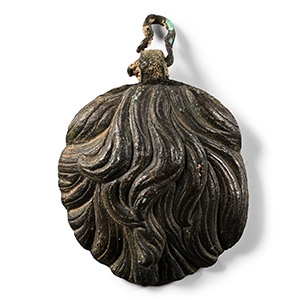
Roman Bronze Oil Lamp Lid
1st-2nd century A.D.Sold for (Inc. bp): £156
A domed lid with a loop to the edge; the upper face with intricate hair design showing voluminous, carefully rendered curls. 61 grams, 72 mm
From the collection of a gentleman, acquired on the London art market in the 1990s.
