
Loading, please wait...
LOT 0621
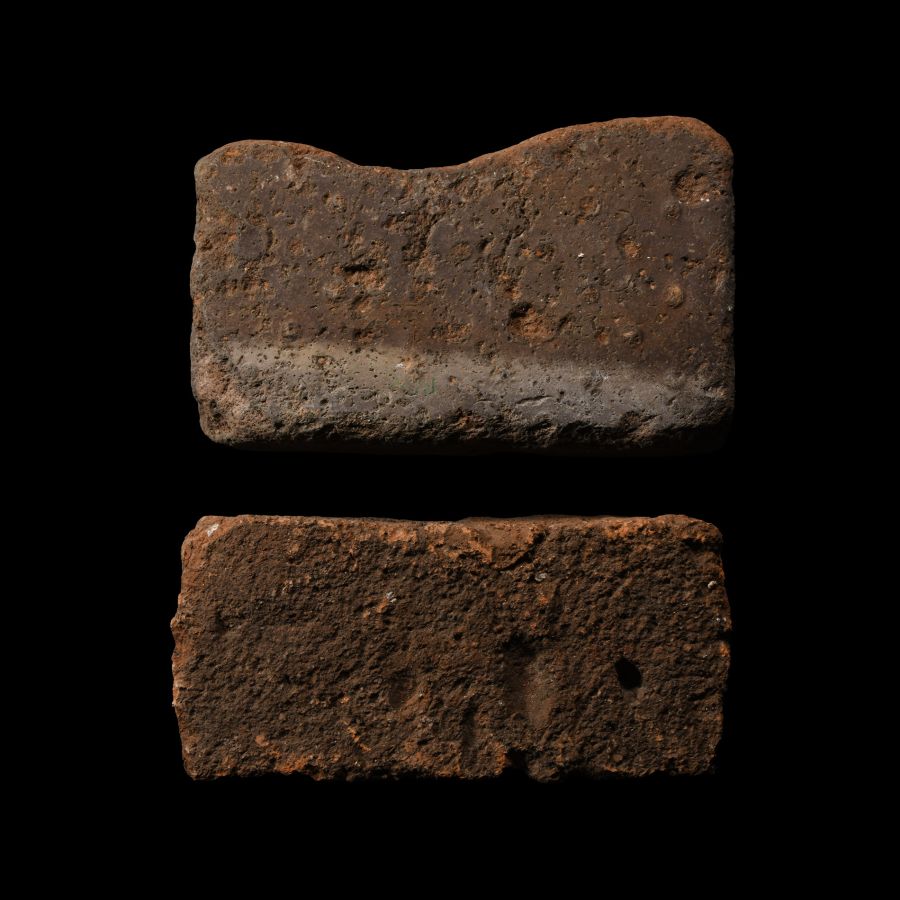
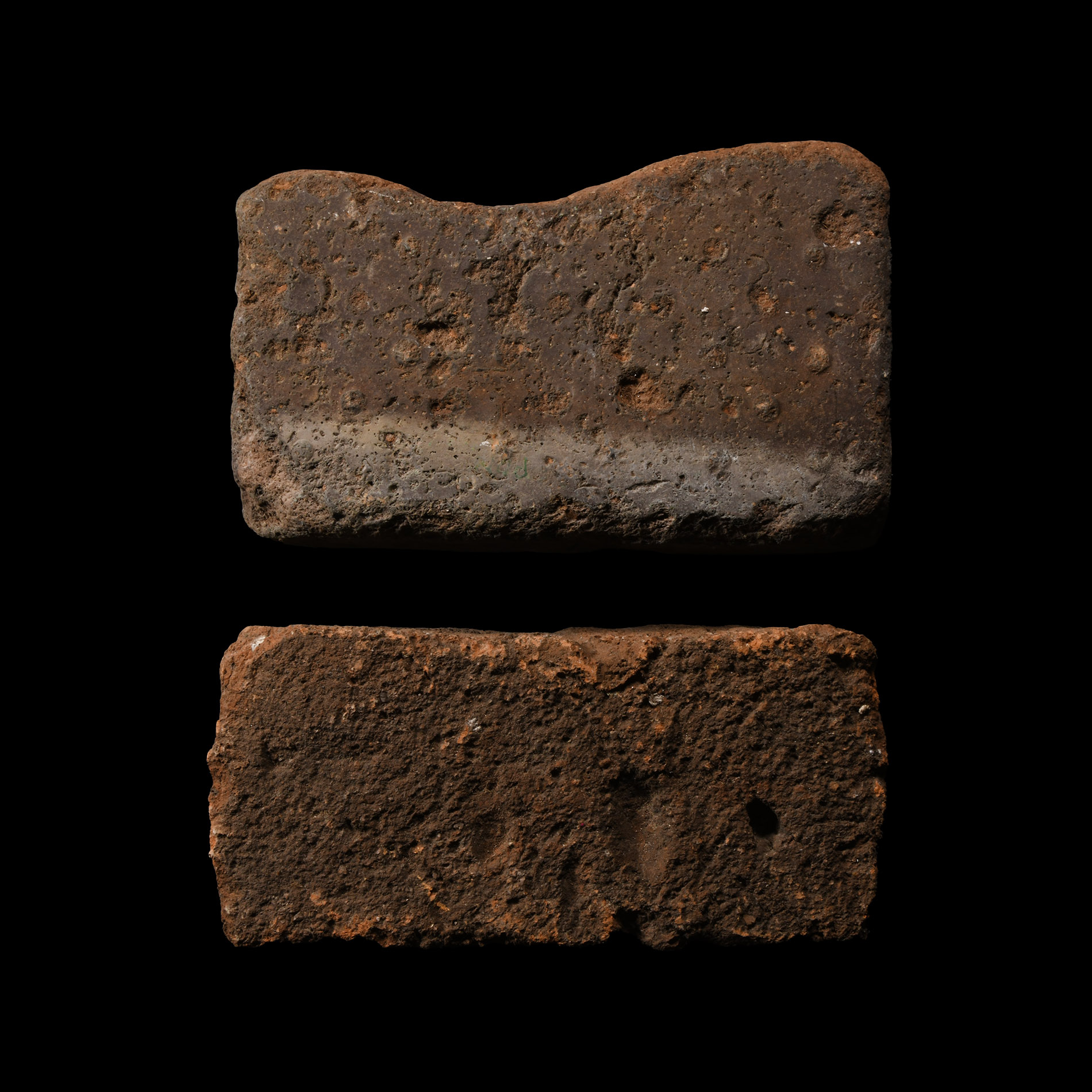
Roman Terracotta Brick Group
1ST-4TH CENTURY A.D.
8 1/4 - 8 5/8 in. (3.14 kg total, 21-22 cm).
Of different compositions, including one brick with handwritten label reading 'ROM AMPHITHEATRE [...]'. [2, No Reserve]
ProvenanceAcquired 1990s-early 2000s.
East Anglian private collection.
TimeLine Auctions follows a vetting process to ensure the authenticity and legality of all items, reinforcing our commitment to integrity and responsible trading. Each antiquity, antique, and coin lot undergoes thorough examination by a vetting committee of at least ten external specialists, professional trade association members, scientists, and archaeologists: Our Vetting Process
AUCTIONS:
TimeLine is a leading auction house specialising in antiquities, ancient art, collectables, natural history, coins, medals, and books. Our auctions offer museums, collectors, historians, and enthusiasts the opportunity to acquire unique and historically significant pieces.
-
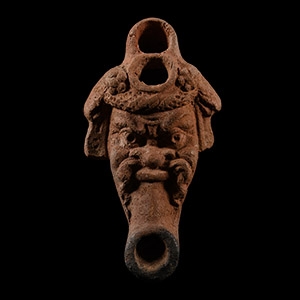
Roman Miniature Terracotta Oil Lamp with Theatre Mask
2nd century B.C.-1st century A.D.Sold for (Inc. bp): £364
Hollow-formed with long nozzle extending from the fleshy mouth, crown of foliage; smaller nozzle and filler-hole to the brow; raised ring to the base; a theatre mask or face of Silenus. 24.3 grams, 72 mm
Acquired 1960s-1990s. From the late Alison Barker collection, a retired London barrister.
Lamps with figurines first appeared in the Hellenistic period, possibly originating in Athens. Found in all parts of the Mediterranean basin, they were particularly popular during the first and second centuries A.D. The Silenus face types were linked to the Bacchic cult. The crown of leaves and fruit across the forehead alludes to Bacchus or one of his followers. -
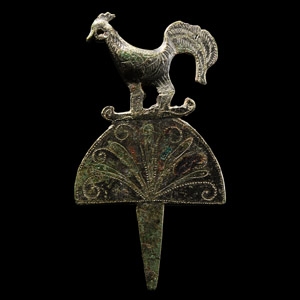
Roman Enamelled Bronze Cockerel Finial
Circa 2nd-3rd century A.D.Sold for (Inc. bp): £208
Featuring bifacial detailing and remains of enamelling, the cockerel standing atop a fan-shaped plaque with tapering attachment lug. 30.2 grams, 79 mm
Acquired 1990s-early 2000s. East Anglian private collection. -
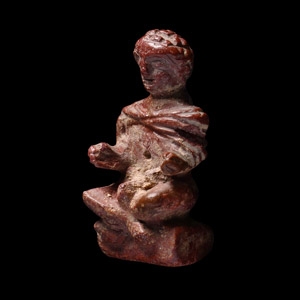
Late Roman Glass Pendant of a Seated Cloaked Male
3rd-4th century A.D.Sold for (Inc. bp): £117
Modelled in the round, seated cross-legged on a rectangular base, featuring semi-naturalistic facial and anatomical features and an exaggerated phallus; suspension loop to reverse. 9.13 grams, 36 mm high
Fine condition.
Acquired 1969-1999. London collection of the late Mr S.M., thence by descent.
