
Loading, please wait...
LOT 0737
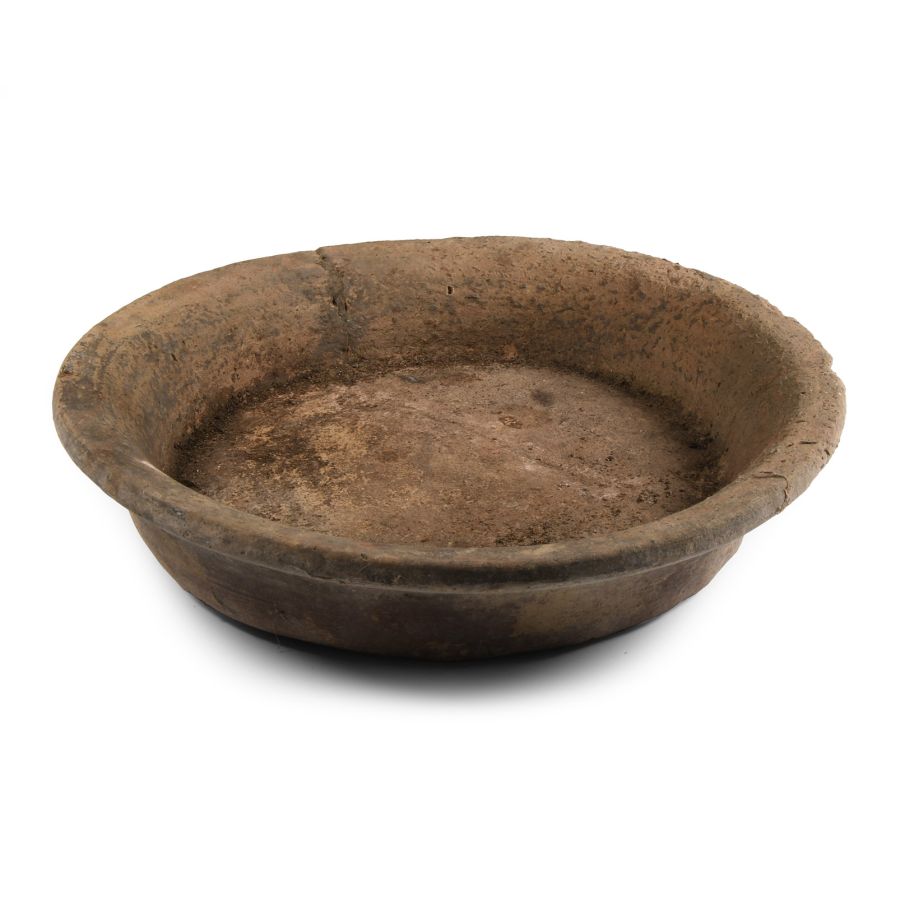
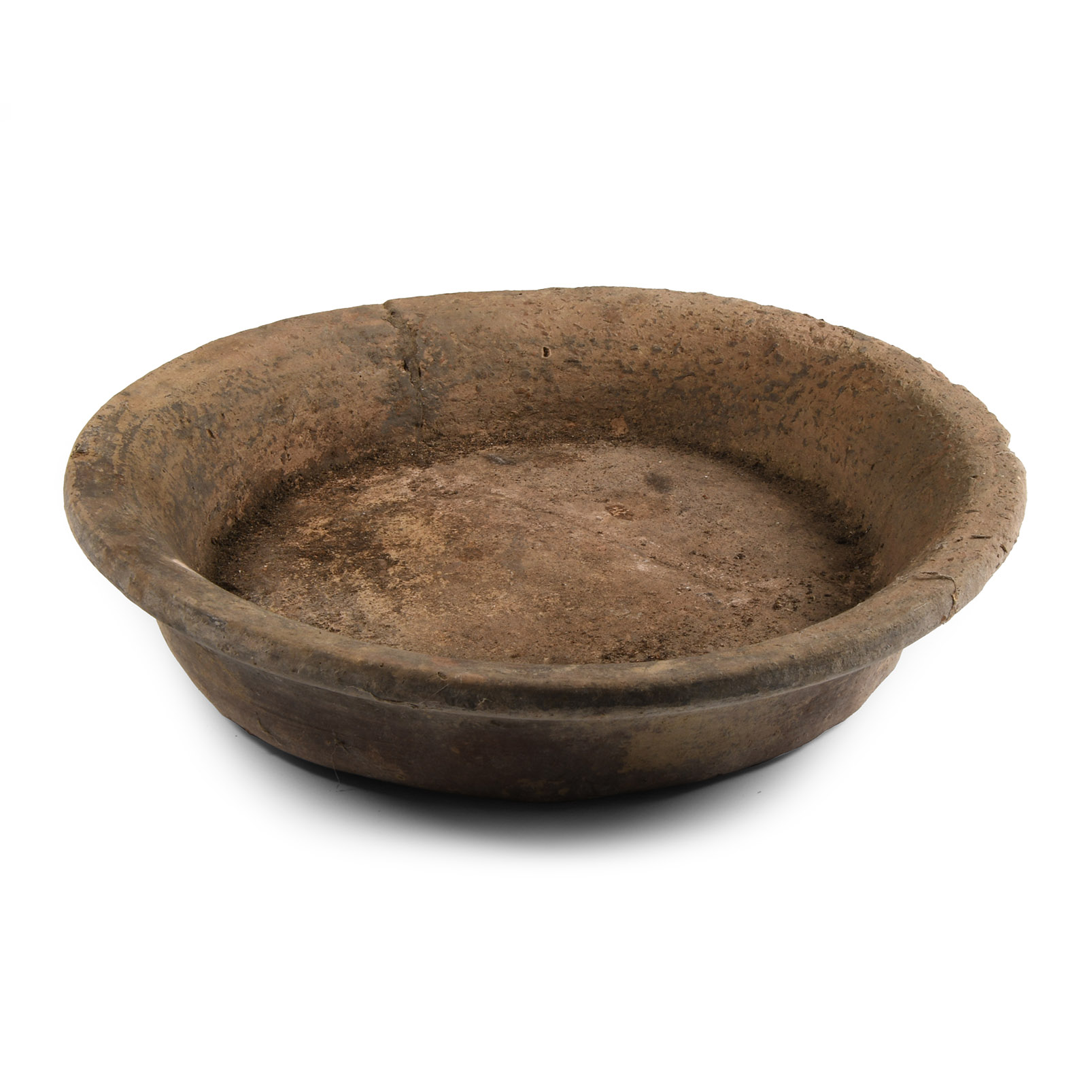
Roman Terracotta Bowl
2ND-4TH CENTURY A.D.
7 7/8 in. (580 grams, 20 cm wide).
Broad flat base with low sidewall and everted rim; repaired. [No Reserve]
ProvenanceFrom a collection acquired on the UK art market from various auction houses and collections mostly before 2000.
From an important Cambridgeshire estate; thence by descent.
TimeLine Auctions follows a vetting process to ensure the authenticity and legality of all items, reinforcing our commitment to integrity and responsible trading. Each antiquity, antique, and coin lot undergoes thorough examination by a vetting committee of at least ten external specialists, professional trade association members, scientists, and archaeologists: Our Vetting Process
AUCTIONS:
TimeLine is a leading auction house specialising in antiquities, ancient art, collectables, natural history, coins, medals, and books. Our auctions offer museums, collectors, historians, and enthusiasts the opportunity to acquire unique and historically significant pieces.
-
.jpg)
Gnostic Haematite Magical Gemstone
2nd-5th century A.D.Sold for (Inc. bp): £2,600
Ellipsoid plaque with chamfered rim; obverse: two animal-headed attendants flank a seated figure in profile mounted on a curved barque, with birds, stars, crescents and other items in the field; reverse: enigmatic legend 'XAYYXYXBA / XVXBAR ** / AZIXVCBXI /
From the collection of magical objects of the late Mr A. Cotton, Brockenhurst, Hampshire, UK. This lot has been checked against the Interpol Database of stolen works of art and is accompanied by search certificate number no.12224-222410. -
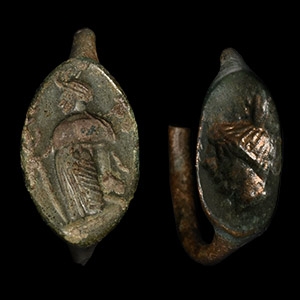
Roman Bronze Ring Bezel Group
1st century B.C.-1st century A.D.Sold for (Inc. bp): £46
Comprising: vesica-shaped bezel with incise togate standing figure with sceptre; ellipsoid bezel with profile bust. 4.51 grams total, 20-21 mm
Property of the vendor's grandfather, thence by family descent, circa 1985. From the private collection of a New York, USA gentleman. -
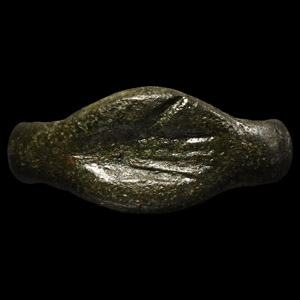
Roman Bronze Ring with Hand
2nd-3rd century A.D.Sold for (Inc. bp): £65
Wide hoop expanding to an oval-shaped intaglio with open hand. 3.18 grams, 20.88 mm overall, 17.14 mm internal diameter (approximate size British N, USA 6 1/2, Europe 13.72, Japan 13)
Private collection formed since the 1940s. UK art market. Property of an Essex, UK, gentleman.
