
Loading, please wait...
LOT 0878
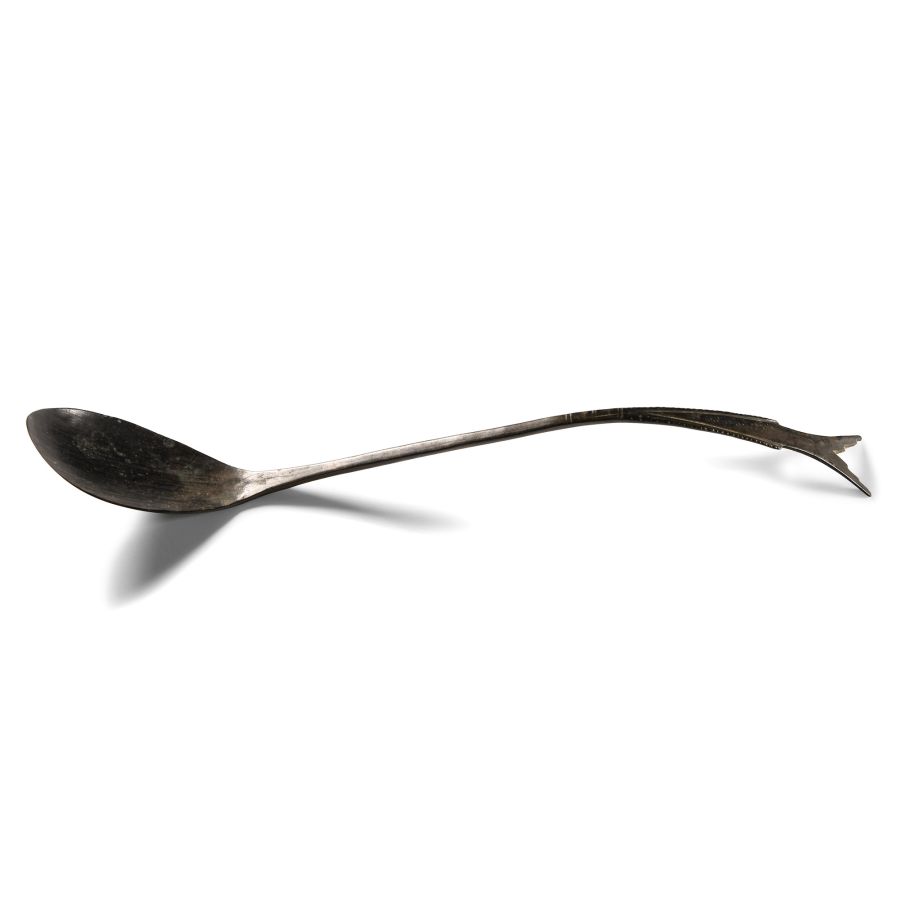
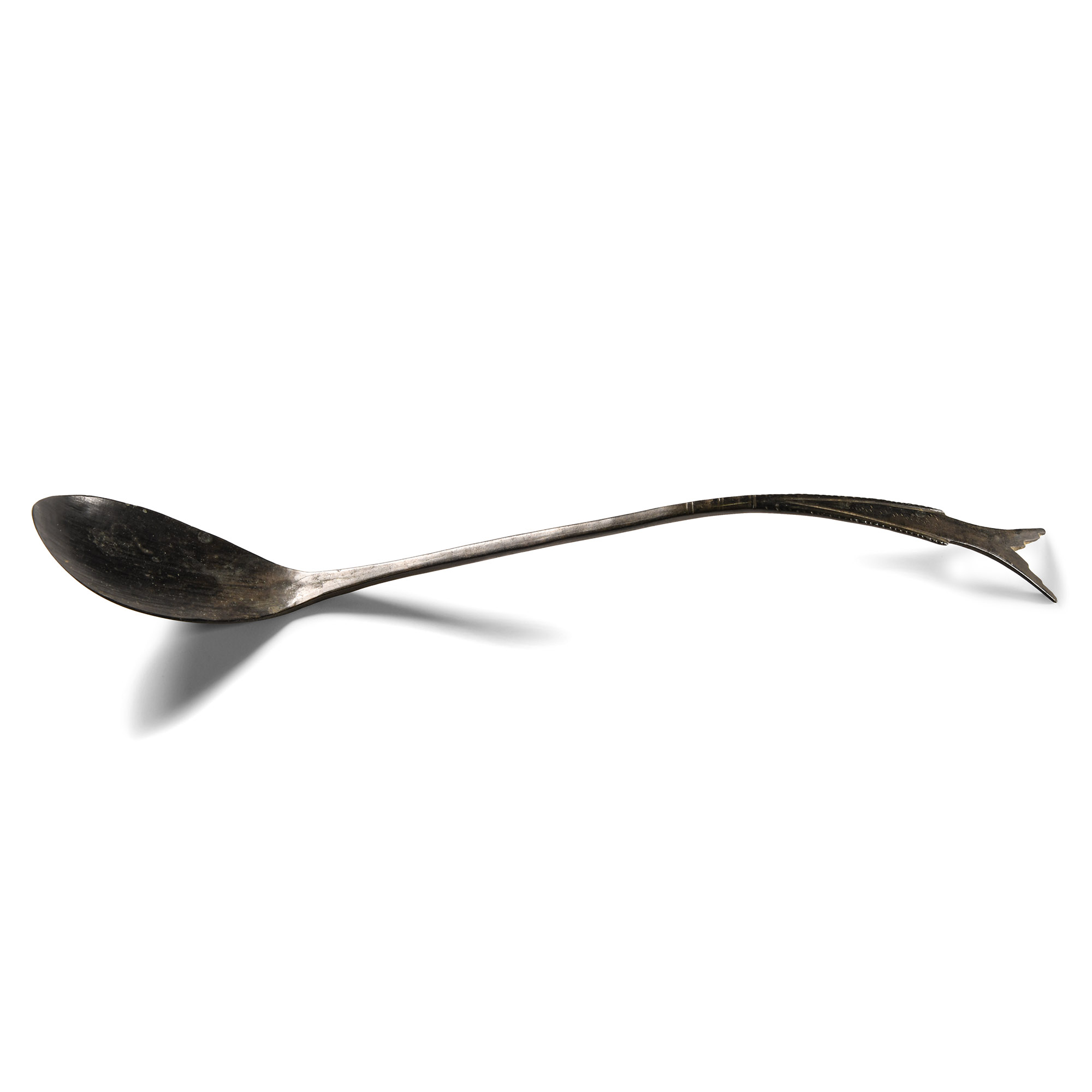
Roman Swallow-Tailed Bronze Spoon
CIRCA 1ST-3RD CENTURY A.D.
11 in. (48 grams, 28 cm).
With shallow lenticular bowl, swept handle, swallow-tail finial with notched edges. [No Reserve]
ProvenanceFrom a collection acquired on the UK art market from various auction houses and collections mostly before 2000.
From an important Cambridgeshire estate; thence by descent.
Cf. Riha, E. & Stern, W.B., Die Römischen Löffel aus Augst und Kaiseraugst, Forschungen in Augst 5, Augst, 1982, for discussion.
CONDITIONTimeLine Auctions follows a vetting process to ensure the authenticity and legality of all items, reinforcing our commitment to integrity and responsible trading. Each antiquity, antique, and coin lot undergoes thorough examination by a vetting committee of at least ten external specialists, professional trade association members, scientists, and archaeologists: Our Vetting Process
AUCTIONS:
TimeLine is a leading auction house specialising in antiquities, ancient art, collectables, natural history, coins, medals, and books. Our auctions offer museums, collectors, historians, and enthusiasts the opportunity to acquire unique and historically significant pieces.
-
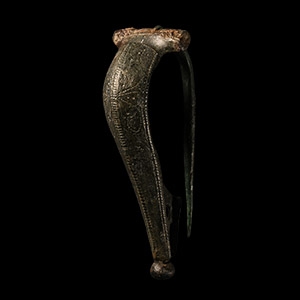
Roman 'Colchester Type' Silvered Bronze Bow Brooch with Vine Motif
1st century A.D.Sold for (Inc. bp): £65
With hinged pin; finely-executed pointille detailing to the bow, vinescroll motif and rouletting. 19.84 grams, 56 mm
Found Cambridgeshire, UK. -
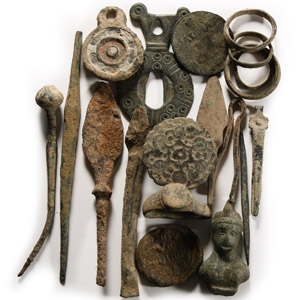
Roman and Later Bronze Artefact Collection
Mainly 1st-3rd century A.D.Sold for (Inc. bp): £104
Including bust of Victory pendant, tanged arrowhead, rosette belt slider, finger rings and other items. 145 grams total, 17-99 mm
Ex Nigel Mills, London, UK. -
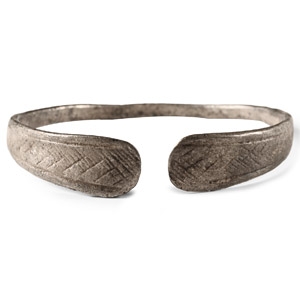
Roman Silver Armilla Bracelet with Hatched Paddle Terminals
2nd-3rd century A.D.Sold for (Inc. bp): £85
With slender round-section shank flaring to lobe terminals, panel of hatching to each lobe. 11.9 grams, 51 mm
Private collection, Arundel, West Sussex, UK, 1975-late 1990s.
