
Loading, please wait...
LOT 1152
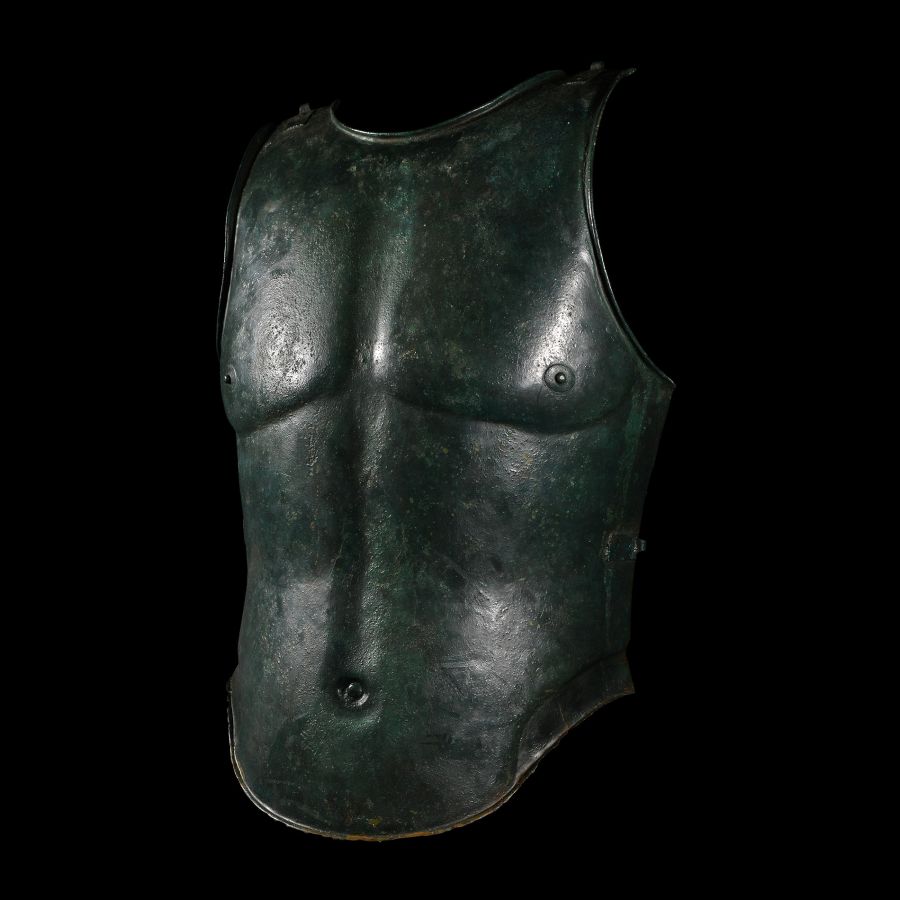
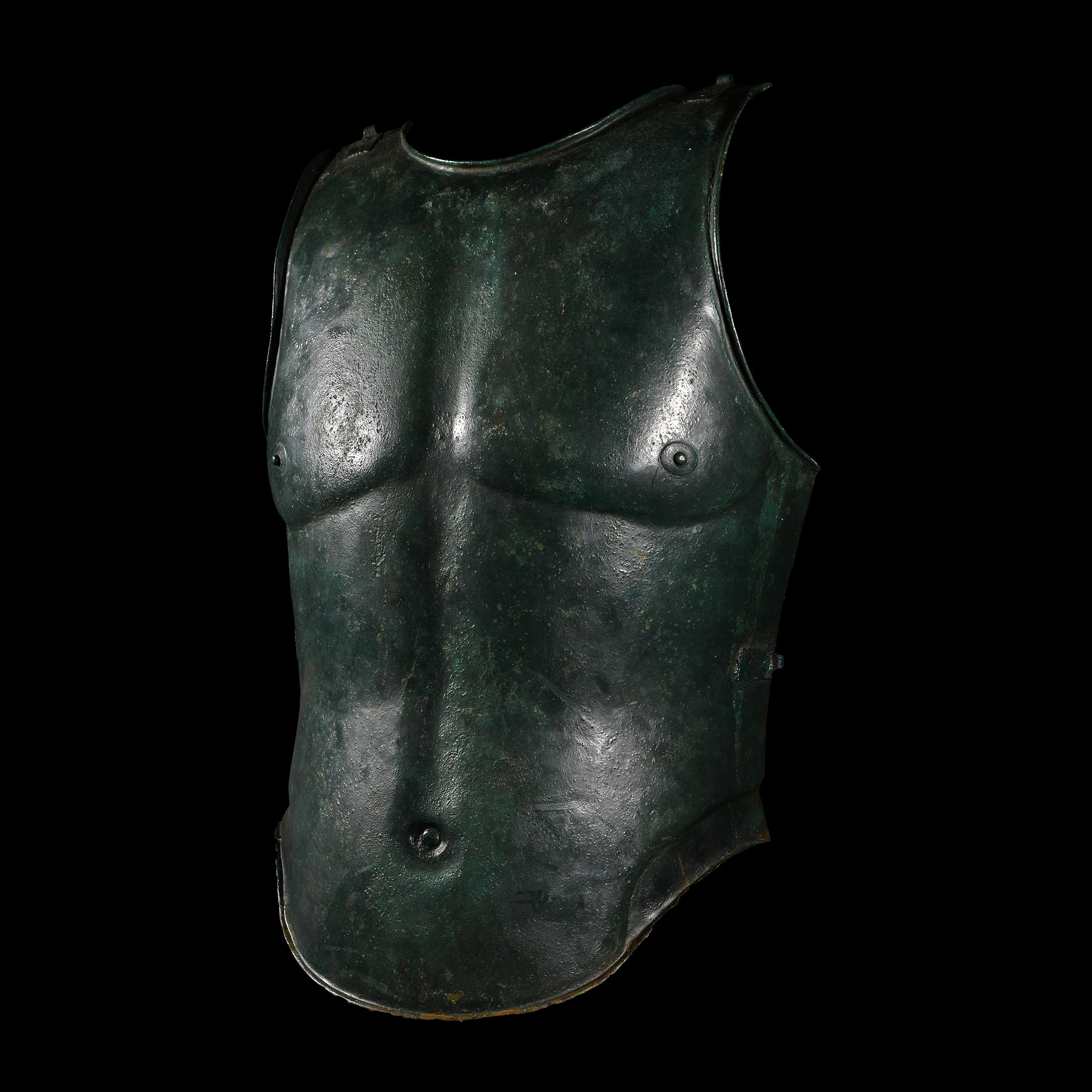
Roman Style Bronze Cuirass
20TH CENTURY A.D.
20 7/8 in. (1.49 kg, 53 cm high).
Modelling a muscular male torso with naturalistic anatomical detailing.
ProvenanceAcquired 1990s-early 2000s.
East Anglian private collection.
See Peterson, D., Fotografare la storia, I Legionari Romani, nelle fotoricostruzioni di Daniel Peterson (Photographing history, The Roman Legionaries, in Daniel Peterson's photoreconstructions), Parma, 1992, pp.7-9, for similar.
CONDITIONTimeLine Auctions follows a vetting process to ensure the authenticity and legality of all items, reinforcing our commitment to integrity and responsible trading. Each antiquity, antique, and coin lot undergoes thorough examination by a vetting committee of at least ten external specialists, professional trade association members, scientists, and archaeologists: Our Vetting Process
AUCTIONS:
TimeLine is a leading auction house specialising in antiquities, ancient art, collectables, natural history, coins, medals, and books. Our auctions offer museums, collectors, historians, and enthusiasts the opportunity to acquire unique and historically significant pieces.
-
Medieval Schiavonesca Type Iron Sword with Inlay
14th-15th century A.D.Sold for (Inc. bp): £2,600
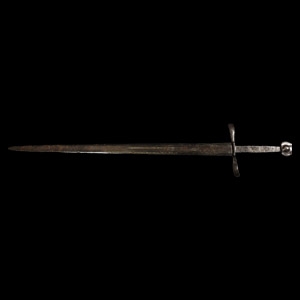
Comprising a broad, double-edged blade with rounded tip, shallow central fuller to the upper third of both sides; flat guard with stepped central panel, D-section arms formed in a horizontal S-curve, 'cat's head' truncated type pommel with an integral central boss to both faces; the tang with a sword-shaped stamp, the blade with an inlaid three-armed workshop mark and another stamp, including a V surmounted by a cross. 1.37 kg, 1.18 m
Restored and protected with a possible vertical suspension in acid solution, on the blade traces of delamination and flaking along the pattern-welds, some corrosion damages but in general very good condition.
From an English collection, acquired 1990s. The Kusmirek Collection, UK. This lot has been checked against the Interpol Database of stolen works of art and is accompanied by search certificate number no.11771-203963.
The Schiavonesca sword was used by Dalmatian mercenaries serving in the Venetian state armies, and were produced by the workshops of the Serenissima to which the marks probably belong. Many of these swords were produced in Dubrovnik, a Croatian city under the Venetian rule. Dr Aleksić mentions the swordsmith Radonja Vukotić, who made an agreement with blacksmith Andrija Miletin at the beginning of September 1436, to produce swords together in the following year. -
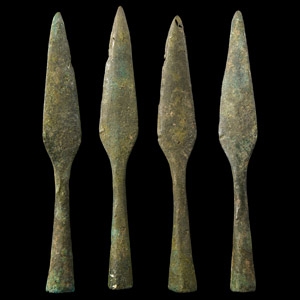
Scythian Bronze Arrowhead Group
5th-3rd century B.C.Sold for (Inc. bp): £208
Composed of four socketted lanceolate arrowheads. 64 grams total, 95-97 mm
Acquired on the EU art market around 2000. From the collection of a North American gentleman. -
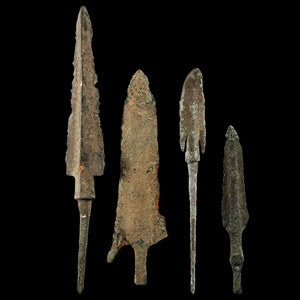
Luristan Bronze Arrowhead Group
2nd-1st millennium B.C.Sold for (Inc. bp): £13
Four tanged arrowheads of barbed and leaf-shaped types, including examples with pronounced midribs. 90 grams total, 8.7-14.5 cm
Ex G. White collection, 1990s.
