
Loading, please wait...


LOT 0102
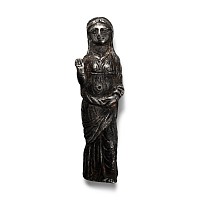
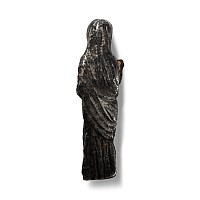
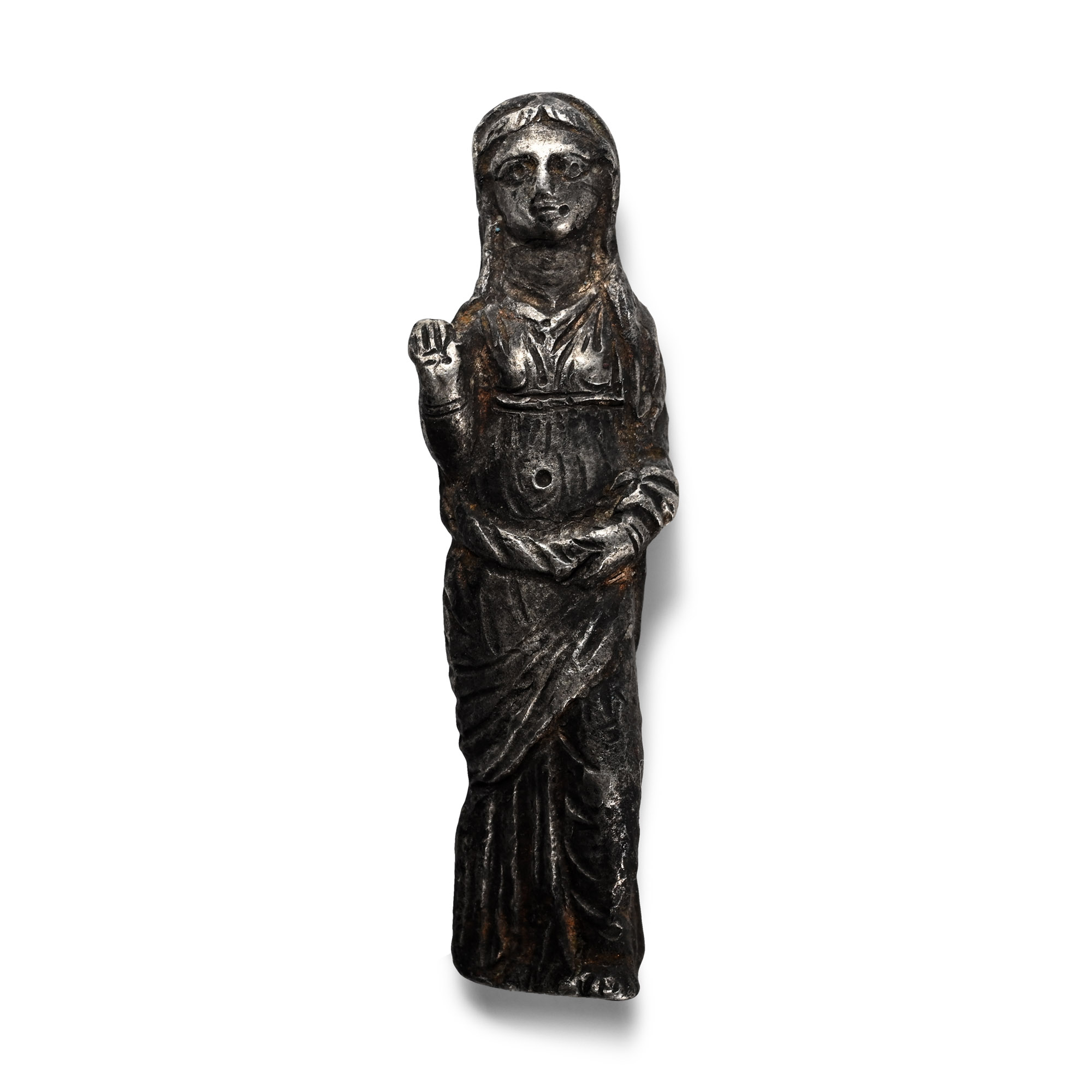
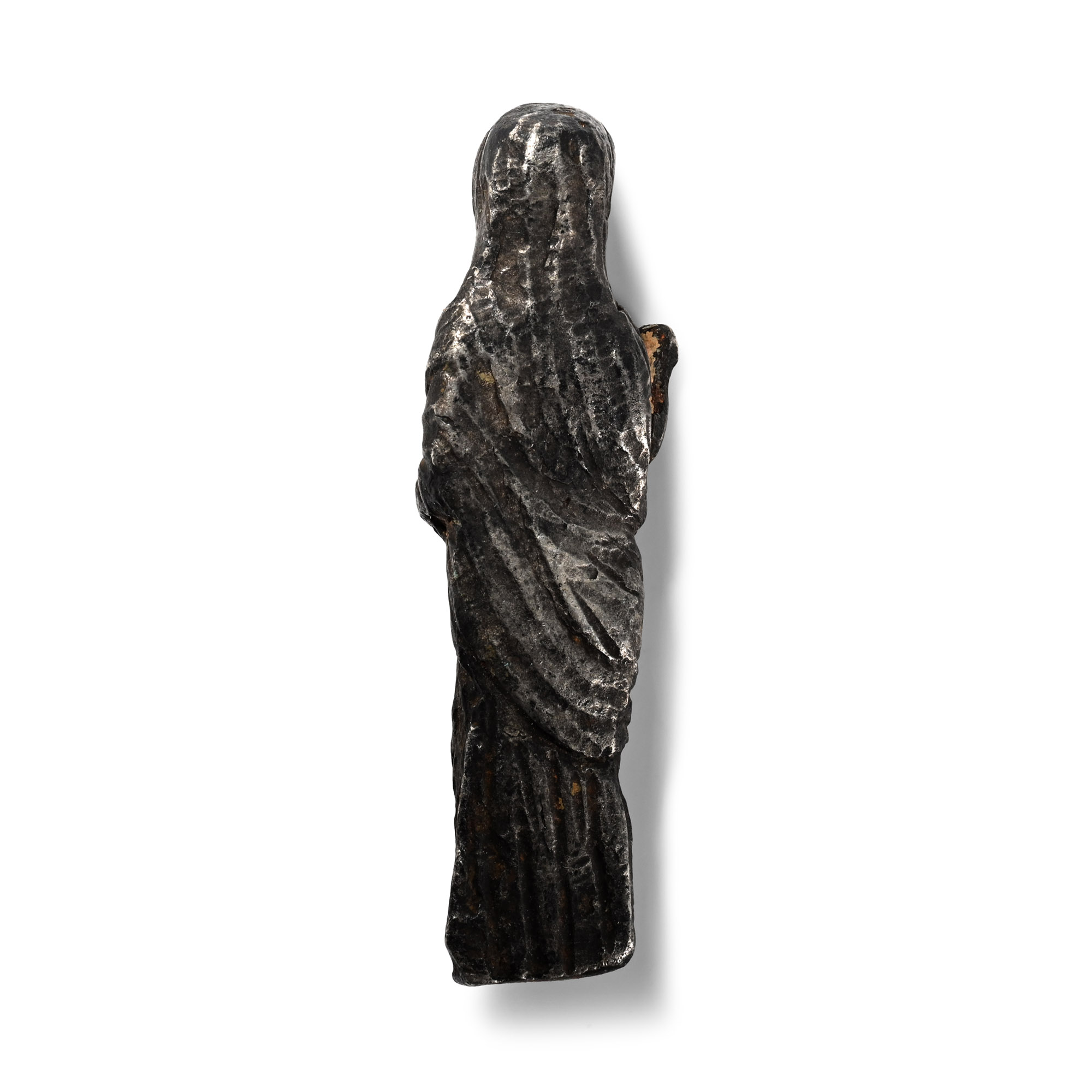
Roman Solid Silver Figure of a Goddess
1ST-3RD CENTURY A.D.
1 3/8 in. (11.8 grams, 41 mm).
Standing female wearing a loosely draped robe draped over her head, the hem gathered at her waist and held in her left hand, right hand raised in greeting; probably a priestess of Vesta.
ProvenanceAcquired in the mid 1980s-1990s.
Private collection, Switzerland, thence by descent.
Private collection, since the late 1990s.
This lot has been checked against the Interpol Database of stolen works of art and is accompanied by search certificate number no.12227-222180.
Cf. bronze statue of empress Julia Aquilia Severa, sometime priestess of Vesta and later wife to Emperor Elagabalus, dating from 220/222 AD, now in the National Archaeological Museum in Athens.
CONDITIONTimeLine Auctions follows a vetting process to ensure the authenticity and legality of all items, reinforcing our commitment to integrity and responsible trading. Each antiquity, antique, and coin lot undergoes thorough examination by a vetting committee of at least ten external specialists, professional trade association members, scientists, and archaeologists: Our Vetting Process
AUCTIONS:
TimeLine is a leading auction house specialising in antiquities, ancient art, collectables, natural history, coins, medals, and books. Our auctions offer museums, collectors, historians, and enthusiasts the opportunity to acquire unique and historically significant pieces.
LOT 0102
Roman Solid Silver Figure of a Goddess
Estimate £1,800 - 2,400€2,090 - 2,780 (for guidance only)$2,430 - 3,240 (for guidance only)
-

Large Roman Tinned Bronze Patera
1st century A.D.Estimate: £800 - 1,000 (‡+bp*)
Opening Bid: £444
With a deep bowl and flat-section handle with integral loop; shallow concentric grooves around the exterior of the neck, rolled rim, concentric rings to the underside; finished on a lathe; cracked and split. 903 grams, 33 cm wide
Acquired in Europe before 1993. Private collection, Europe. This lot has been checked against the Interpol Database of stolen works of art and is accompanied by search certificate number no.11788-206494.
In contrast to their elaborate counterparts, paterae such as this were likely carried as part of the standard kit of Roman soldiers, used as a general cooking and eating utensil. The regular heap up (sarcina) of the legionaries is well represented on the reliefs of Trajan's column. It was composed of a T stake (furca), to which a linen bag (sacculus) was hung, as well as the leather haversack for 15-20 days supplies (trinum nundinum) and personal effects, a pot (ollula), a cup (patera), and a basket for work on the fields. -
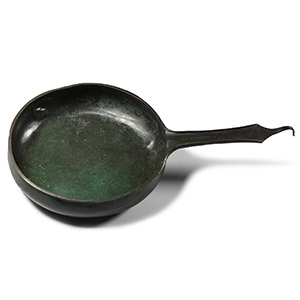
Roman Bronze Pan with Handle
1st century B.C.-1st century A.D.Estimate: £1,000 - 1,400 (+bp*)
Opening Bid: £535
The bowl with a wide flat bottom and convex sides; the inside with incised concentric circles; flat handle with raised edges and hooked finial for suspension. 483 grams, 39.5 cm
German private collection, Mr O., collecting in the 1950s-1960s; thence by descent. with Bonhams, London, 7 July 2016, lot 191. Accompanied by an academic report by Dr Raffaele D’Amato. This lot has been checked against the Interpol Database of stolen works of art and is accompanied by search certificate number no.11735-201189.
This vessel was part of Roman and provincial bronze instrumentum domesticum, i.e. culinary or domestic utility ware. Such cooking vessels are rare: some are found in central and northern Italy, in Pannonia, Germany and in Britain. The Aylesford Pan, today in the British Museum (inventory no.1886.1112.1), is one of the most important finds. This specimen (Eggers type 130), probably pre-Caesarian or Caesarian, was found in a grave together with a Celtic bucket and a jug. -
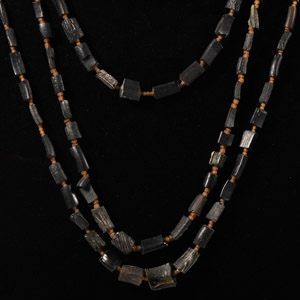
Roman Amber and Black Glass Bead Necklace Group
1st-4th century A.D. and laterSold for (Inc. bp): £72
Comprising three necklaces restrung from beads of drilled ancient glass bangle fragments. 40 grams total, 67-68 cm
UK gallery, early 2000s.
