Loading, please wait...

Roman Silver Wine Strainer Roman Silver Wine Strainer Roman Silver Wine Strainer
Use mousewheel to zoom in and out, click to enlarge
Details

LOT 0741

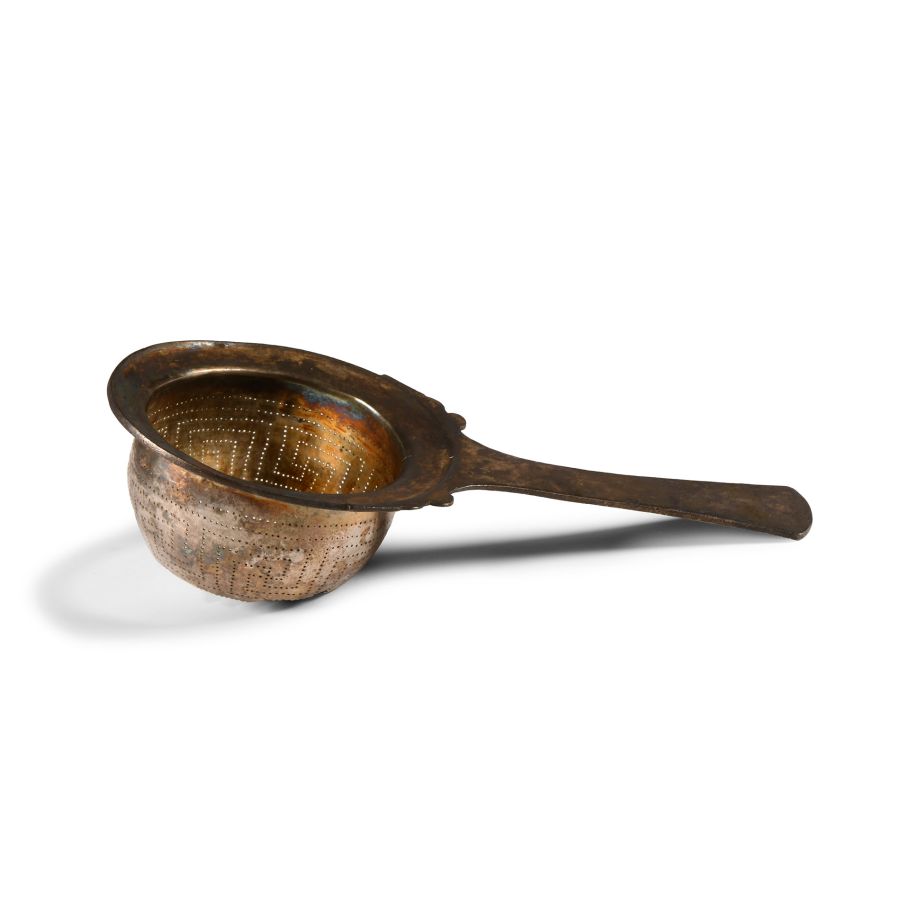
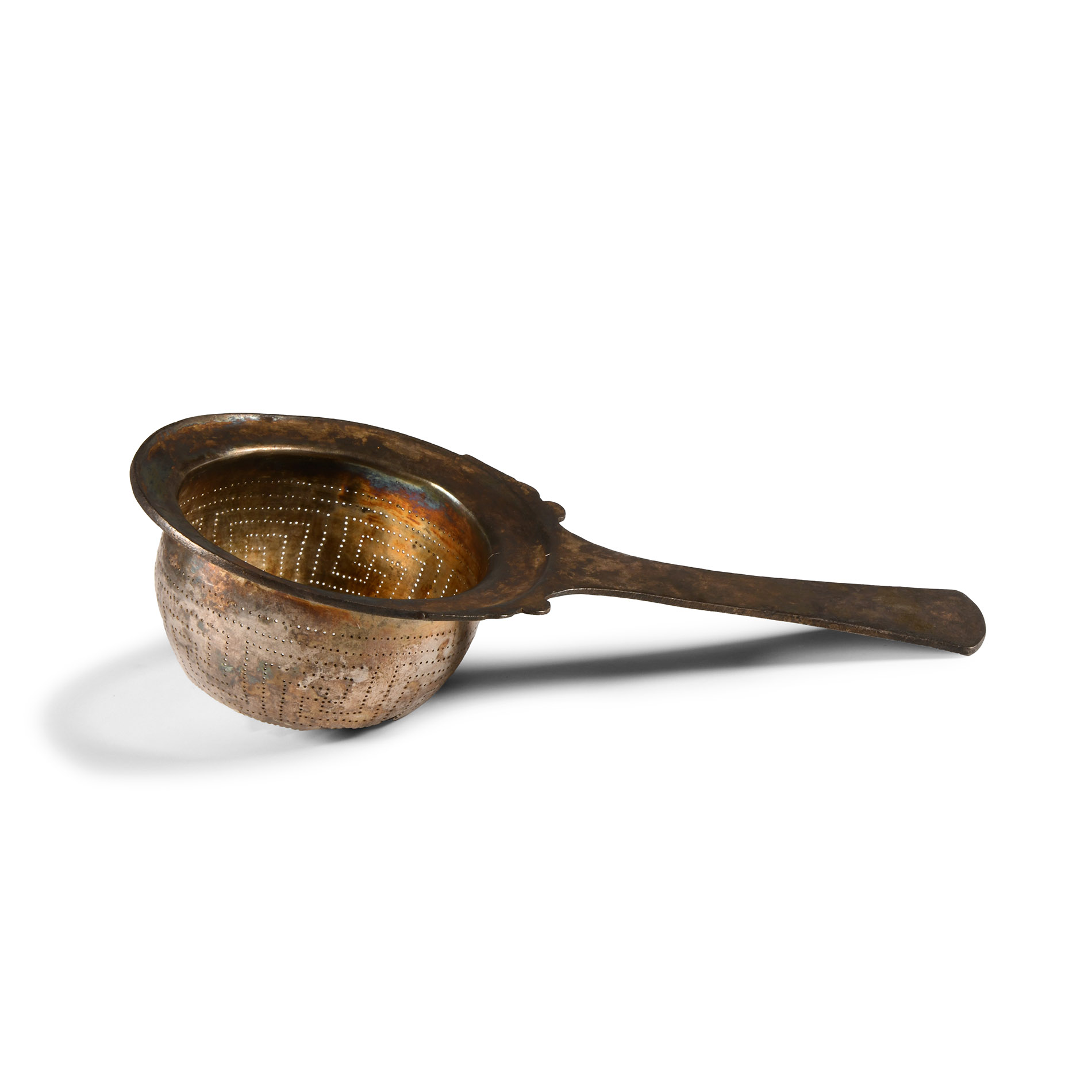
Roman Silver Wine Strainer

CIRCA 3RD CENTURY A.D.

7 in. (100 grams, 17.7 cm).

Barrel-shaped body with flared rim, stepped rear plaque and flat-section handle; the body with pierced meander pattern; fragmentary base with scrolled tendrils and other patterns.

Provenance

Acquired 1990s-early 2000s.
East Anglian private collection.
Property of a Essex gentleman.

Literature

Cf. similar item in the British Museum, London, under accession no.1878,1012.24.

CONDITION
VETTING:

TimeLine Auctions follows a vetting process to ensure the authenticity and legality of all items, reinforcing our commitment to integrity and responsible trading. Each antiquity, antique, and coin lot undergoes thorough examination by a vetting committee of at least ten external specialists, professional trade association members, scientists, and archaeologists: Our Vetting Process


AUCTIONS:

TimeLine is a leading auction house specialising in antiquities, ancient art, collectables, natural history, coins, medals, and books. Our auctions offer museums, collectors, historians, and enthusiasts the opportunity to acquire unique and historically significant pieces.

Live Bidding

LOT 0741

Roman Silver Wine Strainer

Sold for (Inc. bp): £975

Print page

RELATED LOTS
  • Roman Bronze Fortuna Statuette
    Roman Bronze Fortuna Statuette
    Circa 2nd-3rd century A.D.

    Sold for (Inc. bp): £143

    The goddess standing wearing a knee-length robe, bearing a cornucopia on her left arm. 89 grams total, 87 mm including stand


    From a collection acquired on the UK art market from various auction houses and collections mostly before 2000. From an important Cambridgeshire estate; thence by descent.

    Statuettes of Fortuna, the goddess of Chance, were evidently popular during the Roman Imperial times judging from the large number that have been found, and with the advent of the cult of Isis inside the Roman Empire the two divinities were identified as a single goddess.

    Lot Details

  • Roman Gold Ring with Garnet Cabochon
    Roman Gold Ring with Garnet Cabochon
    Circa 2nd-3rd century A.D.

    Estimate: £3,000 - 4,000 (+bp*)

    Opening Bid: £1,600

    Comprising a keeled hoop forked at the shoulders to form two elegant scrolls supporting the raised bezel, decorative grooves framing the garnet cabochon. 8.16 grams, 23.85 mm overall, 19.37 mm internal diameter (approximate size British N, USA 6 1/2, Europe 13.72, Japan 13)


    Acquired from London galleries during the 1990s. From the jewellery collection of a London, UK, gentleman. This lot has been checked against the Interpol Database of stolen works of art and is accompanied by search certificate no.12114-214295.

    The type of ring seems to date (with the volutes on the shoulders) to the late 2nd-early 3rd century A.D., although the model is certainly derived from the Hellenistic world. The use of carnelian and garnet was abundant in Hellenistic and Roman rings, and the style of the rings continued without change in the Roman Hellenised east.

    Lot Details

  • Large Roman Tinned Bronze Patera
    Large Roman Tinned Bronze Patera
    1st century A.D.

    Estimate: £1,000 - 1,400 (‡+bp*)

    Opening Bid: £500

    With a deep bowl and flat-section handle with integral loop; shallow concentric grooves around the exterior of the neck, rolled rim, concentric rings to the underside; finished on a lathe; cracked and split. 903 grams, 33 cm wide


    Acquired in Europe before 1993. Private collection, Europe. This lot has been checked against the Interpol Database of stolen works of art and is accompanied by search certificate number no.11788-206494.

    In contrast to their elaborate counterparts, paterae such as this were likely carried as part of the standard kit of Roman soldiers, used as a general cooking and eating utensil. The regular heap up (sarcina) of the legionaries is well represented on the reliefs of Trajan's column. It was composed of a T stake (furca), to which a linen bag (sacculus) was hung, as well as the leather haversack for 15-20 days supplies (trinum nundinum) and personal effects, a pot (ollula), a cup (patera), and a basket for work on the fields.

    Lot Details

Stay up-to-date with the latest from TimeLine Auctions by joining our mailing list