
Loading, please wait...
LOT 0863
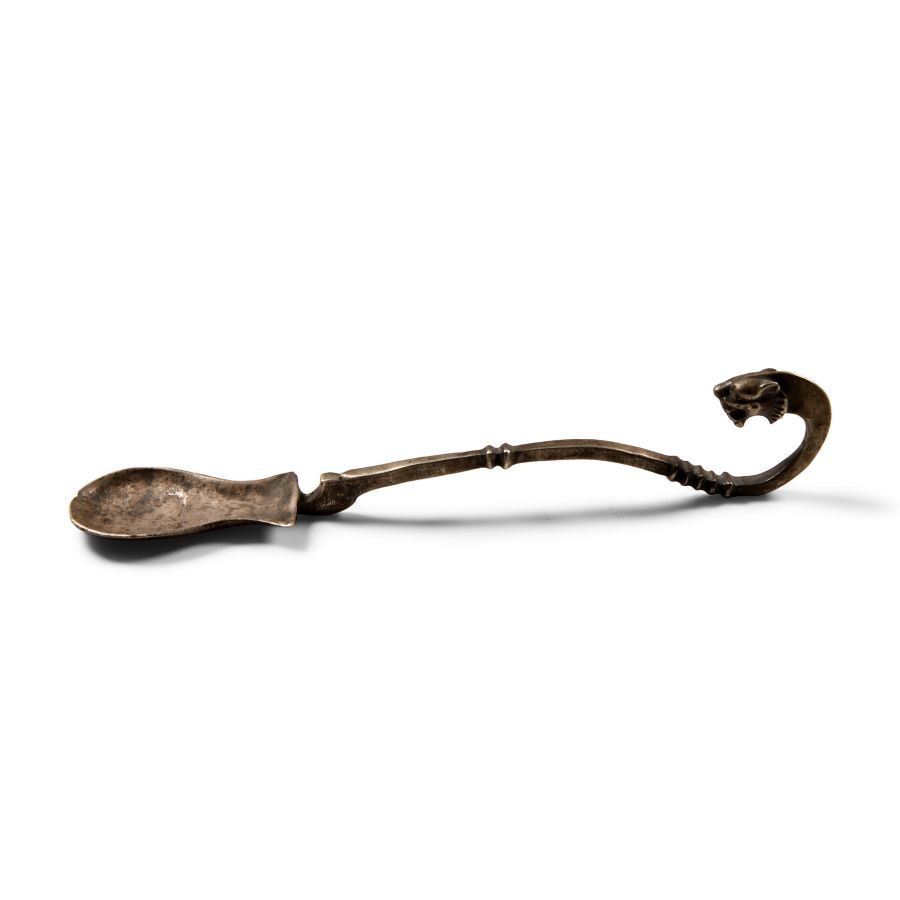
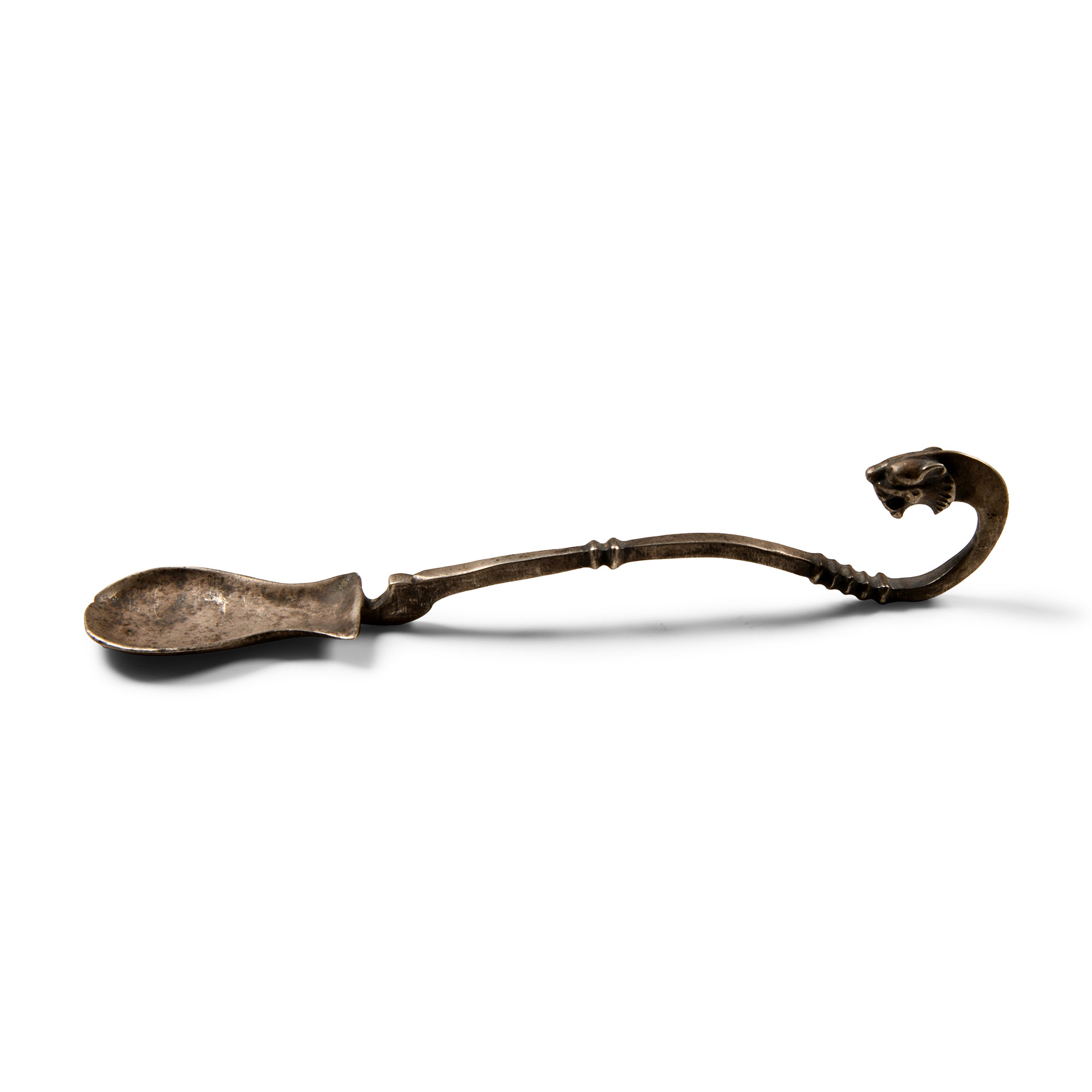
Roman Silver Spoon with Lion-Head Handle
2ND-4TH CENTURY A.D.
5 1/4 in. (21.1 grams, 13.3 cm).
Comprising a shallow violin-shaped bowl, swan neck bolster, square-section stem with baluster and collars, swept curve; the final formed as a lion's head with pricked ears, pellet eyes and mouth open revealing teeth.
ProvenanceEx German art market, 2000s.
Acquired from an EU collector living in London.
From the collection of Surrey, UK, gentleman.
Cf. Riha, E. & Stern, W.B., Die Römischen Löffel aus Augst und Kaiseraugst, Basel, 1982, items 218-221, for type.
CONDITIONTimeLine Auctions follows a vetting process to ensure the authenticity and legality of all items, reinforcing our commitment to integrity and responsible trading. Each antiquity, antique, and coin lot undergoes thorough examination by a vetting committee of at least ten external specialists, professional trade association members, scientists, and archaeologists: Our Vetting Process
AUCTIONS:
TimeLine is a leading auction house specialising in antiquities, ancient art, collectables, natural history, coins, medals, and books. Our auctions offer museums, collectors, historians, and enthusiasts the opportunity to acquire unique and historically significant pieces.
-
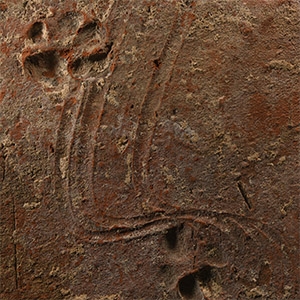
Romano-British 'Lympne Castle Roman Fort' Terracotta Tile with Roman Dog Pawprints
3rd-4th century A.D.Sold for (Inc. bp): £468
Substantial tegula with pawprints from a dog; with old collector's note. 3.28 kg, 23.5 x 24 cm
Found Lympne Castle, Kent, UK. From the collection of a late East Anglian teacher and antiquarian who retired to the Isle of Wight, UK. He amassed a large collection of objects between the 1960s-1980s. Accompanied by an original old collection display card.
Lympne Castle was built close to the former Roman fort of Portus Lemanis, incorporating curated elements from the ruins of the fort. The Roman structure formed part of the Litus Saxonicum ('Saxon Shore') a series of coastal fortifications erected in the 3rd century to deter raiding from the coastlands across the North sea. -
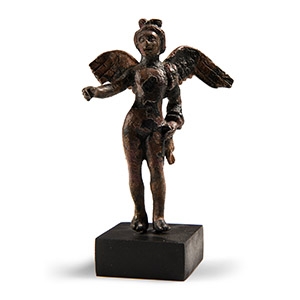
Roman Bronze Statuette of the Goddess Eos
2nd-3rd century A.D.Sold for (Inc. bp): £546
Modelled in the round, Eos (The Dawn) standing nude with left leg slightly flexed; the head with finely detailed face and hair dressed in a chignon; spread wings to the rear with feather detailing; left arm bent and hand resting on the hip with mantle wound about the shoulder and wrist; right arm extended and hand modelled open to accept an attribute; mounted on a custom-made display stand. 150 grams total, 11.2 cm including stand
From a collection acquired on the UK art market from various auction houses and collections mostly before 2000. From an important Cambridgeshire estate; thence by descent.
Eos, the ancient Greek goddess of the dawn, was perhaps the most resplendent of all the beings in the Greek pantheon. With the brilliant dye of saffron as her colour, she was also associated with roses, which also embody the glowing hues of the dawn. -
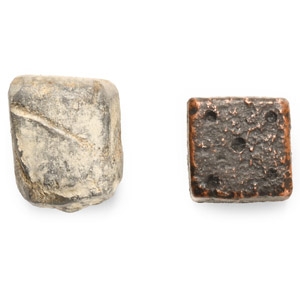
Roman 'Yorkshire' Bronze and Lead Gaming Dice Group
2nd-4th century A.D.Sold for (Inc. bp): £78
Comprising one cuboid dice with markings disposed 1:6, 2:5, 3:4; one rectangular block with sprue to one end, surface abraded. 36.9 grams total, 12-16 mm
Found whilst searching with a metal detector in Yorkshire, UK.
