
Loading, please wait...
LOT 0843
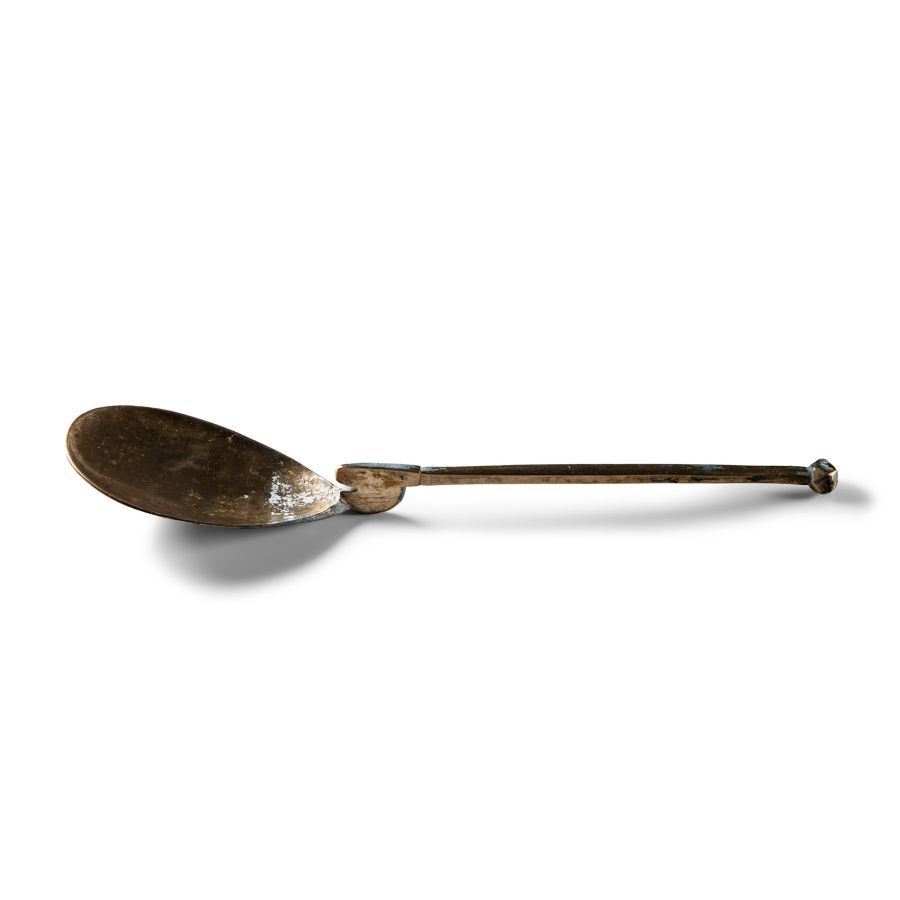
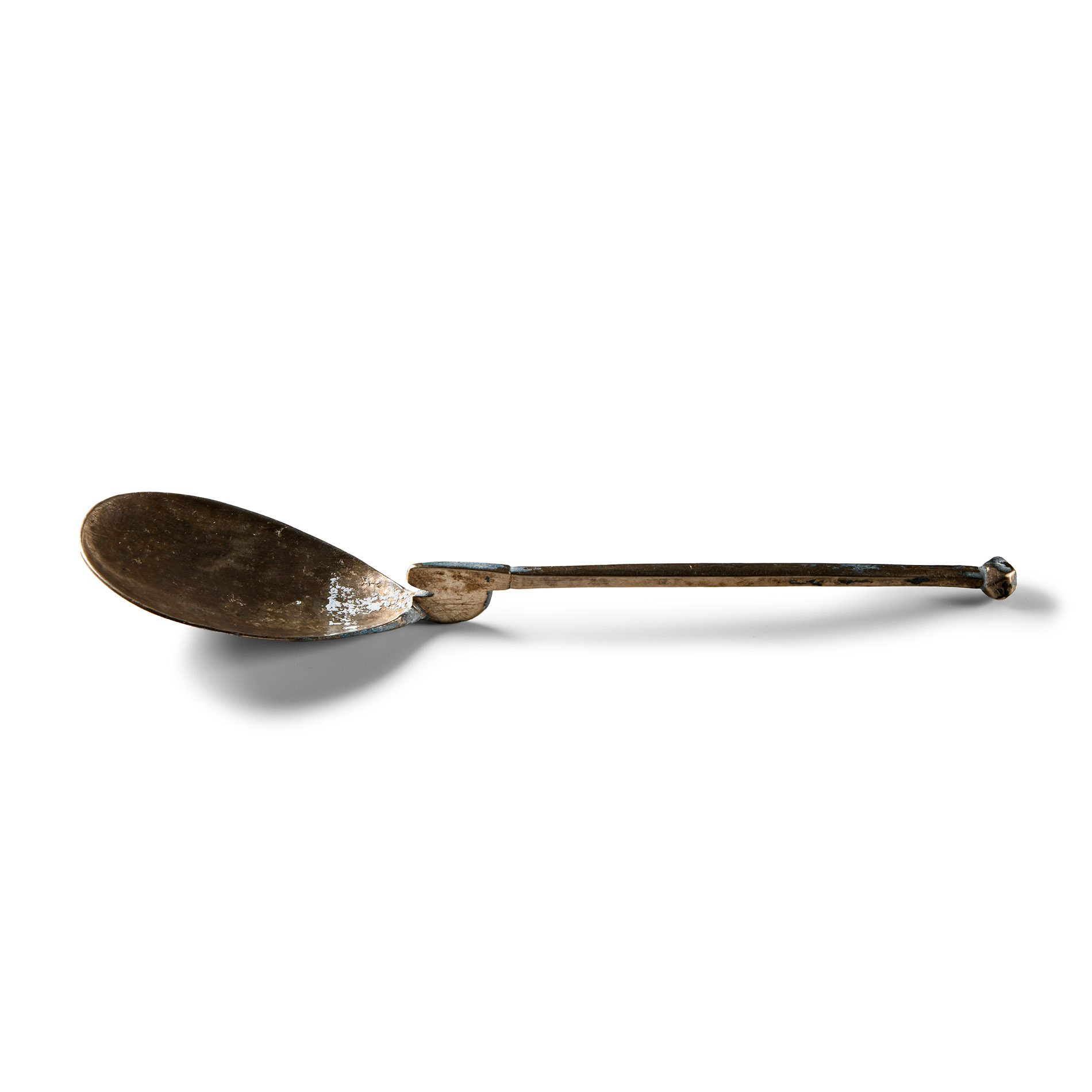
Roman Silver Spoon with Handle
5TH-6TH CENTURY A.D.
7 3/8 in. (39 grams, 18.8 cm).
Shallow piriform bowl attached to a stepped baluster, square-section handle with knop finial.
ProvenanceEx London, UK, gallery, 1971-early 2000s.
LiteratureCf. Shelton, K.J., The Esquiline Treasure, London, 1981, item 27, for type.
FootnotesCochlearia like this one have been discovered in treasure hoards. They were used in Christian times for administration of the Holy Communion. The absence of Christian symbolism or of a Christian inscription on this spoon might suggest that it dates from a pre-Christian era, or that its owner/commissioner was pagan, or simply that this spoon was intended for domestic use.
CONDITIONTimeLine Auctions follows a vetting process to ensure the authenticity and legality of all items, reinforcing our commitment to integrity and responsible trading. Each antiquity, antique, and coin lot undergoes thorough examination by a vetting committee of at least ten external specialists, professional trade association members, scientists, and archaeologists: Our Vetting Process
AUCTIONS:
TimeLine is a leading auction house specialising in antiquities, ancient art, collectables, natural history, coins, medals, and books. Our auctions offer museums, collectors, historians, and enthusiasts the opportunity to acquire unique and historically significant pieces.
LOT 0843
Roman Silver Spoon with Handle
Estimate £400 - 600€460 - 700 (for guidance only)$540 - 810 (for guidance only)
-
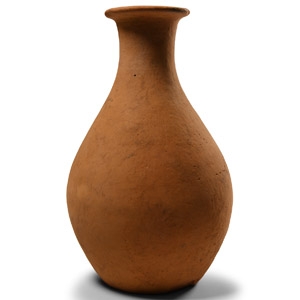
Roman Terracotta Bottle
1st-4th century A.D.Sold for (Inc. bp): £78
Piriform in profile with broad flared rim to the mouth; chip to equator. 432 grams, 18.5 cm
Acquired 1980-2015. Ex Abelita family collection. -
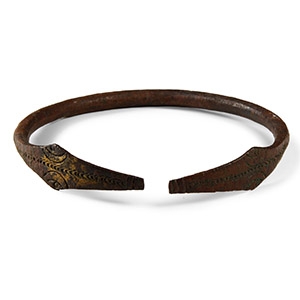
Roman Gilt Bronze Snake-Headed Bracelet
1st-4th century A.D.Sold for (Inc. bp): £104
Round-section shank and lozenge-shaped finials with serpent detailing. 24.6 grams, 74 mm
From a collection acquired on the UK art market from various auction houses and collections mostly before 2000. From an important Cambridgeshire estate; thence by descent. -
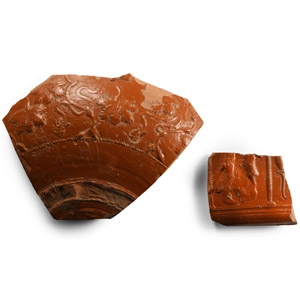
Romano-British 'Moorgate' Samian Ware Sherd Group
1st century A.D.Sold for (Inc. bp): £26
Two fragments of burnished ceramic bowl, the larger with label reading 'Roman Samian / Moorgate Court / London / March 1928'; the smaller ''Roman Samian / from Moorgate St. London / Jan. 1930'. 115 grams total, 4.9-10 cm
Found Moorgate, London, UK, 1928-1930. From the collection of a late East Anglian teacher and antiquarian who retired to the Isle of Wight in Hampshire, UK. He amassed a large collection of objects between the 1960s-1980s.
