
Loading, please wait...
LOT 0722
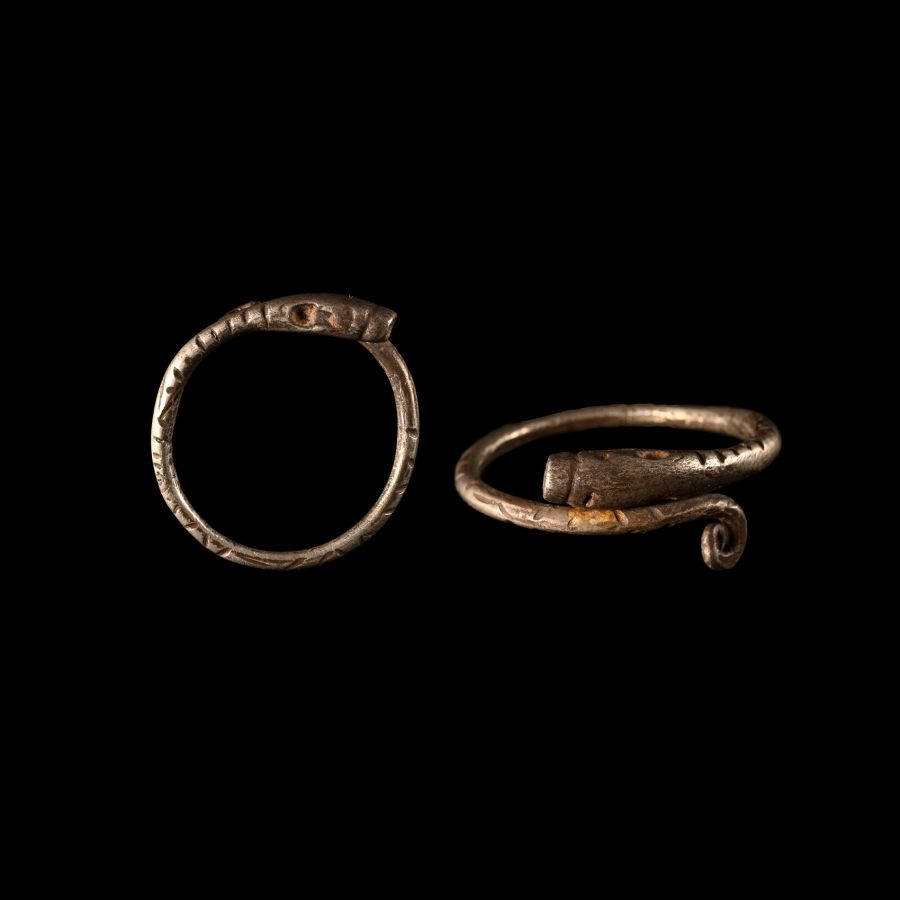
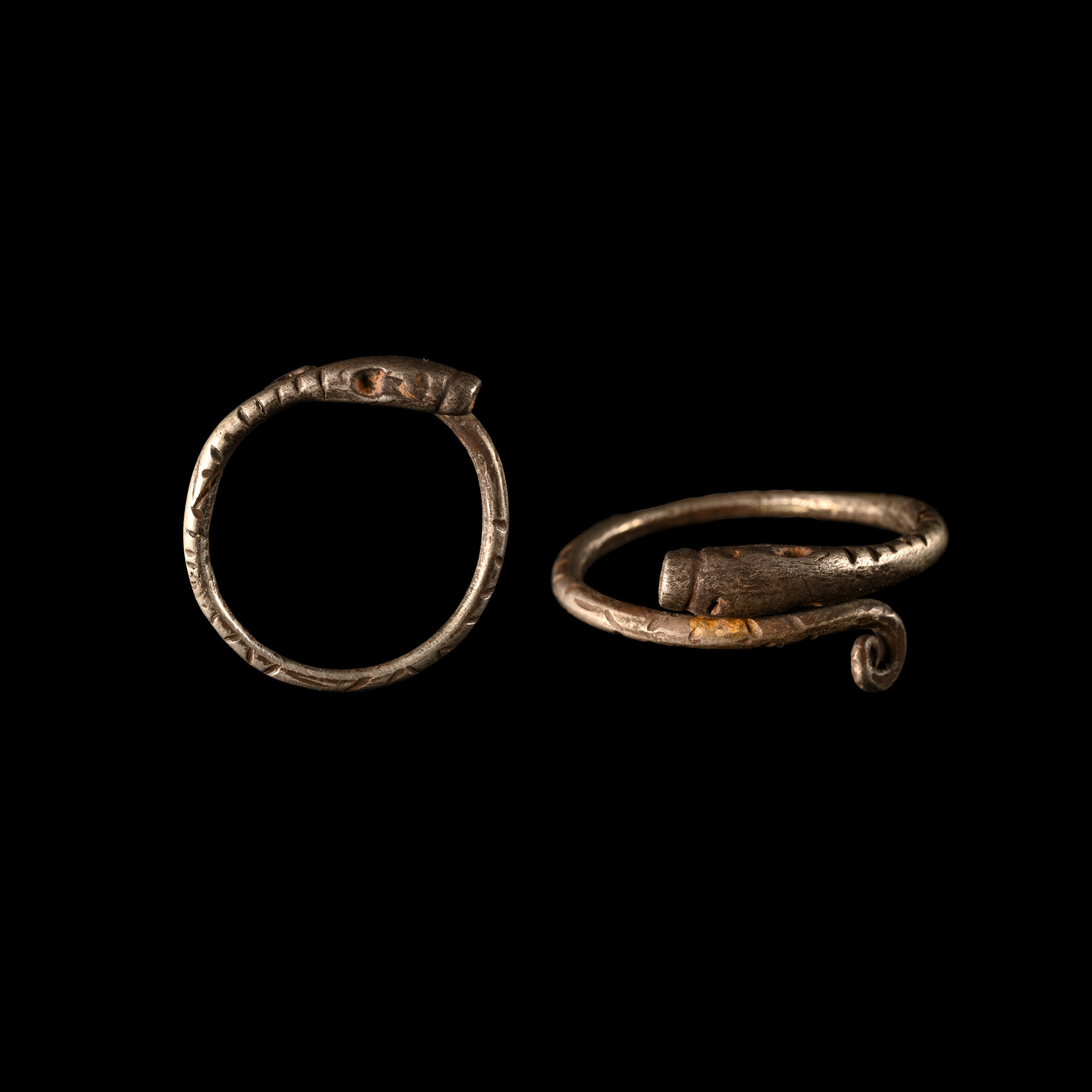
Roman Silver Snake Ring
1ST-2ND CENTURY A.D.
3/4 in. (3.28 grams, 23.25mm overall, 19.74mm internal diameter (approximate size British T, USA 9 1/2, Europe 21.26, Japan 20)).
Formed as a coiled snake with curved tail, hatched lines to the body and stylised facial features. [No Reserve]
ProvenancePrivate collection, UK; formed in the 1980s.
Property of a Shropshire private collector.
TimeLine Auctions follows a vetting process to ensure the authenticity and legality of all items, reinforcing our commitment to integrity and responsible trading. Each antiquity, antique, and coin lot undergoes thorough examination by a vetting committee of at least ten external specialists, professional trade association members, scientists, and archaeologists: Our Vetting Process
AUCTIONS:
TimeLine is a leading auction house specialising in antiquities, ancient art, collectables, natural history, coins, medals, and books. Our auctions offer museums, collectors, historians, and enthusiasts the opportunity to acquire unique and historically significant pieces.
-
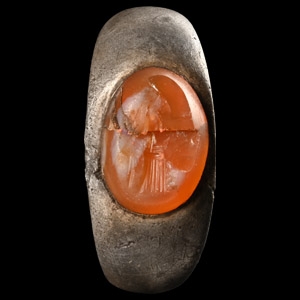
Roman Silver Ring with Bust Gemstone
2nd-3rd century A.D.Sold for (Inc. bp): £572
With broad tapering plaque, inset carnelian intaglio of a profile bust; intaglio repaired. 8.92 grams, 25.80 mm overall, 20.28 mm internal diameter (approximate size British G, USA 3 1/2, Europe 4.92, Japan 4)
Acquired on the London art market in the late 1980s-1990s. From the family collection of an East London, UK, gentleman. -
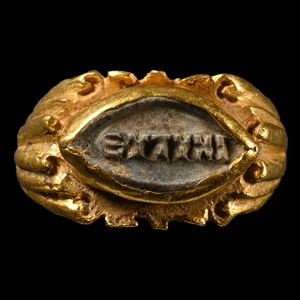
Roman Gold 'Good Fortune' Cameo Ring
3rd century A.D.Sold for (Inc. bp): £2,106
Composed of an angular hoop with sloping, fluted shoulders; raised lenticular bezel set with glass paste, raised Greek inscription 'EYTYKI', translating to 'good fortune', a wish for good luck for the bearer. 6.21 grams, 19.03 mm overall, 11.88 x 15.57 mm internal diameter (approximate size British D 1/2, USA 2, Europe 1.78, Japan 1)
From the late Alison Barker collection, 1970-1990. Accompanied by a previous catalogue information slip.
The ring belongs to the type III, variant 2 of the Ruseva-Slokoska classification. They are characterised by a flat band widening towards the trapezium-shaped oblique shoulders, cut to resemble leaves, shaped with vertical grooves and hatches at the extremities. The augural inscription 'EYTYKI' was usual in the augural rings, given for a donative or in occasion of the passage from puberty to adolescence. -
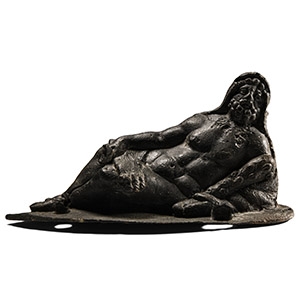
Roman Bronze Reclining Hercules Statuette
2nd-3rd century A.D.Sold for (Inc. bp): £4,160
Hollow-formed figure of Hercules resting with his weight on his left arm, cradling his club; lionskin mantle drawn over his head and covering his shoulders, back and thighs; right arm resting on his right thigh, holding a corner of the mantle; scaphoid base with attachment holes; mounted on a custom-made display stand. 4.28 kg total, 25 cm wide including stand
From a collection acquired on the UK art market from various auction houses and collections mostly before 2000. From an important Cambridgeshire estate; thence by descent.
This bronze was probably a chariot decoration. Hercules is represented here in mature age, bearded and with a cap and body covered by the skin of the Nemean Lion, killed in the first of his labours. This kind of image of Hercules was mainly widespread in the second to third century A.D., when emperors like Commodus and Maximianus Herculius identified themselves as the new Hercules at the top of the Roman state.
