
Loading, please wait...
LOT 0794
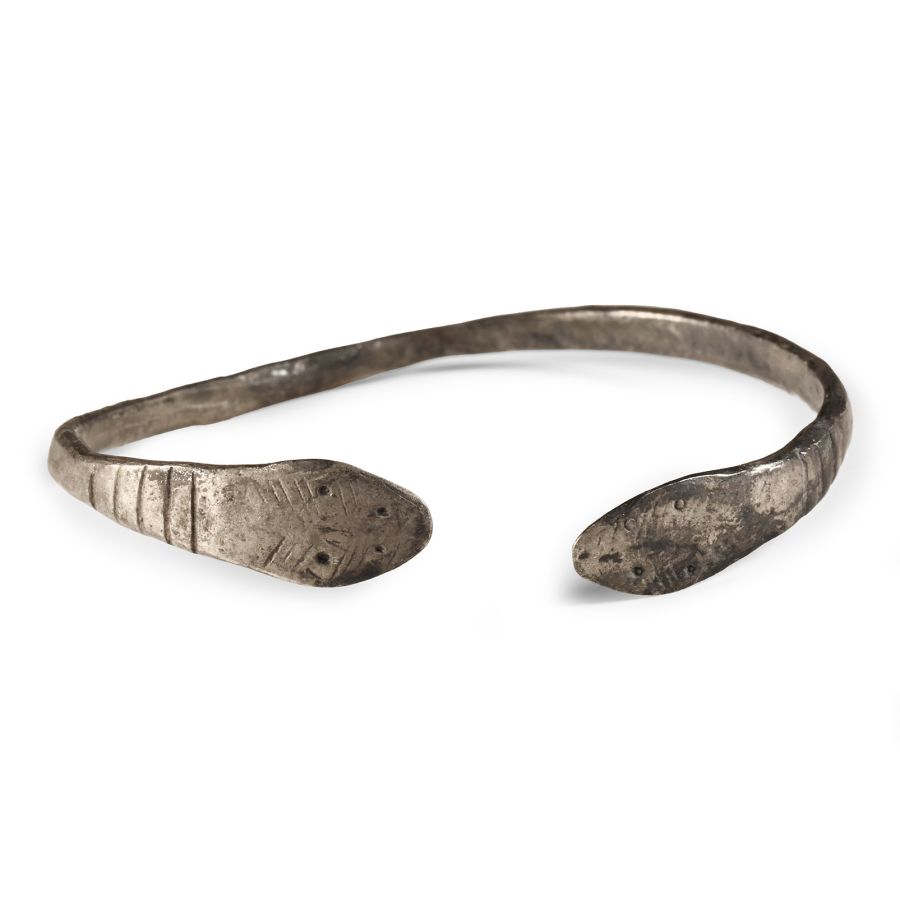
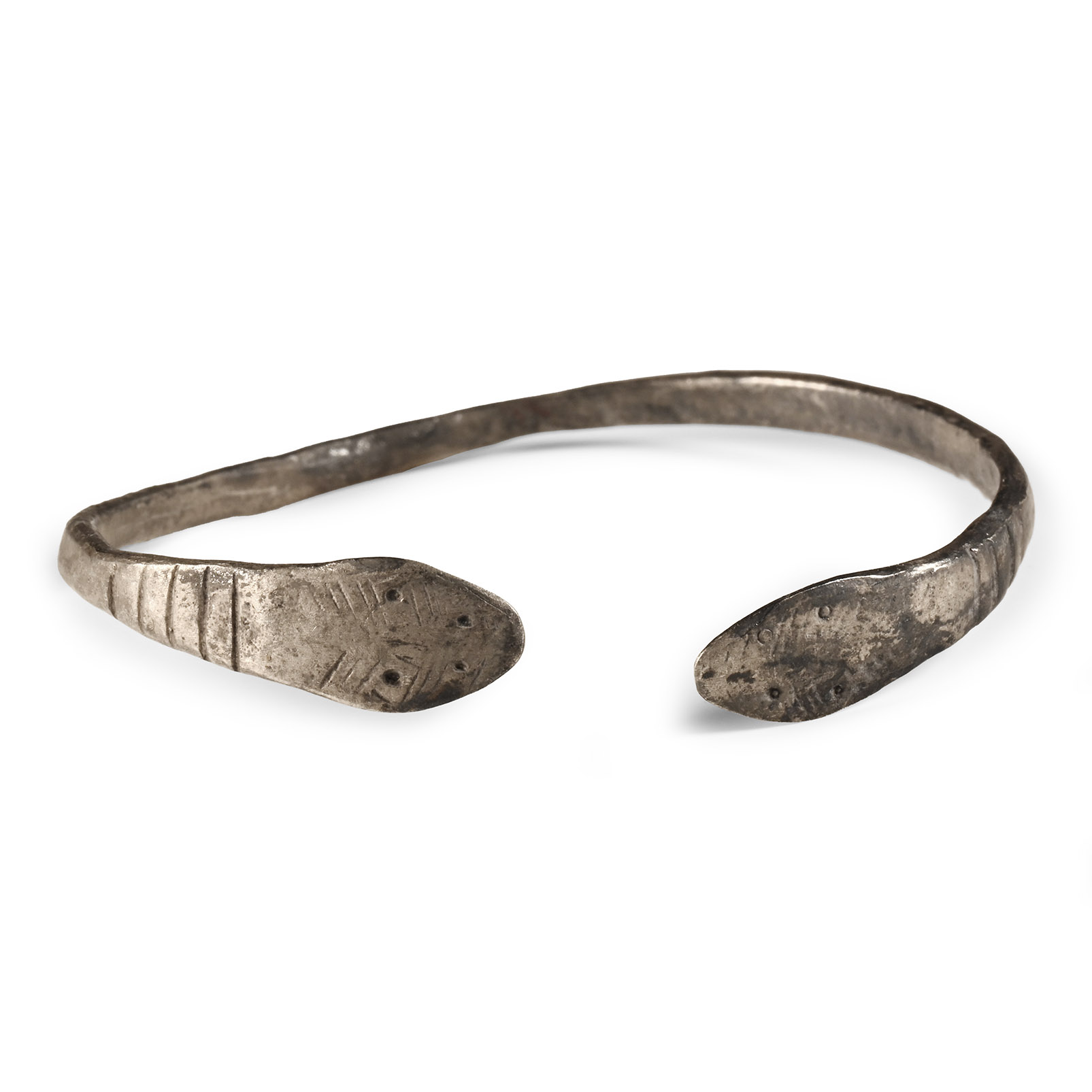
Roman Silver Snake Head Bracelet
2ND-3RD CENTURY A.D.
2 in. (6.84 grams, 50 mm).
With narrow D-section shank and lobe terminals with punched snake-head detailing.
ProvenanceEx German art market, 2000s.
Acquired from an EU collector living in London.
From the collection of Surrey, UK, gentleman.
Cf. Ruseva-Slokoska, L., Roman Jewellery, Sofia, 1991, item 161, for similar.
CONDITIONTimeLine Auctions follows a vetting process to ensure the authenticity and legality of all items, reinforcing our commitment to integrity and responsible trading. Each antiquity, antique, and coin lot undergoes thorough examination by a vetting committee of at least ten external specialists, professional trade association members, scientists, and archaeologists: Our Vetting Process
AUCTIONS:
TimeLine is a leading auction house specialising in antiquities, ancient art, collectables, natural history, coins, medals, and books. Our auctions offer museums, collectors, historians, and enthusiasts the opportunity to acquire unique and historically significant pieces.
-
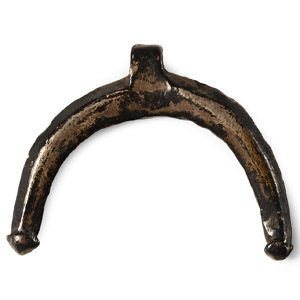
Roman Silver Lunar Pendant
1st-4rd century A.D.Sold for (Inc. bp): £59
Square-section crescent with suspension loop to the apex, bulb finials. 2.84 grams, 27 mm
From the collection of C. Sullivan, London, UK, 1990s. -
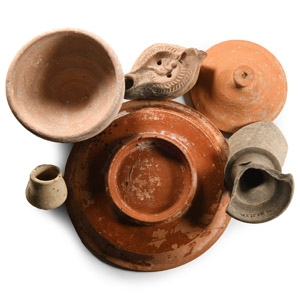
Romano-British Mixed Pottery Sherd Group
1st-4th century A.D.Sold for (Inc. bp): £143
Including a burnished redware dish, lidded bowl and other items. 663 grams total, 4-17 cm
Found UK. From the collection of a late East Anglian teacher and antiquarian who retired to the Isle of Wight in Hampshire, UK. He amassed a large collection of objects between the 1960s-1980s. -
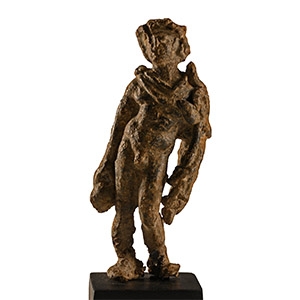
Roman Lead Statuette of Mercury
1st-2nd century A.D.Sold for (Inc. bp): £221
Standing in contrapposto pose, wearing a cloak draped from the right shoulder and tucked around the left arm supporting a caduceus with snake-head finials; broad-brimmed petasos with wings on the crown; the right arm held vertically at the side supporting the marsupium coin-purse; mounted on a custom-made display stand. 111 grams total, 88 mm including stand
From a collection acquired on the UK art market from various auction houses and collections mostly before 2000. From an important Cambridgeshire estate; thence by descent.
Mercury was the god of trade and industry, whose principle shrine in the city of Rome was at the Circus Maximus. The draped mantle is typical for statuary of Mercury from the 1st-2nd century A.D. (Boucher, pl.40, 43) as is the caduceus (Boucher, pl.46 (211)).
