
Loading, please wait...
LOT 0767
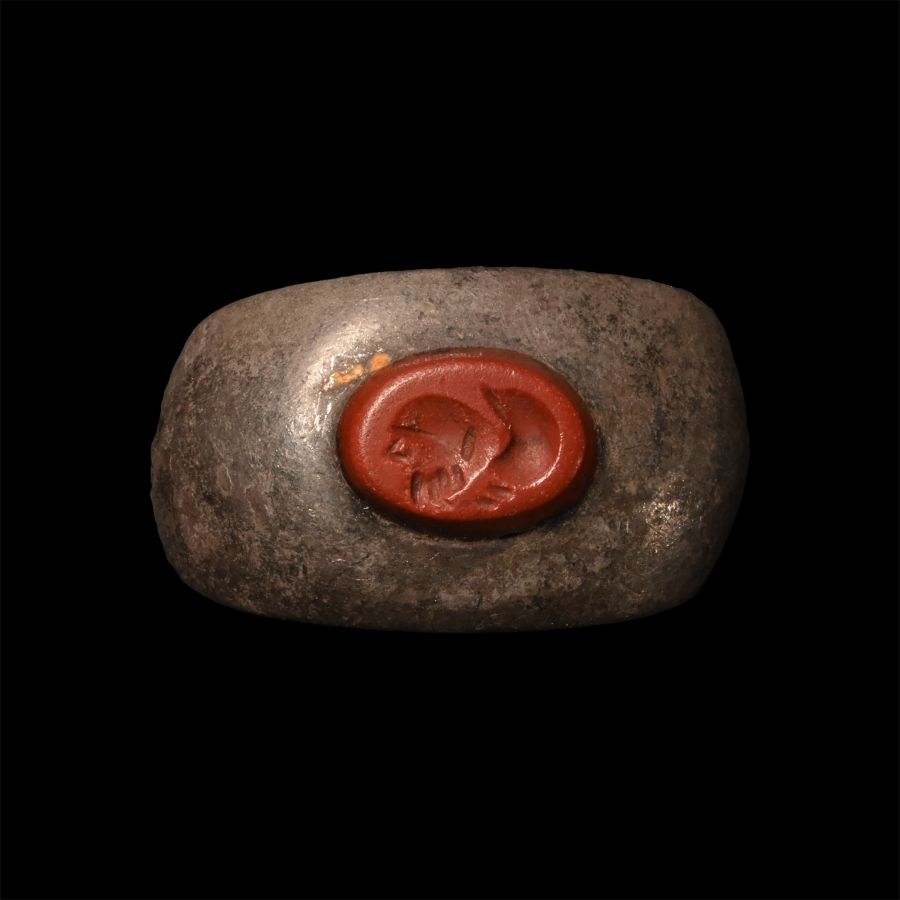
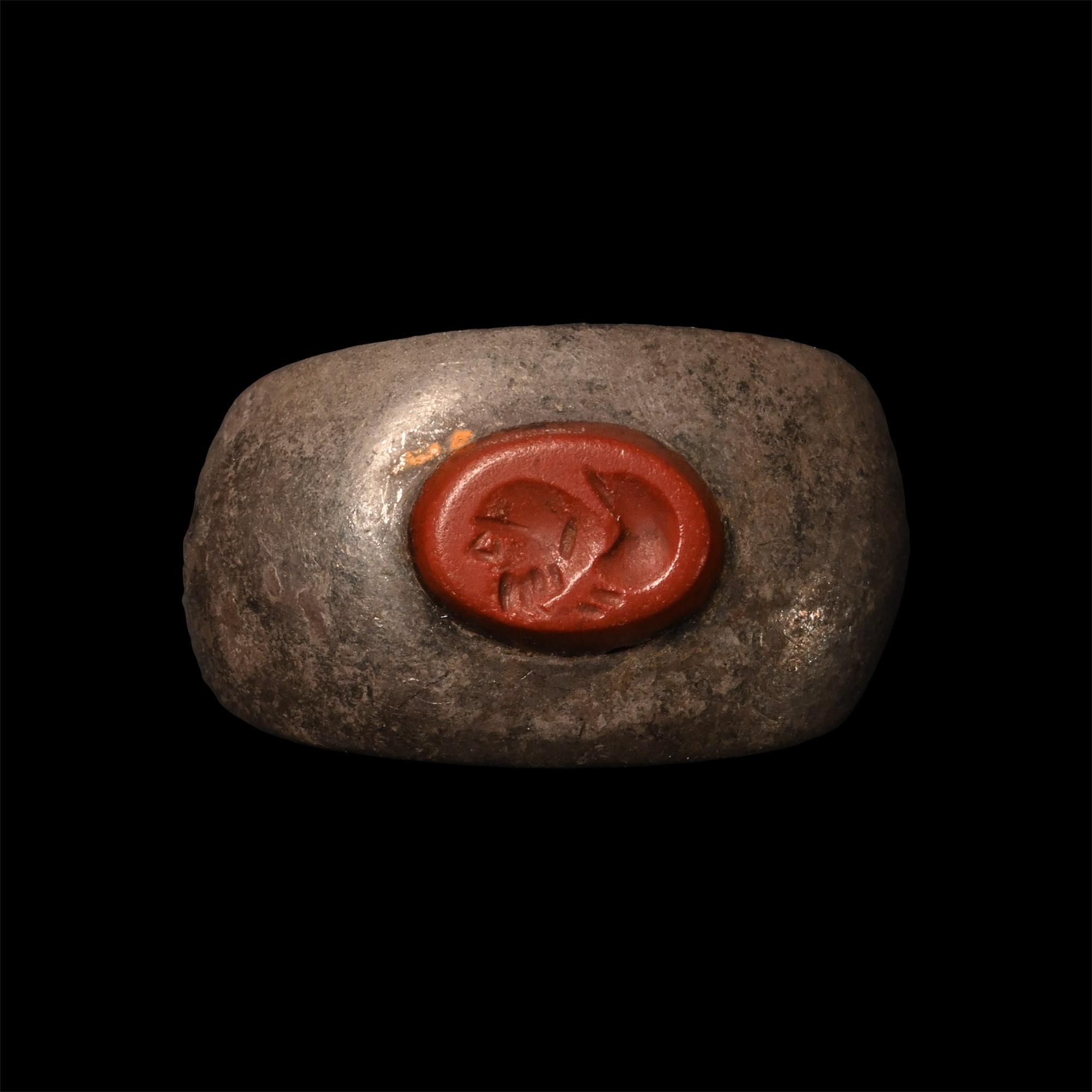
Roman Silver Ring with Silenus Head Gemstone
2ND CENTURY A.D.
7/8 in. (6.19 grams, 21 mm).
With applied jasper stud bearing an intaglio profile bust of Silenus; hoop incomplete. [No Reserve]
ProvenancePrivate collection, England.
LiteratureCf. Ruseva-Slokoska, L., Roman Jewellery, Sofia, 1991, item 195, for type.
CONDITIONTimeLine Auctions follows a vetting process to ensure the authenticity and legality of all items, reinforcing our commitment to integrity and responsible trading. Each antiquity, antique, and coin lot undergoes thorough examination by a vetting committee of at least ten external specialists, professional trade association members, scientists, and archaeologists: Our Vetting Process
AUCTIONS:
TimeLine is a leading auction house specialising in antiquities, ancient art, collectables, natural history, coins, medals, and books. Our auctions offer museums, collectors, historians, and enthusiasts the opportunity to acquire unique and historically significant pieces.
-
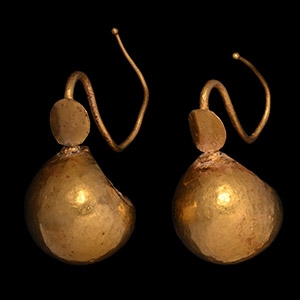
Roman Gold Bell-Shaped Earring Pair
1st-3rd century A.D.Sold for (Inc. bp): £767
Each a hollow-formed sphere with dimple to the upper edge and discoid plaque extending to an S-curved wire dangle. 7.5 grams total, 28-31 mm
Acquired in the mid 1980s-1990s. Private collection, Switzerland, thence by descent. Private collection, since the late 1990s. -
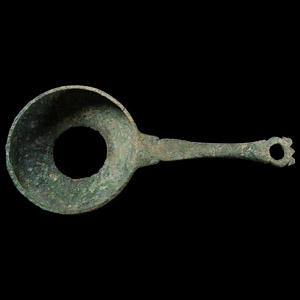
Graeco-Roman Bronze Patera with Duck-Head Handle
3rd century B.C.-3rd century A.D.Estimate: £250 - 350 (‡+bp*)
Opening Bid: £135
The bowl with a convex outer face and notched lip, decoratively waisted handle with addorsed duck heads to the apex of the suspension loop; base of bowl absent. 314 grams, 30 cm
Acquired in Europe before 1995. -
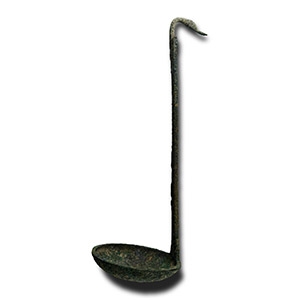
Roman Bronze Duck-Headed Ladle
1st-3rd century A.D.Sold for (Inc. bp): £520
With broad bowl and inturned rim, D-section handle, with one remaining hooked duck-head finial. 208 grams, 26.5 cm
Private collection of Mr S.A., Switzerland, 1990s, thence by descent.
