
Loading, please wait...
LOT 0577
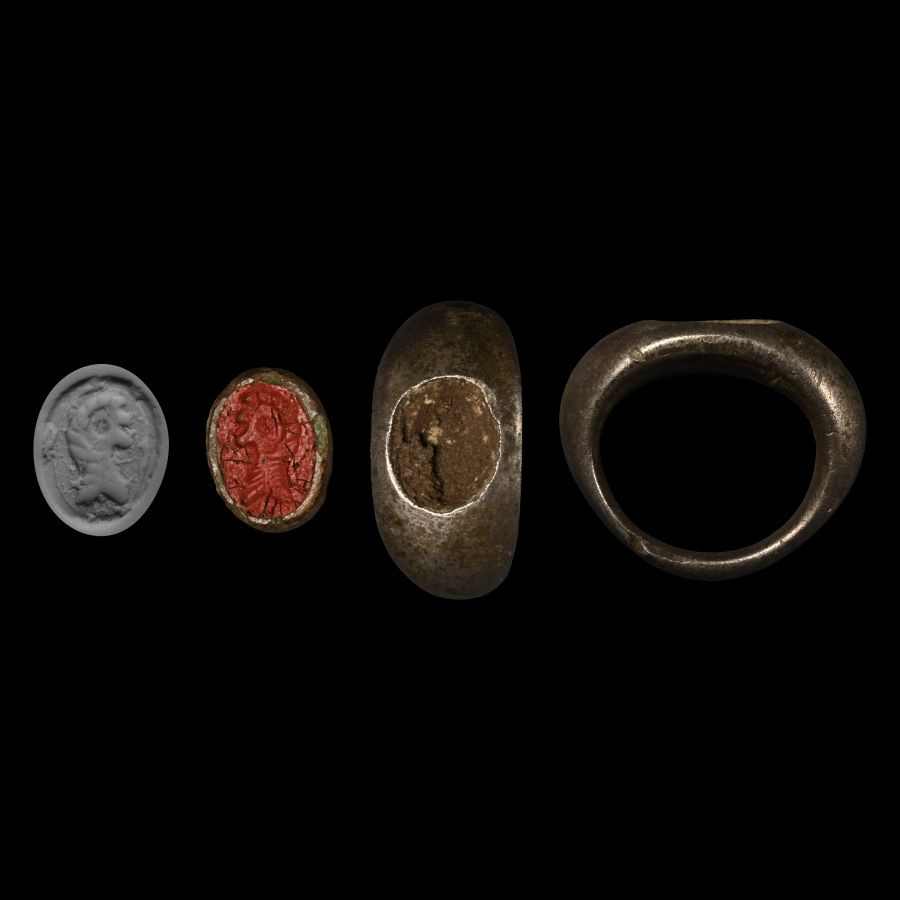
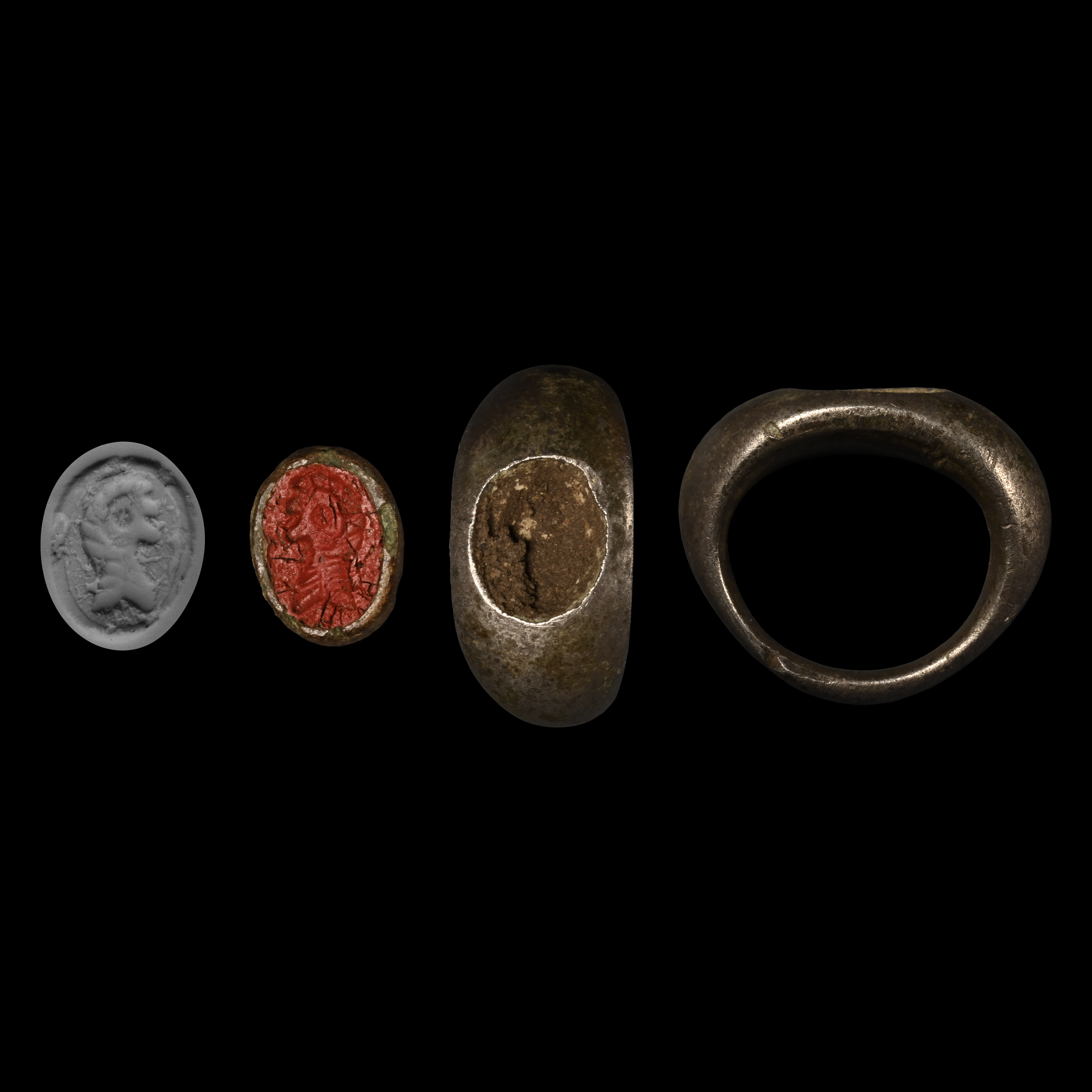
Roman Silver Ring with Separate Gemstone
2ND-3RD CENTURY A.D.
1 in. (12.70 grams, 24.03 mm overall, 16.67 mm internal diameter (approximate size British H, USA 3 3/4, Europe 6.18, Japan 6)).
Comprising: a ring with D-section hoop widening at the shoulders, oval cell to the bezel to accept an insert; a red glass intaglio with a stylised profile bust(?) set in a bronze mount. [No Reserve]
ProvenanceProperty of a Cambridgeshire, UK, collector.
From his private collection since the 1970s; thence by descent circa 2000.
Ex private collection of a Bedfordshire gentleman.
This lot is accompanied by an illustrated lot declaration signed by the Head of the Antiquities Department, Dr Raffaele D'Amato.
TimeLine Auctions follows a vetting process to ensure the authenticity and legality of all items, reinforcing our commitment to integrity and responsible trading. Each antiquity, antique, and coin lot undergoes thorough examination by a vetting committee of at least ten external specialists, professional trade association members, scientists, and archaeologists: Our Vetting Process
AUCTIONS:
TimeLine is a leading auction house specialising in antiquities, ancient art, collectables, natural history, coins, medals, and books. Our auctions offer museums, collectors, historians, and enthusiasts the opportunity to acquire unique and historically significant pieces.
-

Roman Gold Amulet in the Shape of a Phallus
1st-2nd century A.D. or laterSold for (Inc. bp): £2,340
Amuletic pendant of a phallus with testes, square suspension loop to the rear. 8.35 grams, 23 mm
Acquired in the mid 1980s-1990s. Private collection, Switzerland, thence by descent. Private collection, since the late 1990s. This lot has been checked against the Interpol Database of stolen works of art and is accompanied by a search certificate no.12593-232171. This lot has been cleared against the Art Loss Register database, and is accompanied by an illustrated lot declaration signed by the Head of the Antiquities Department, Dr Raffaele D'Amato.
Phallic amulets, symbols of fertility, prosperity and happiness in the Roman world, are represented by numerous examples in most museums and in many private collections. The typologies are various within the four main series: a) phallus seen from the front; b) phallus seen from the side; c) double phallus and d) triple phallus. -
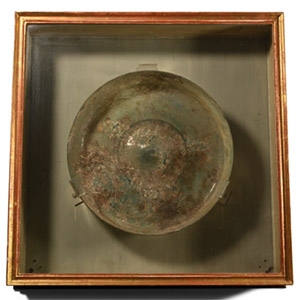
Roman 'Constable Maxwell' Glass Plate
4th century A.D.Estimate: £2,500 - 3,500 (+bp*)
Opening Bid: £1,250
A wide, shallow bowl with gently sloping walls and dimple to base, tubular foot ring; set in a custom-made glazed display case. 3.1 kg total, 44 x 44 cm including box
From the Constable Maxwell collection, given as a gift to a long term employee, with inscription to verso. Accompanied by an academic report by Dr Raffaele D’Amato. This lot has been checked against the Interpol Database of stolen works of art and is accompanied by a search certificate number no.12620-235747. This lot has been cleared against the Art Loss Register database, and is accompanied by an illustrated lot declaration signed by the Head of the Antiquities Department, Dr Raffaele D'Amato.
The plate belongs to the category of blown bowls with tubular rim which were used as daily dishes and plates. They are part of a series made in the late 4th century A.D., but continuing an Italic tradition of production of glass vessels of this category existing since the 1st century A.D. -
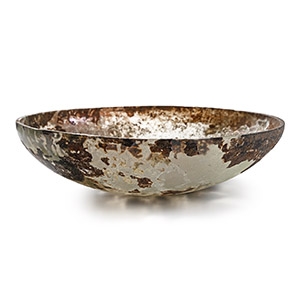
Roman Cast Glass Dish
1st century A.D.Sold for (Inc. bp): £1,040
With shallow convex body and slightly inturned rim; iridescent surface. 161 grams, 16.5 cm
From an important London collection of glass, 1990s. This lot is accompanied by an illustrated lot declaration signed by the Head of the Antiquities Department, Dr Raffaele D'Amato.
