
Loading, please wait...
LOT 0714
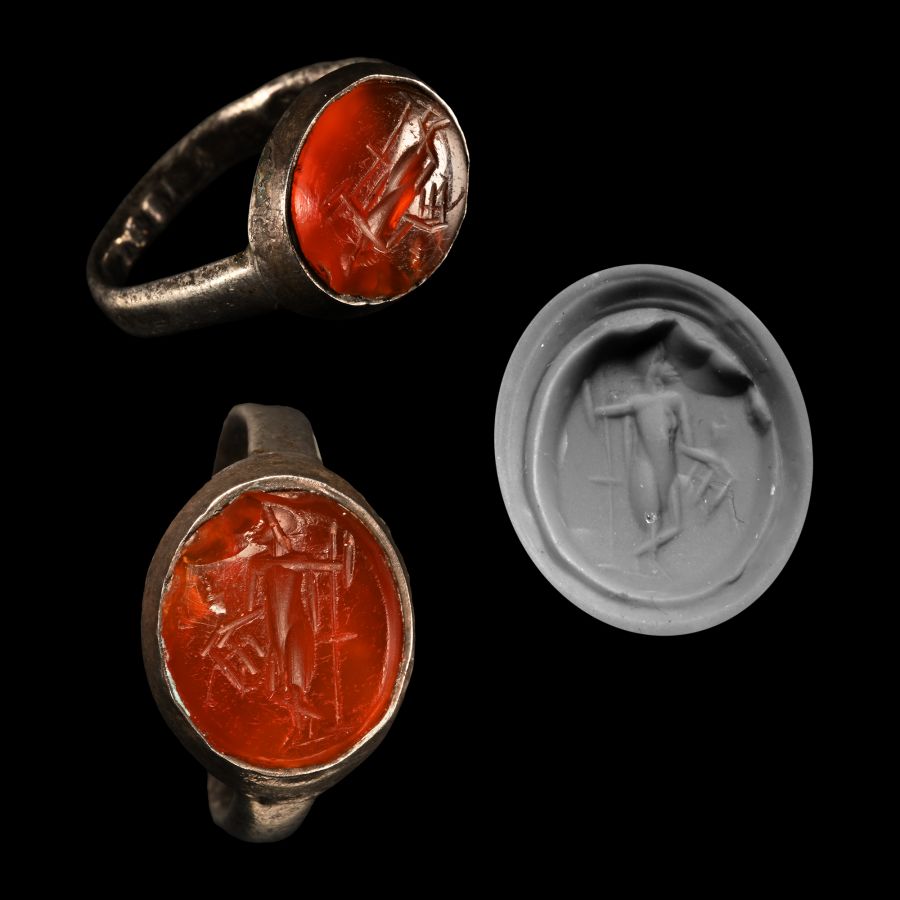
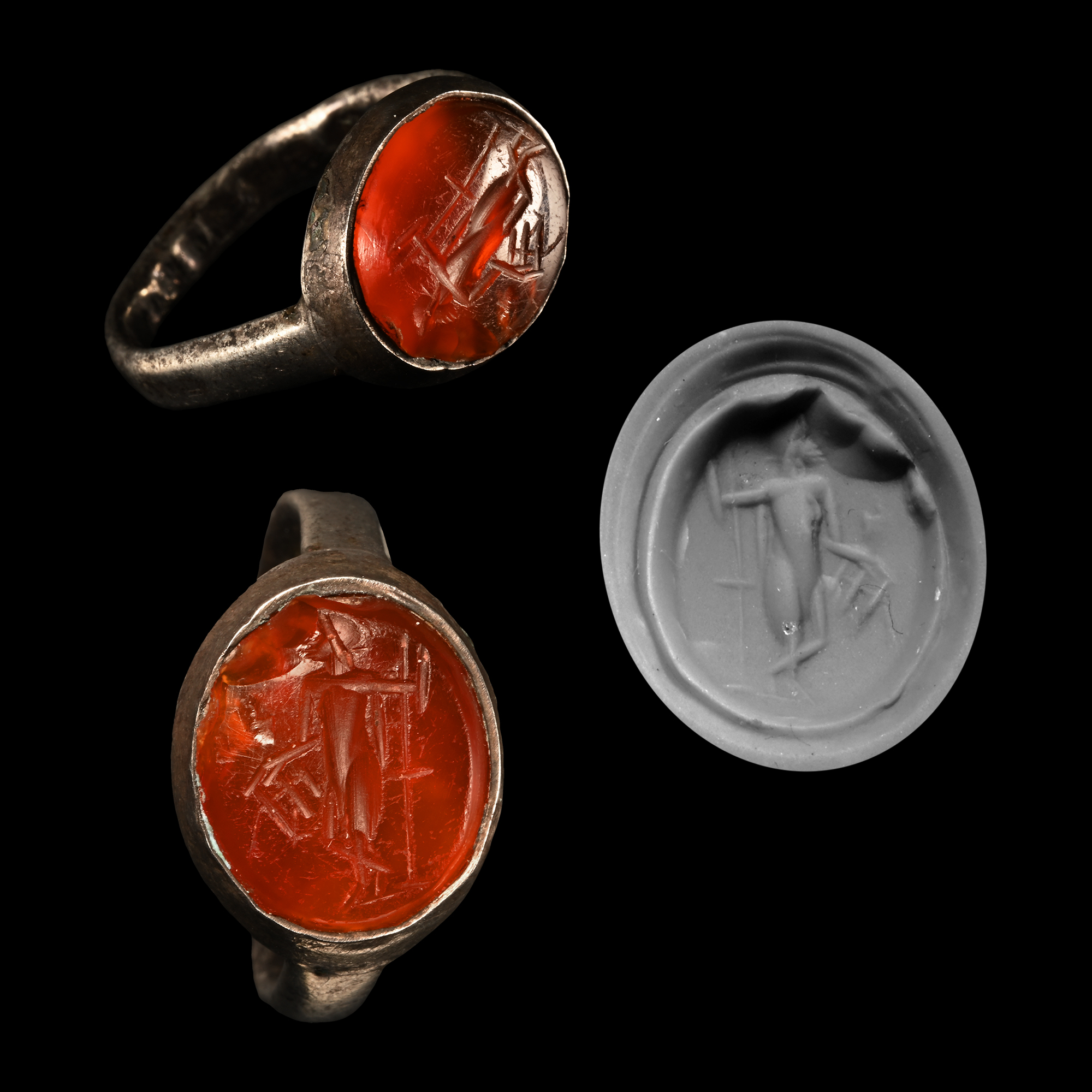
Roman Silver Ring with Poseidon Gemstone
1ST-2ND CENTURY A.D.
1 in. (4.97 grams, 26.02 mm overall, 18.30 mm internal diameter (approximate size British P, USA 7 1/2, Europe 16.23, Japan 15)).
With elliptical cell, inset carnelian cabochon with intaglio figure of Poseidon standing naked, only covered by a cloak on his shoulders, holding a trident with left hand, and a net with a stylised dolphin(?) with the right hand; possibly a marriage.
ProvenanceUK private collection formed before 2000.
Ex North London, UK, gallery.
Cf. Chadour, A.B., Rings. The Alice and Louis Koch Collection, volume I, Leeds, 1994, 207, for type; Katsonopoulou, D., ‘Further insights on the cult of Poseidon Helikonios in Helike (IV)’ in Katsonopoulou, D. (ed.), Poseidon God of Earthquakes and Waters Cult and Sanctuaries, Athens, 2017, pp.17-33, figs.8a and 9.
FootnotesOn issues of the Roman colonial coinage of Patras, the image of nude standing Poseidon holding a trident and dolphin is reproduced simultaneously with the most common representations of the god shown standing with one foot resting on a support (rock or dolphin). This type of standing nude Poseidon holding a trident in his left hand and a dolphin in his right is also pictured on the reverse of coins of Agion.
CONDITIONTimeLine Auctions follows a vetting process to ensure the authenticity and legality of all items, reinforcing our commitment to integrity and responsible trading. Each antiquity, antique, and coin lot undergoes thorough examination by a vetting committee of at least ten external specialists, professional trade association members, scientists, and archaeologists: Our Vetting Process
AUCTIONS:
TimeLine is a leading auction house specialising in antiquities, ancient art, collectables, natural history, coins, medals, and books. Our auctions offer museums, collectors, historians, and enthusiasts the opportunity to acquire unique and historically significant pieces.
-
Roman Bronze Bird Statuette Group
2nd-3rd century A.D.Sold for (Inc. bp): £98
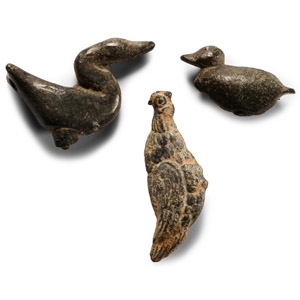
Group of three figures modelled in the round comprising: game bird (beak absent); goose with peg to underside and pierced tail; duck. 42 grams total, 27-39 mm
From a collection acquired on the UK art market from various auction houses and collections mostly before 2000. From an important Cambridgeshire estate; thence by descent. -
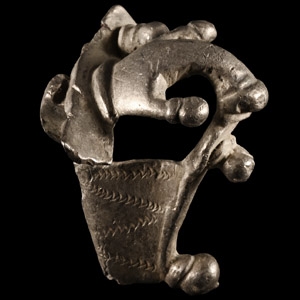
Roman Silver Bow Brooch
1st century A.D.Sold for (Inc. bp): £117
Of kräftig profilierte type with crescent above the bow and broad catch with lobe to the forward edge. 12 grams, 30 mm
Ex Cambridgeshire, UK, collection, 1990s. -
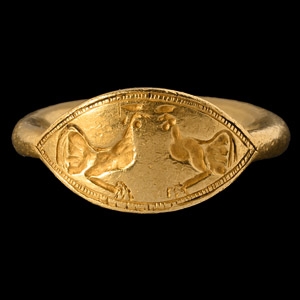
Late Roman Gold Ring with Facing Birds
Circa 5th-7th century A.D.Sold for (Inc. bp): £2,470
With a heavy round-section hoop thickened at the base, lentoid bezel with ropework border and two opposing cockerels. 14.42 grams, 24.86 mm overall, 17.53 mm internal diameter (approximate size British P 1/2, USA 7 3/4, Europe 16.86, Japan 16)
Believed to have been acquired at Christie's. Property of a North American gallery. This lot has been checked against the Interpol Database of stolen works of art and is accompanied by search certificate no.12109-214332.
