
Loading, please wait...
LOT 1032
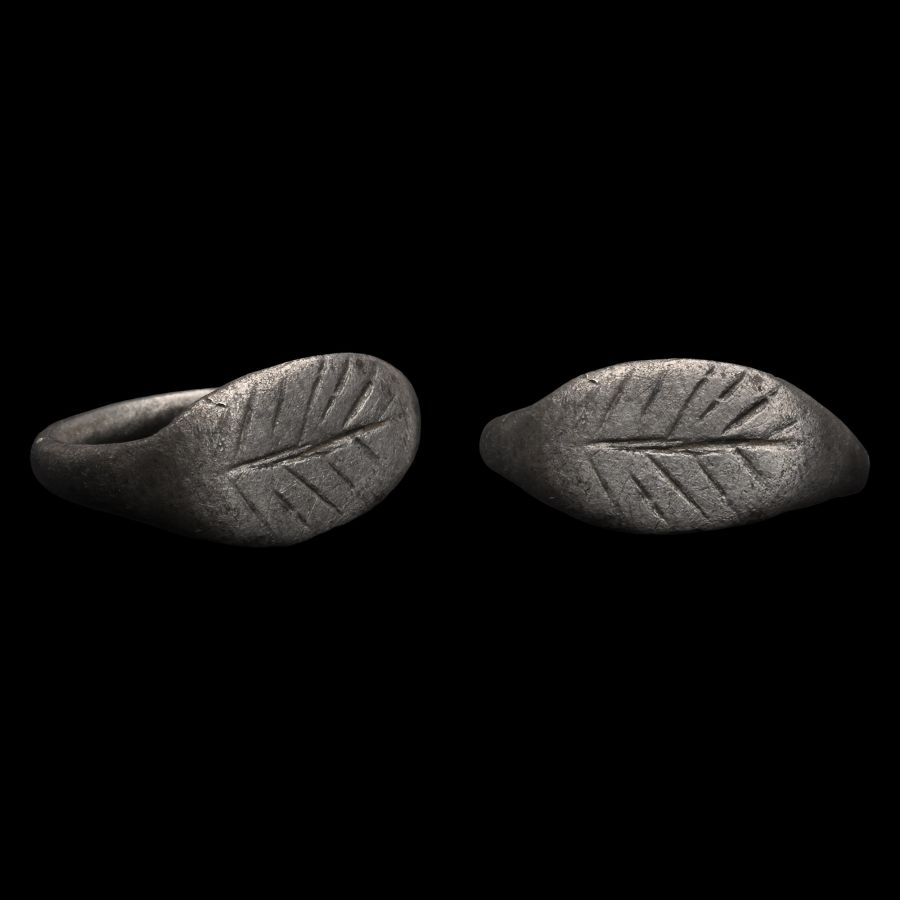
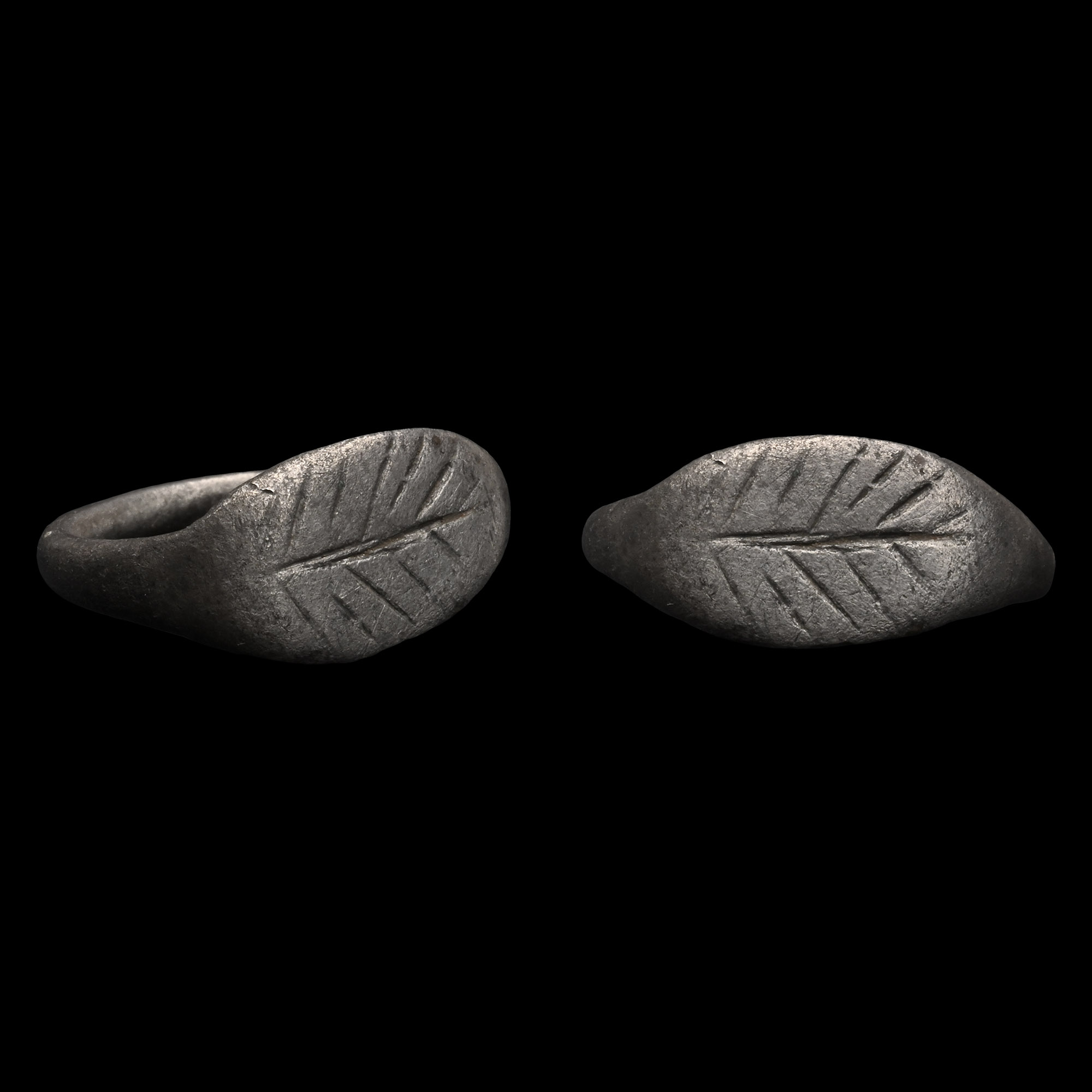
Roman Silver Ring with Palm Branch
1ST-4TH CENTURY A.D.
3/4 in. (2.67 grams, 19.40 mm overall, 15.48 mm internal diameter (approximate size British F 1/2, USA 3, Europe 4.3, Japan 4)).
An interphalangeal ring with an incuse palm branch motif on the bezel. [No Reserve]
ProvenanceEx German art market, 2000s.
Acquired from an EU collector living in London.
From the collection of a Surrey, UK, gentleman.
TimeLine Auctions follows a vetting process to ensure the authenticity and legality of all items, reinforcing our commitment to integrity and responsible trading. Each antiquity, antique, and coin lot undergoes thorough examination by a vetting committee of at least ten external specialists, professional trade association members, scientists, and archaeologists: Our Vetting Process
AUCTIONS:
TimeLine is a leading auction house specialising in antiquities, ancient art, collectables, natural history, coins, medals, and books. Our auctions offer museums, collectors, historians, and enthusiasts the opportunity to acquire unique and historically significant pieces.
-
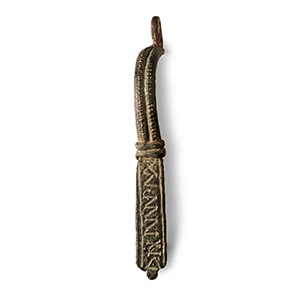
Roman Inscribed Bronze Bow Brooch
3rd-4th century A.D.Sold for (Inc. bp): £91
Colchester-type brooch shank with seriffed enigmatic legend 'DIXMNM'. 8.19 grams, 78 mm
Ex important German collection of brooches, 1980s. This lot is accompanied by an illustrated lot declaration signed by the Head of the Antiquities Department, Dr Raffaele D'Amato.
The inscription 'DIXMNM' is not easy to interpretate. MNM was possibly used as abbreviation for Dis Manibus Monumentum, i.e. ‘Monument to the spirit of the dead’. DIX was a shorter form for he/she/it said (dixit), but also refers sometimes to the numeral 12 (duodecimus). -
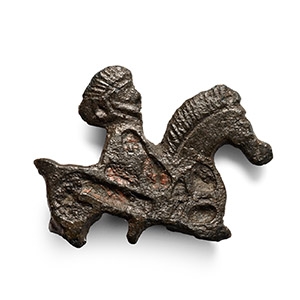
Romano-British Enamelled Bronze Horse and Rider Brooch
2nd century A.D.Sold for (Inc. bp): £72
Plate brooch with cells to the horse's chest and flanks and to the rider's body, intended to accept cloisonné enamel fill, remains of a sprung pin to the reverse. 3.9 grams, 27 mm
Ex DRG Coins and Antiquities, Bishops Stortford, Essex, UK. From the private collection of a West London, UK, gentleman, formed since the early 2000s. Accompanied by a handwritten dealer's ticket. -
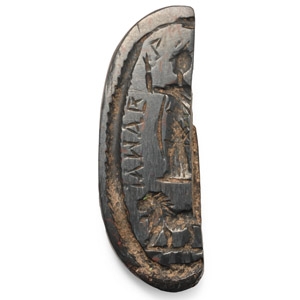
Roman Gnostic Magic Stone Amulet Fragment
3rd-5th century A.D.Sold for (Inc. bp): £1,430
Comprising a half of a bifacial seal, one side showing a standing figure above a lion, Greek inscription before the figure; the other side with Abraxas and Greek inscription on the edge. 5.04 grams, 34 mm
From the collection of a gentleman, acquired on the London art market in the 1990s.
