
Loading, please wait...
LOT 0871
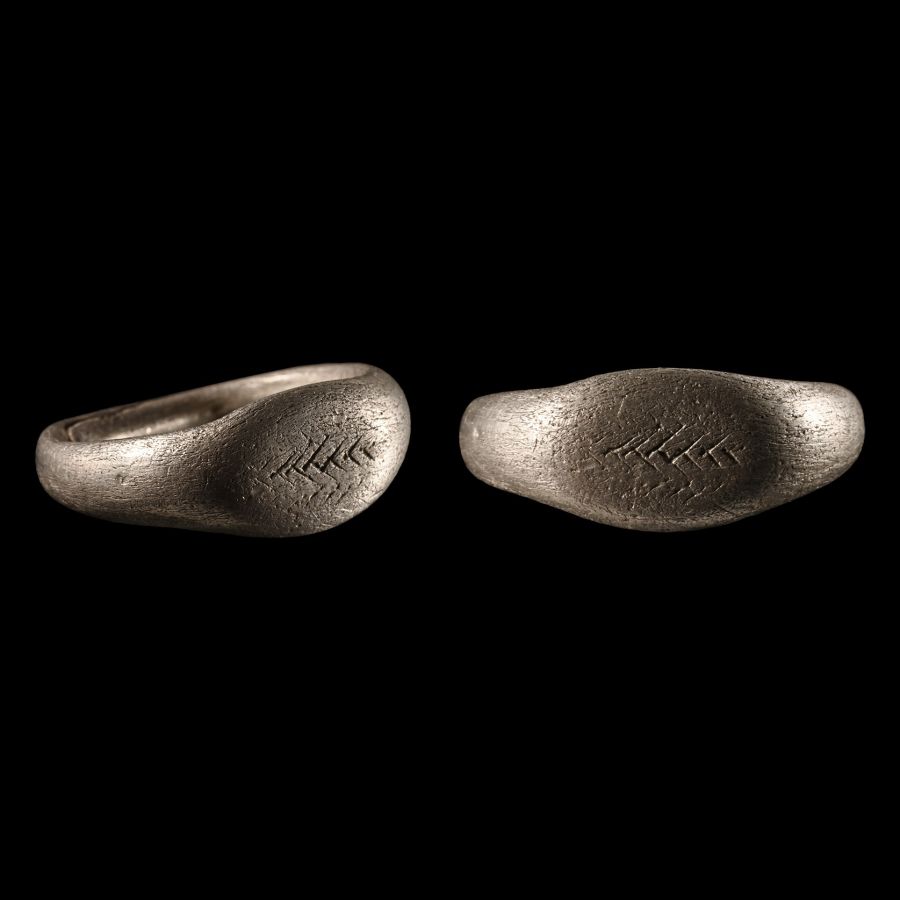
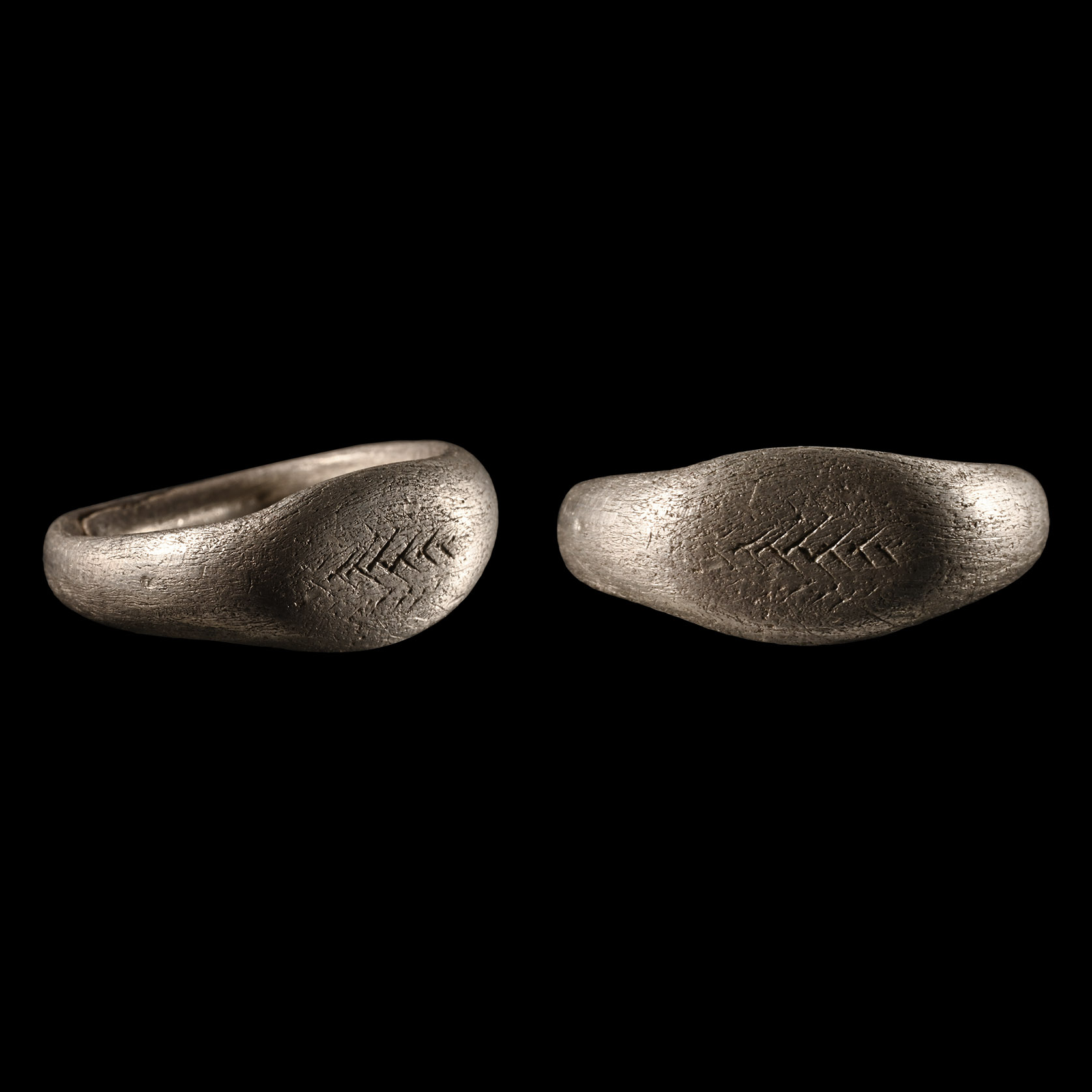
Roman Silver Ring with Palm Branch
1ST CENTURY A.D.
3/4 in. (4.89 grams, 20.04 mm overall, 14.82 mm internal diameter (approximate size British G 1/2, USA 3 1/2, Europe 5.55, Japan 5)).
Rounded ellipsoid plaque with incised palm frond. [No Reserve]
ProvenanceAcquired on the London art market in the late 1980s-1990s.
From the family collection of an East London, UK, gentleman.
Cf. Chadour, A.B., Rings. The Alice and Louis Koch Collection, volume I, Leeds, 1994, item 178.
CONDITIONTimeLine Auctions follows a vetting process to ensure the authenticity and legality of all items, reinforcing our commitment to integrity and responsible trading. Each antiquity, antique, and coin lot undergoes thorough examination by a vetting committee of at least ten external specialists, professional trade association members, scientists, and archaeologists: Our Vetting Process
AUCTIONS:
TimeLine is a leading auction house specialising in antiquities, ancient art, collectables, natural history, coins, medals, and books. Our auctions offer museums, collectors, historians, and enthusiasts the opportunity to acquire unique and historically significant pieces.
-
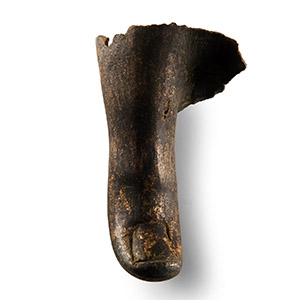
Roman Gilt Bronze Statue Thumb
3rd century A.D.Sold for (Inc. bp): £247
Hollow-formed left thumb with detailed nail. 178 grams, 95 mm
Acquired in Europe before 2001. European private collection. -
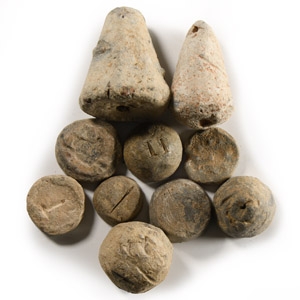
Roman and Later Lead Weight Collection
1st-18th century A.D.Sold for (Inc. bp): £20
Including tabular, plano-convex and conical types. 889 grams total, 20-45 mm
Found whilst fieldwalking in Somerset and Devon, UK. -
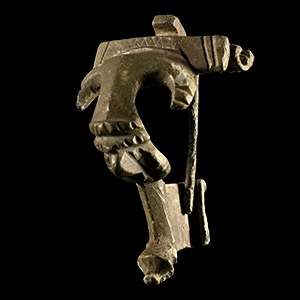
Roman Bronze Bow Brooch
1st-3rd century A.D.Sold for (Inc. bp): £78
Of kräftig profilierte 'anchor' type, with a broad plaque in front of the spring and pin, trumpet-type bow; broad footplate with catch to the rear. 23 grams, 45 mm
Property of a gentleman from Vienna; from his private collection formed since 1970.
