
Loading, please wait...
LOT 0903
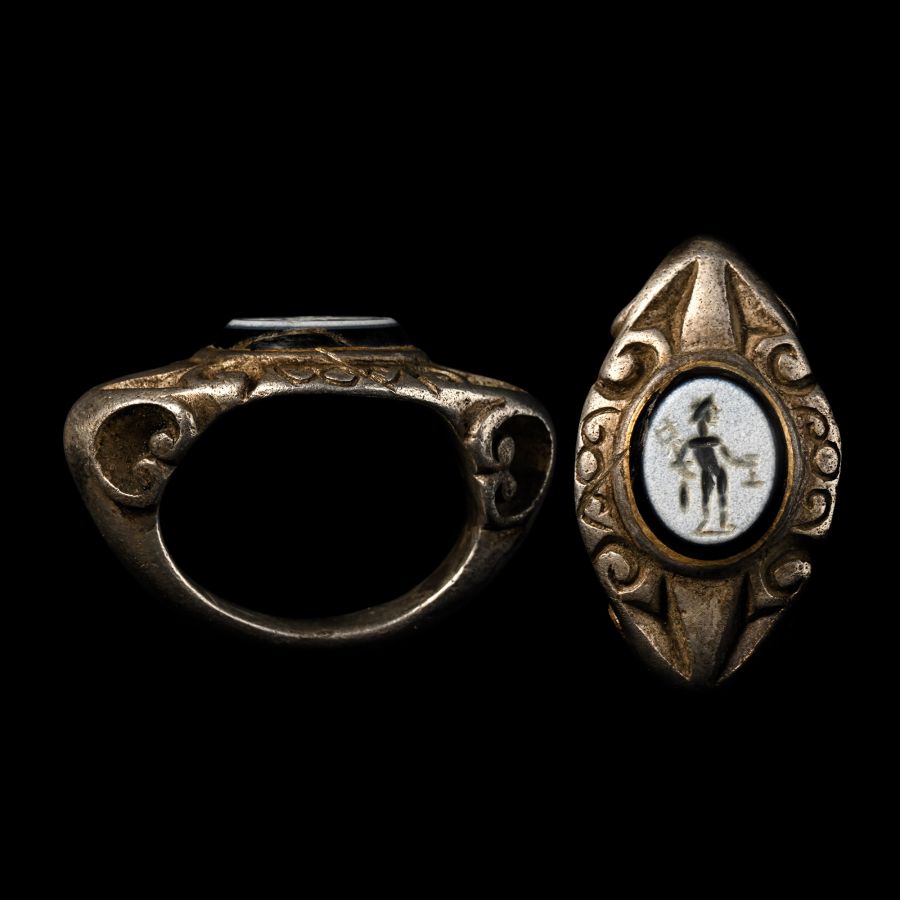
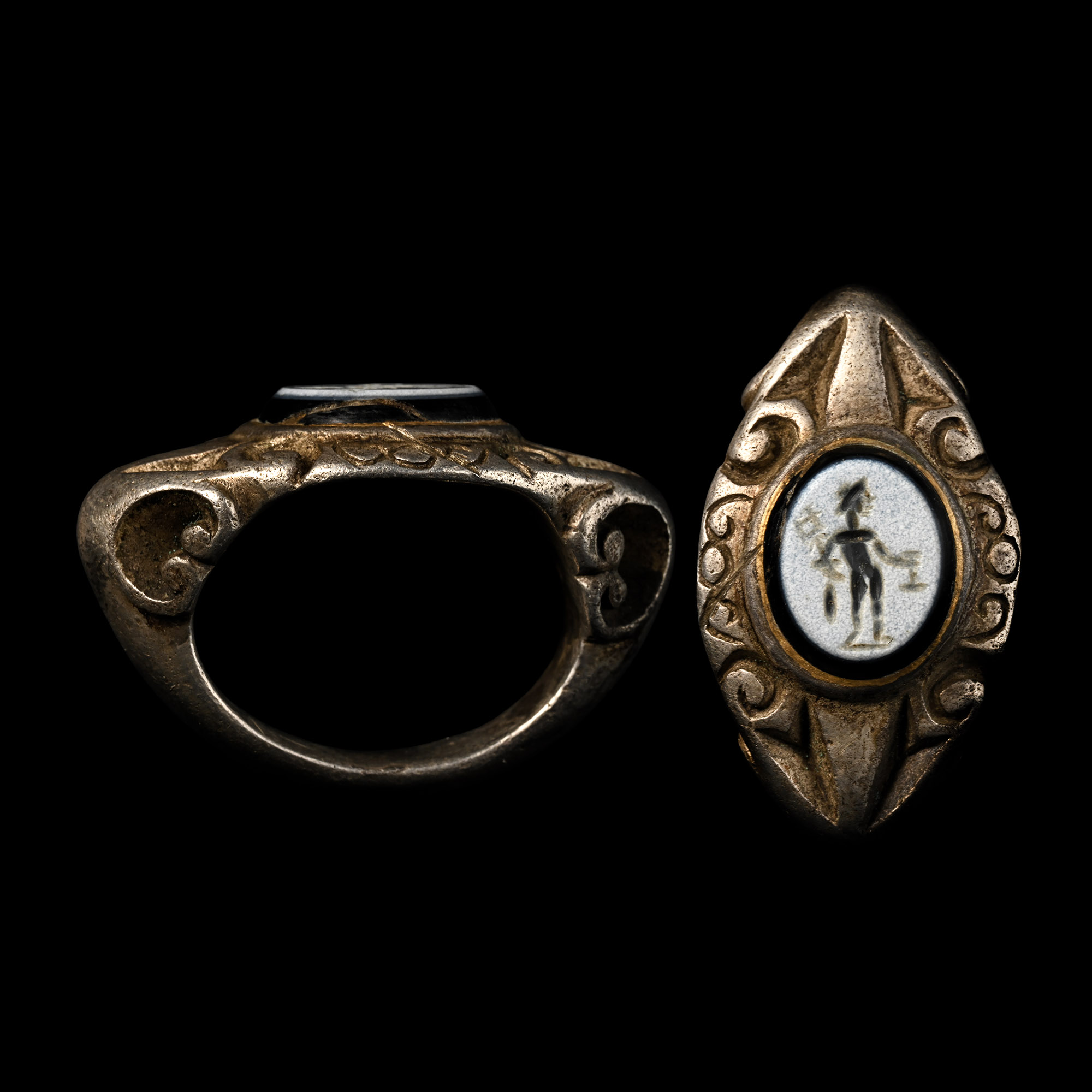
Roman Silver Ring with Mercury Gemstone
3RD CENTURY A.D.
1 1/4 in. (20.69 grams, 33.42 mm overall, 21.22 x 15.43 mm internal diameter (approximate size British L 1/2, USA 6, Europe 11.87, Japan 11)).
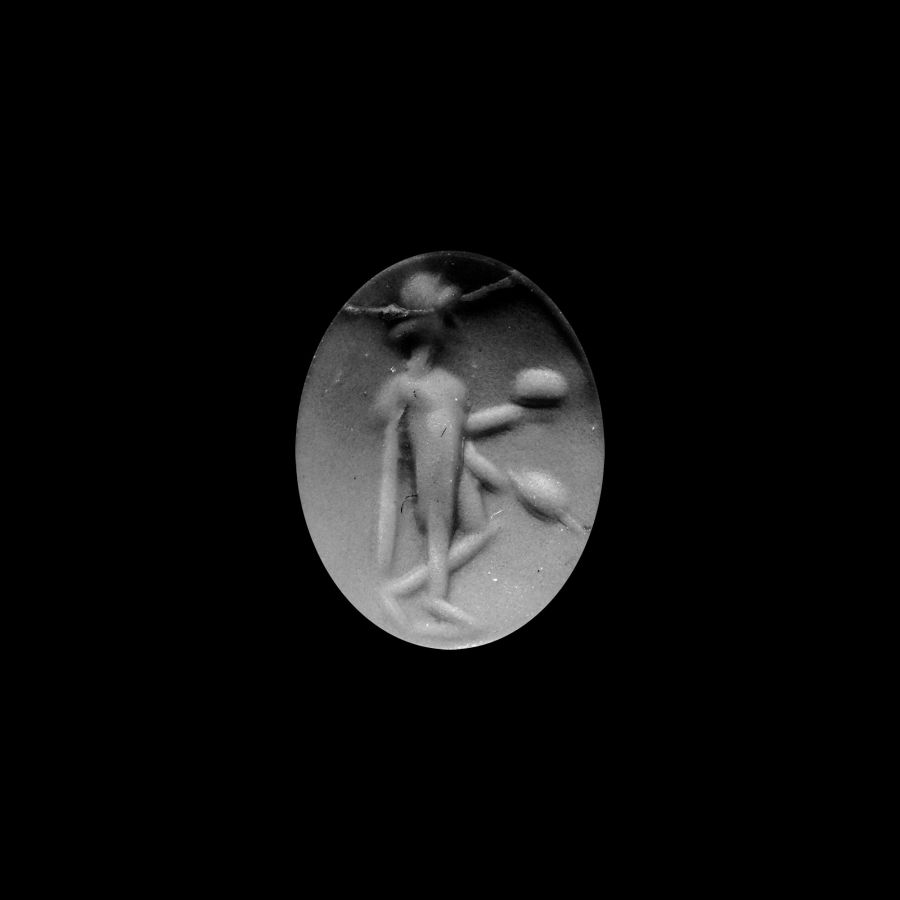
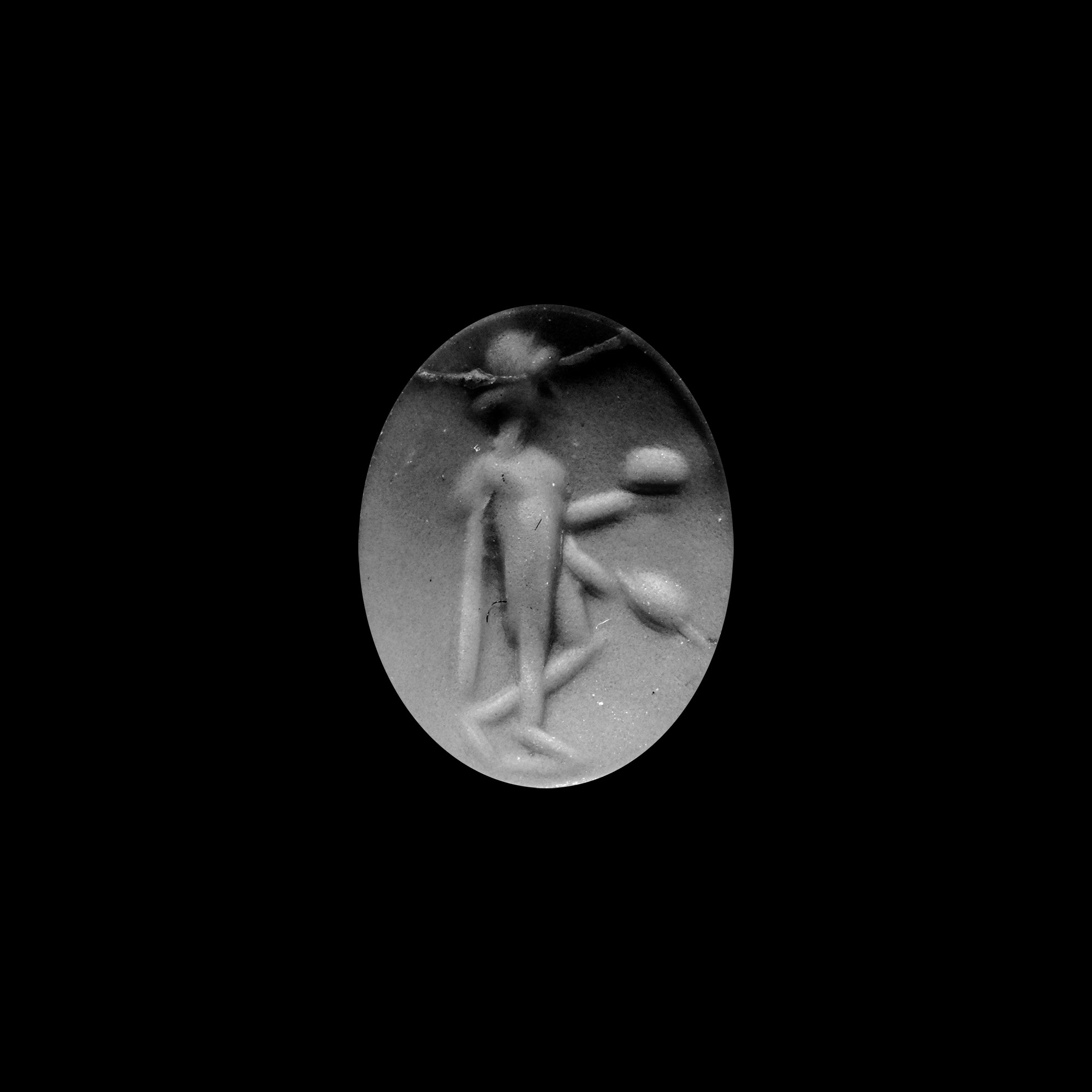
A D-section silver hoop with flared shoulders, flat scaphoid plaque with openwork scrolls to the edges, scroll detailing to the plaque, inset glass bezel with intaglio image of Mercury in petasos standing with caduceus and marsupium(?) in his right hand. [No Reserve]
ProvenanceEx property of a London gentleman; acquired in the 1980s.
LiteratureCf. Ruseva-Slokoska, L., Roman Jewellery, Sofia, 1991, item 215.
CONDITIONTimeLine Auctions follows a vetting process to ensure the authenticity and legality of all items, reinforcing our commitment to integrity and responsible trading. Each antiquity, antique, and coin lot undergoes thorough examination by a vetting committee of at least ten external specialists, professional trade association members, scientists, and archaeologists: Our Vetting Process
AUCTIONS:
TimeLine is a leading auction house specialising in antiquities, ancient art, collectables, natural history, coins, medals, and books. Our auctions offer museums, collectors, historians, and enthusiasts the opportunity to acquire unique and historically significant pieces.
-
Roman Garnet Cameo of a Grotesque Head
1st century A.D.Sold for (Inc. bp): £338
With head of a grotesque facing; supplied with a museum-quality impression. 0.95 grams, 10 mm
Private English collection, formed between the late 1970s and early 1990s. Private collection, London, UK. -
Roman Red Marble Thumb Pestle
3rd-6th century A.D.Estimate: £1,000 - 1,400 (‡+bp*)
Opening Bid: £540
Pestle or grinding tool, the handle formed as a thumb with knuckle and nail detailing; old collector's label '2' to underside. 312 grams, 12 cm
Ex private collection, Mrs L.S., 1980s. Acquired from the above, 1999. Private European collection. This lot has been checked against the Interpol Database of stolen works of art and is accompanied by a search certificate number no.12096-218201.
Such items were mainly used by medical staff for grinding ingredients such as medicinal compounds, cosmetics and culinary spices. -
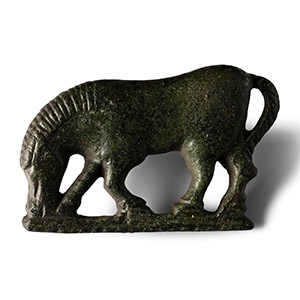
Roman Bronze Horse Plate Brooch
2nd-3rd century A.D.Sold for (Inc. bp): £124
Formed as a horse grazing on a baseline with shaggy mane and looped tail; hinged pin and catch to the reverse. 14.5 grams, 34 mm
Ex David Miller, Hemel Hempstead, London, UK. From the private collection of a West London, UK, gentleman, formed since the early 2000s. Accompanied by a hand written ticket.
