
Loading, please wait...
LOT 0753
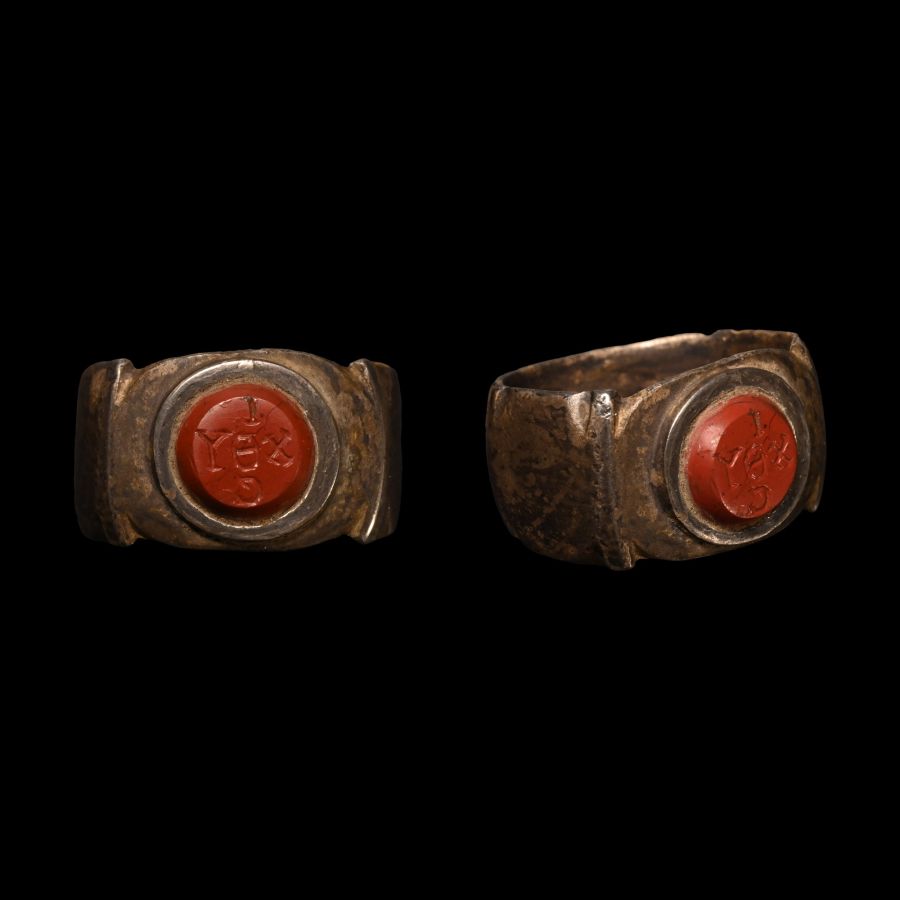
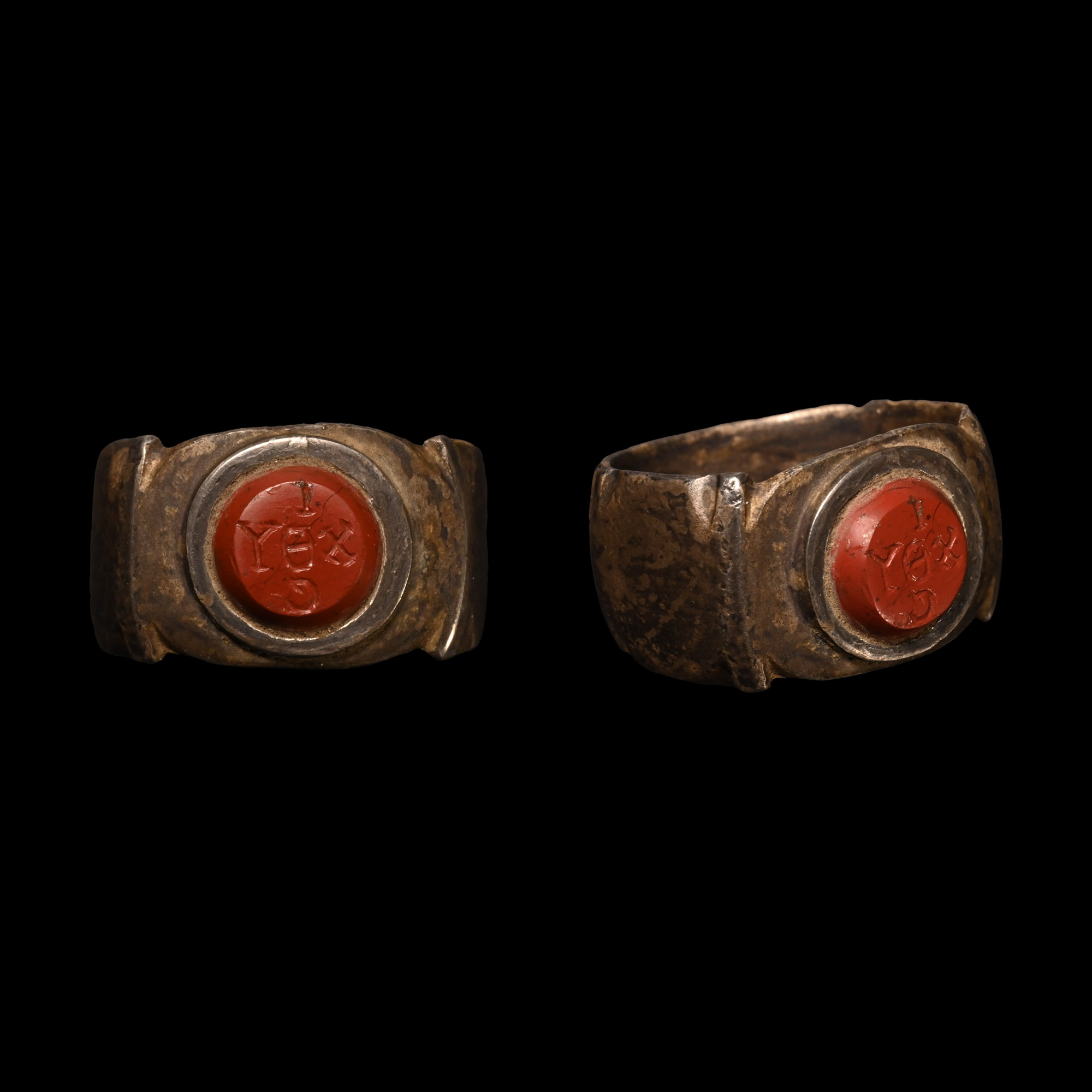
Roman Silver Ring with Later Inscribed Gemstone
3RD-4TH CENTURY A.D. AND LATER
3/4 in. (9.18 grams, 21.93 mm overall, 18.60 mm internal diameter (approximate size British O, USA 7, Europe 14.98, Japan 15)).
With baluster detailing to the shoulders, later inset jasper stud with legend 'ΙXΘYС' (= ICTUS = fish = Jesus Christ).
ProvenancePrivate collection, England.
LiteratureCf. Ruseva-Slokoska, L., Roman Jewellery, Sofia, 1991, item 208, for type.
CONDITIONTimeLine Auctions follows a vetting process to ensure the authenticity and legality of all items, reinforcing our commitment to integrity and responsible trading. Each antiquity, antique, and coin lot undergoes thorough examination by a vetting committee of at least ten external specialists, professional trade association members, scientists, and archaeologists: Our Vetting Process
AUCTIONS:
TimeLine is a leading auction house specialising in antiquities, ancient art, collectables, natural history, coins, medals, and books. Our auctions offer museums, collectors, historians, and enthusiasts the opportunity to acquire unique and historically significant pieces.
LOT 0753
Roman Silver Ring with Later Inscribed Gemstone
Estimate £300 - 400€350 - 460 (for guidance only)$410 - 540 (for guidance only)
-
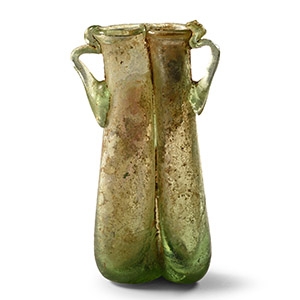
Roman Glass Double Unguentarium
3rd-4th century A.D.Estimate: £400 - 600 (‡+bp*)
Opening Bid: £200
Pale green iridescent glass, two tapering tubes with rolled, everted rims, applied lateral triangular handles. 78 grams, 11 cm
Acquired in the mid 1980s-1990s. Private collection, Switzerland, thence by descent. Private collection, since the late 1990s. -
.jpg)
Roman Bronze Statuette Hand Holding Victory Wreath
1st century A.D.Sold for (Inc. bp): £59
Modelled in the round, right hand clutching a wreath of laurel leaves. 19.6 grams, 23 mm
From a collection acquired on the UK art market from various auction houses and collections mostly before 2000. From an important Cambridgeshire estate; thence by descent.
The hand raising the laurel wreath, symbol of Roman victory, could belong to a statuette representing the winged Victory, Nike. However, an important statuette of Flora, goddess of flowering and cereals, found in Witcombe Villa, represents her with raised hand holding a similar wreath, which does not necessarily correspond to a laurel wreath, but to an intertwined wreath of flowers , symbol of prosperity and spring. -
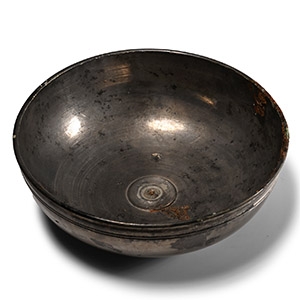
Roman Highly Tinned Bronze Bowl
1st-3rd century A.D.Estimate: £1,800 - 2,400 (‡+bp*)
Opening Bid: £1,000
Hemispherical in profile with low foot, incised circumferential lines to rim; high-tin surface with silvery appearance. 177 grams, 10.3 cm
Acquired in the mid 1980s-1990s. Private collection, Switzerland, thence by descent. Private collection, since the late 1990s. This lot has been checked against the Interpol Database of stolen works of art and is accompanied by search certificate number no.12234-222176.
