
Loading, please wait...
LOT 0896
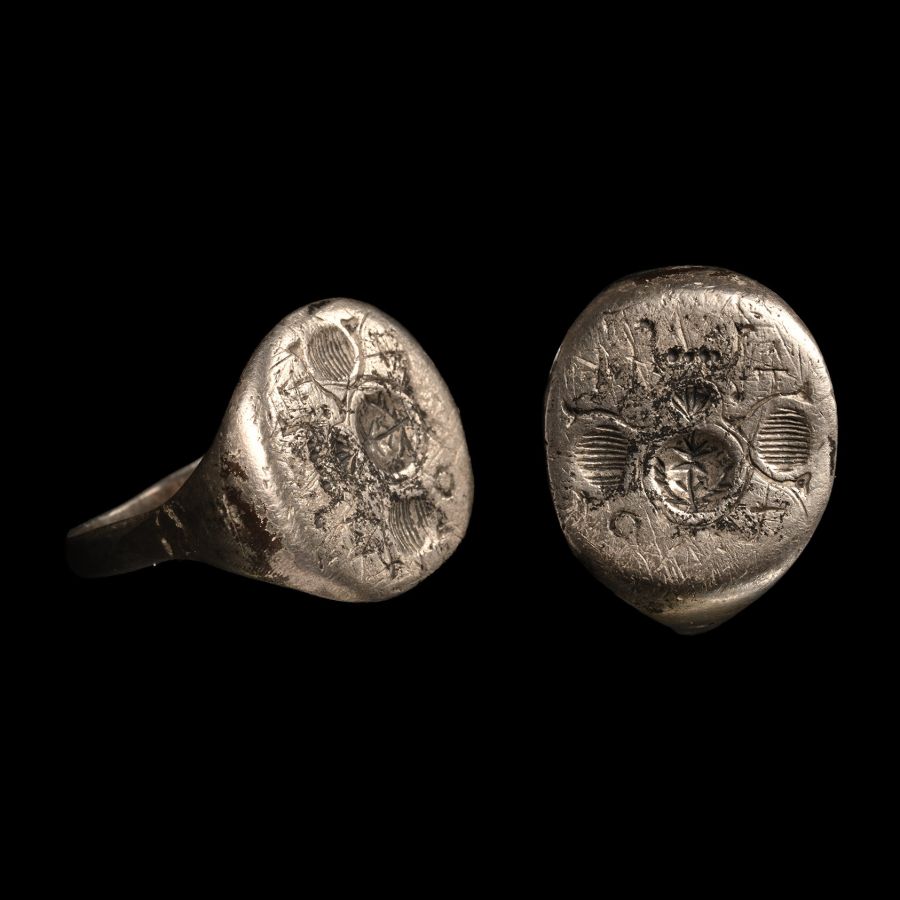
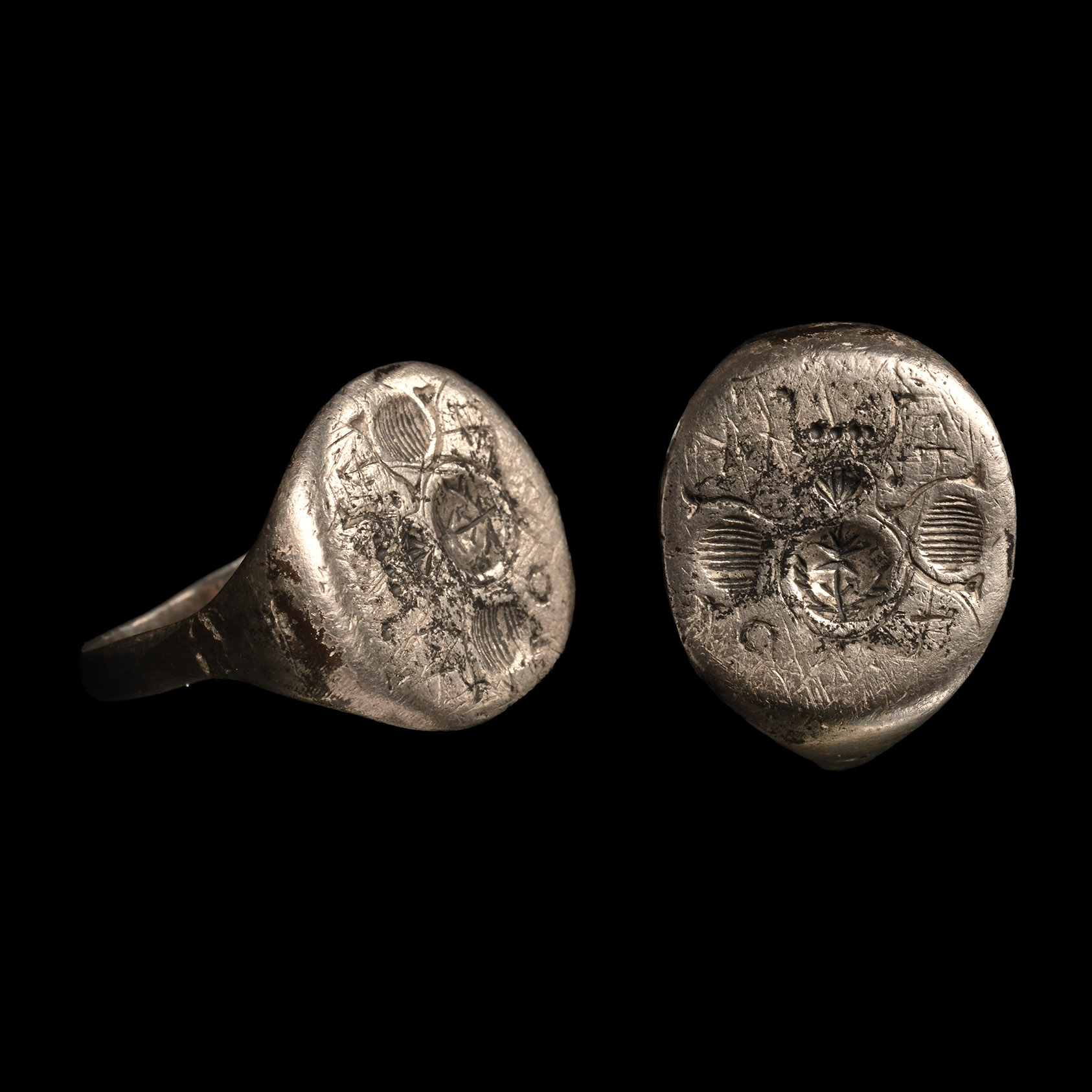
Roman Silver Ring with Insignia
2ND-4TH CENTURY A.D.
3/4 in. (3.56 grams, 20.13 mm overall, 16.26 x 18.07 mm internal diameter (approximate size British P, USA 7 1/2, Europe 16.23, Japan 15)).
Comprising a narrow D-section hoop and a large circular bezel with insignia.
ProvenanceEx German art market, 2000s.
Acquired from an EU collector living in London.
From the collection of Surrey, UK, gentleman.
TimeLine Auctions follows a vetting process to ensure the authenticity and legality of all items, reinforcing our commitment to integrity and responsible trading. Each antiquity, antique, and coin lot undergoes thorough examination by a vetting committee of at least ten external specialists, professional trade association members, scientists, and archaeologists: Our Vetting Process
AUCTIONS:
TimeLine is a leading auction house specialising in antiquities, ancient art, collectables, natural history, coins, medals, and books. Our auctions offer museums, collectors, historians, and enthusiasts the opportunity to acquire unique and historically significant pieces.
-
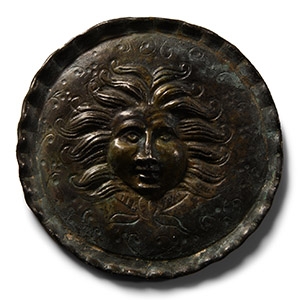
Roman Silver Phalera with Medusa
1st-2nd century A.D.Sold for (Inc. bp): £936
Discoid with fluted rim, central raised gorgoneion within scrolled tendrils. 13.8 grams, 59 mm
Ex German art market, 2000s. Acquired from an EU collector living in London. From the collection of Surrey, UK, gentleman.
Military phalerae with representations of Medusa or the Gorgoneion were popular among the Roman army. They decorated horse harnesses and officers' armour. They were also used as appliqués for scabbards, caskets, or other items in military use. Our phalera is classical in style, recalling the style of the Gorgoneia of the Nemi's ship, and it could also have been used as decorative item for furniture. -
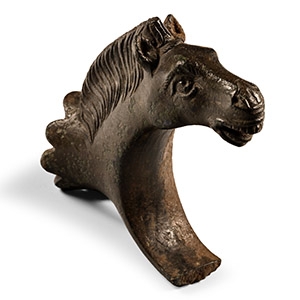
Roman Bronze Horse-Head Mount
2nd-3rd century A.D.Estimate: £1,200 - 1,700 (+bp*)
Opening Bid: £600
Hollow-formed mount formed as a crescent with horse-head finial modelled with flying mane and mouth open; to the rear, a deep flared socket with dentilled rim. 106 grams, 63 mm
Acquired on the German art market, 1989-1995. with The Museum Gallery, 19 Bury Place, London, WC1A 2JB, 1998-2003. Property of a London based academic, 2003-present.
This is beautiful Roman workmanship, probably derived from Hellenistic prototypes, which finds comparisons in similar mounts at the Metropolitan Museum of Art in New York and the British Museum. It could be a bed mount (for bed or triclinium) or a furniture element. It is also possible that it was a cart or chariot element. -
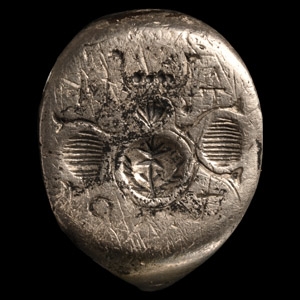
Roman Silver Ring with Insignia
2nd-4th century A.D.Sold for (Inc. bp): £130
Comprising a narrow D-section hoop and a large circular bezel with insignia. 3.56 grams, 20.13 mm overall, 16.26 x 18.07 mm internal diameter (approximate size British P, USA 7 1/2, Europe 16.23, Japan 15)
Ex German art market, 2000s. Acquired from an EU collector living in London. From the collection of Surrey, UK, gentleman.
