
Loading, please wait...
LOT 0583
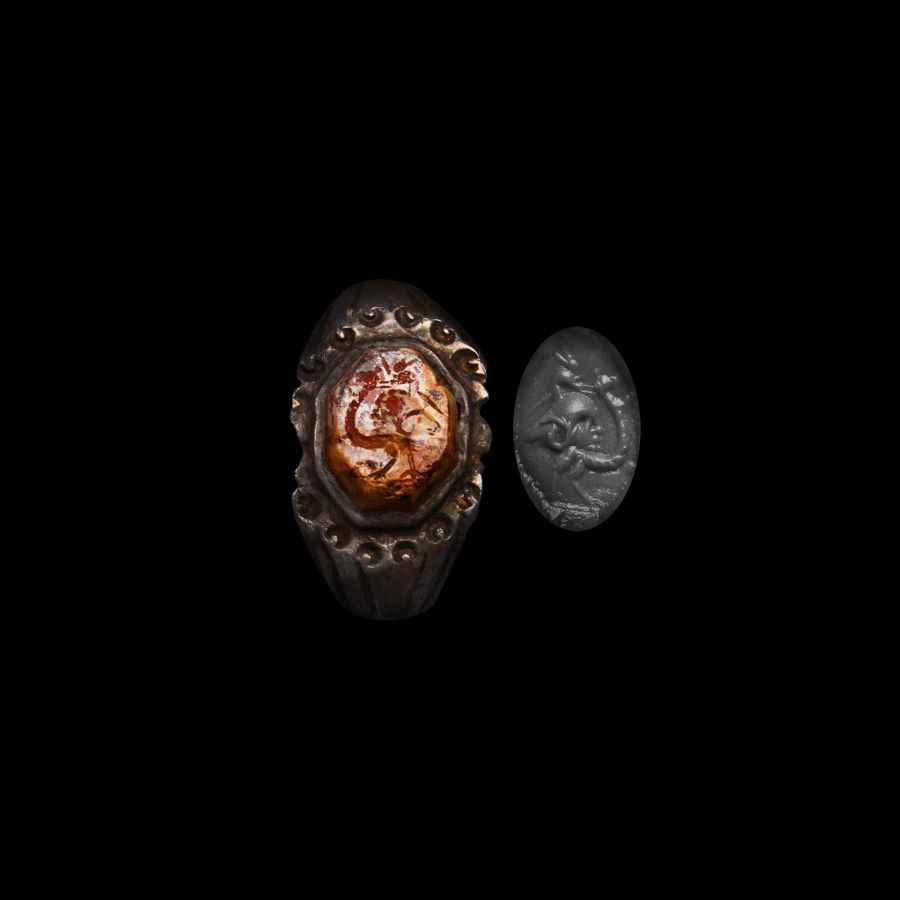
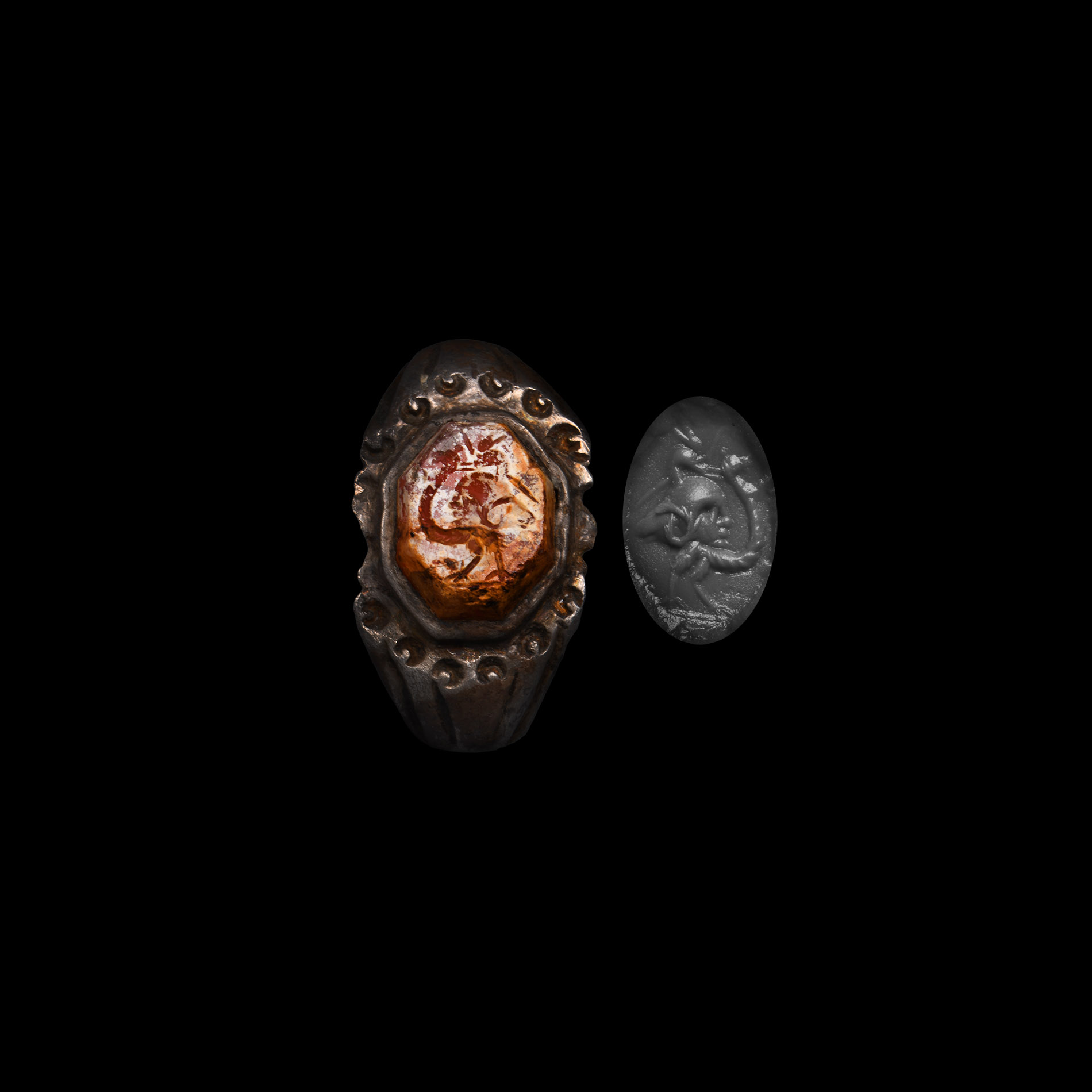
Roman Silver Ring with Gemstone
3RD CENTURY A.D.
1 1/8 in. (11.64 grams, 28.34 mm overall, 21.27 mm internal diameter (approximate size British I 1/2, USA 4 1/2, Europe 8.07, Japan 7)).
The hoop expanding at the shoulders with fluting, set with an octagonal intaglio gemstone displaying a gryllos. [No Reserve]
ProvenanceFrom the collection of a North American gentleman, formed in the 1990s.
CONDITIONTimeLine Auctions follows a vetting process to ensure the authenticity and legality of all items, reinforcing our commitment to integrity and responsible trading. Each antiquity, antique, and coin lot undergoes thorough examination by a vetting committee of at least ten external specialists, professional trade association members, scientists, and archaeologists: Our Vetting Process
AUCTIONS:
TimeLine is a leading auction house specialising in antiquities, ancient art, collectables, natural history, coins, medals, and books. Our auctions offer museums, collectors, historians, and enthusiasts the opportunity to acquire unique and historically significant pieces.
-
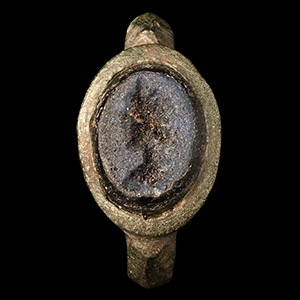
Roman Bronze Ring with Sol Invictus
Circa 2nd-3rd century A.D.Sold for (Inc. bp): £117
Composed of a carinated hoop and oval bezel set with a glass intaglio crowned bust facing left. 3.72 grams, 21.78 mm overall, 18.22 mm internal diameter (approximate size British K, USA 5 1/4, Europe 9.95, Japan 9)
Acquired 1990s-early 2000s. East Anglian private collection.
The portrait could be interpreted as wearing a radiated crown, thus an image of Sol Invictus, common in gems for rings of the 3rd century A.D., where the young face of the Sun-Helios is often visible in profile, looking to the left, with the radiate crown on his head. The cult of Sol Invictus was favoured by the Illyrian emperors and elevated in Rome by Aurelian to one of the premier divinities of the Empire. -
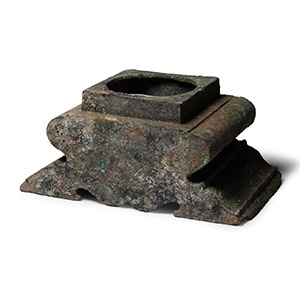
Roman Bronze Statue Base
Circa 2nd-3rd century A.D.Sold for (Inc. bp): £130
Featuring moulded legs and scalloped lower edge to front face; circular hole to the top; hollow-formed. 556 grams, 14.5 cm
Acquired 1990s-early 2000s. East Anglian private collection.
Some bronze supports found in the dedication shrines in temples are peculiar: they often have no frames of architectural derivation and have a central hole to the top. These bases seem to have not been intended for statuettes but for objects that may have needed support on a wall due to their height, possibly military standards, numerous fragments of which have been found in the Northern Italian regions. If this hypothesis is correct, this base could confirm the dedication of 'standards' as ex voto, positioned in the temple as a place for the conservation of military insignia. -
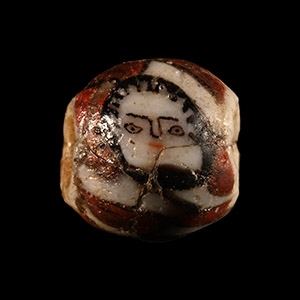
Roman Glass Face Bead
1st century B.C.-1st century A.D.Sold for (Inc. bp): £182
Of roughly spherical form, opaque polychrome checked design incorporating two stylised human faces. 1.34 grams, 10 mm
Ex private collection, 1980s. Acquired on the UK art market in the 1990s.
