
Loading, please wait...
LOT 0854
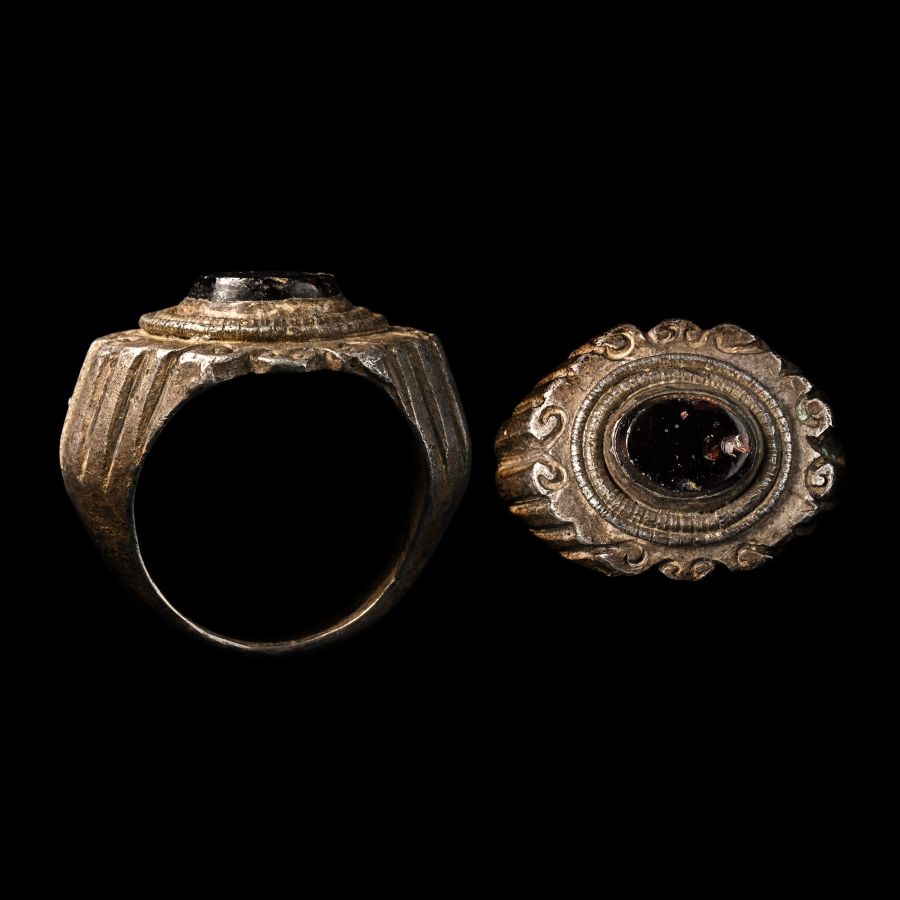
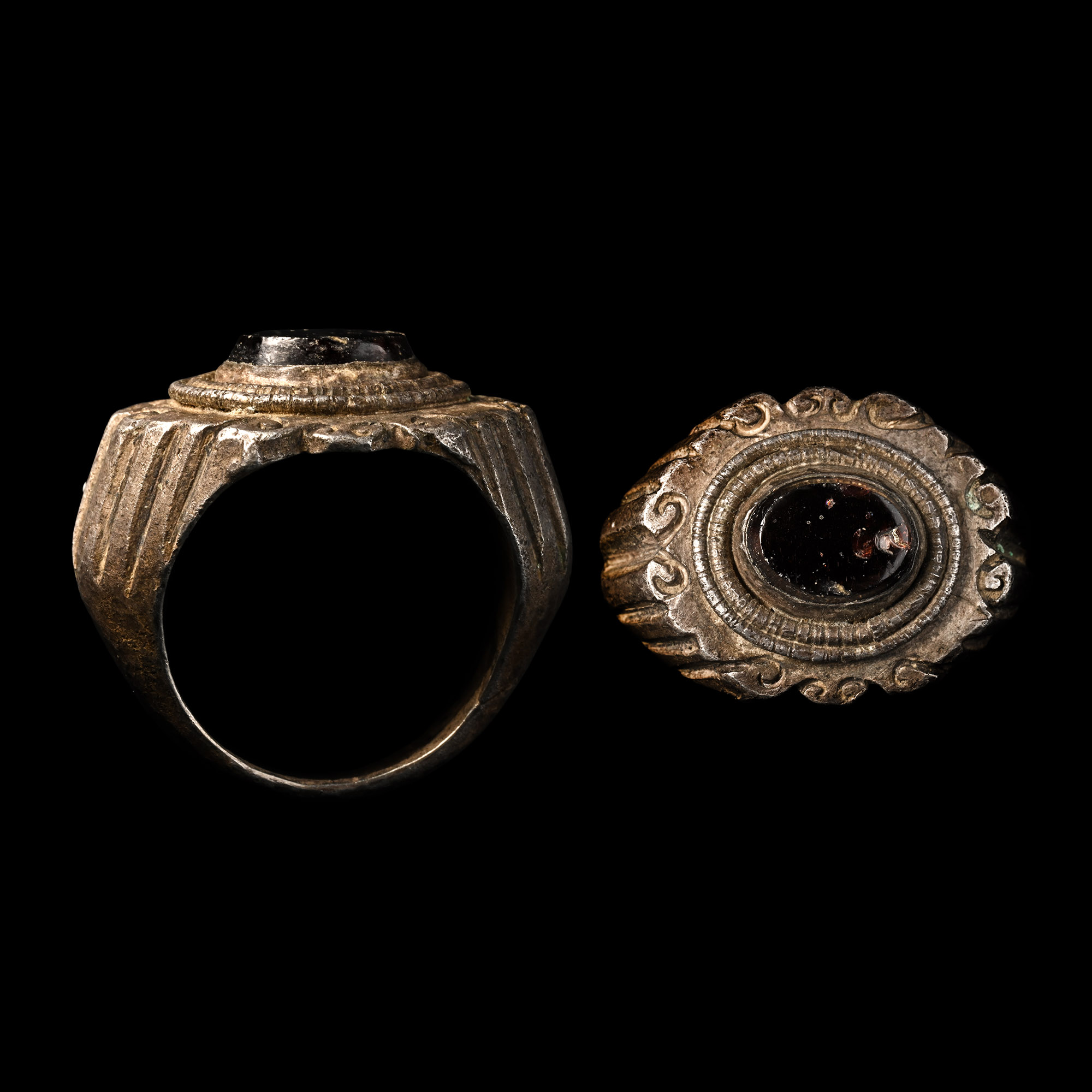
Roman Silver Ring with Garnet
CIRCA 3RD CENTURY A.D.
1 1/4 in. (40.50 grams, 33.15 mm overall, 22.58 mm internal diameter (approximate size British Z+1 1/2, USA 13, Europe 30.69, Japan 29)).
A D-section silver hoop expanding to ribbed shoulders forming the scrolled borders of the plaque, tiered beaded wire collars surrounding an elliptical cell with inset garnet cloison. [No Reserve]
ProvenanceEx property of a gentleman; acquired in the late 1960s-early 1970s.
LiteratureCf. Ruseva-Slokoska, L., Roman Jewellery, Sofia, 1991, item 210.
CONDITIONTimeLine Auctions follows a vetting process to ensure the authenticity and legality of all items, reinforcing our commitment to integrity and responsible trading. Each antiquity, antique, and coin lot undergoes thorough examination by a vetting committee of at least ten external specialists, professional trade association members, scientists, and archaeologists: Our Vetting Process
AUCTIONS:
TimeLine is a leading auction house specialising in antiquities, ancient art, collectables, natural history, coins, medals, and books. Our auctions offer museums, collectors, historians, and enthusiasts the opportunity to acquire unique and historically significant pieces.
-

Roman Marble Head of a Woman
3rd-4th century A.D.Estimate: £6,000 - 8,000 (+bp*)
Opening Bid: £3,000
Carved in three-quarter view, with hair dressed in a chignon with frontal band and wavy segments; soft facial features with much detailing remaining to the proper right eye and mouth; likely a frieze fragment; mounted on an old collector's display stand with typed label 'Marble, woman's head / Egypt / C.25-100 A.D. / Cat.No. 6169'. 8.45 kg, 39 cm high
Acquired in trade from the San Franciscanum Museum, Israel, prior to 1980. with Archaeologia, pre 1983, Switzerland and Canada. Accompanied by an academic report by Dr Raffaele D’Amato. This lot has been checked against the Interpol Database of stolen works of art and is accompanied by search certificate number no.12964-242755.
The arrangement of the hair is characteristic of female portraits dating between the late Severan and Tetrarchic periods. The head, due to the treatment of the hair, finds comparisons with a female portrait in the Museo Nazionale Romano, depicting an elderly woman of the Antonine era, and with another female portrait in the same museum, dated to the third decade of the 3rd century A.D., reworked in the Tetrarchic period, and which showed a Severan so-called Nest Frisur hairstyle. The sculpture in question can therefore be dated between the full 3rd century A.D. and the first decades of the 4th century A.D. based on the hairstyle, the shape of eyes and eyebrows. -
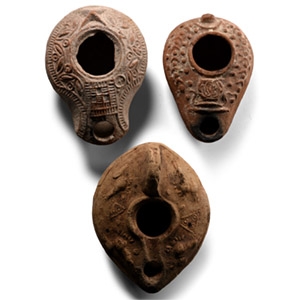
Roman and Byzantine Ceramic Oil Lamp Collection
4th-8th century A.D.Sold for (Inc. bp): £293
Comprising: a piriform lamp with birds and geometric motifs, low basal ring; a piriform lamp with raised pellets and other motifs; a rounded lamp with short nozzle, low-relief leaves and ring-and-dot motifs within geometric border, a hatched rectangle behind the nozzle, a palm branch underneath the nozzle flanked by crescentic lines and ring-and-dot motifs, raised nipple to base. 190 grams total, 78-90 mm
with Galerie Rhéa, Zurich, Switzerland. -
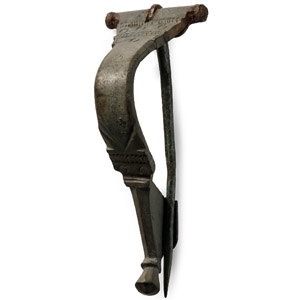
Large Roman Decorated Bronze Bow Brooch
3rd-4th century A.D.Sold for (Inc. bp): £46
Wide bow with annulet and linear decoration, keeled footplate with a facetted knop finial. 24.5 grams, 73 mm
Ex German art market, 2000s. Acquired from an EU collector living in London. From the collection of a Surrey, UK, gentleman.
