
Loading, please wait...
LOT 0645
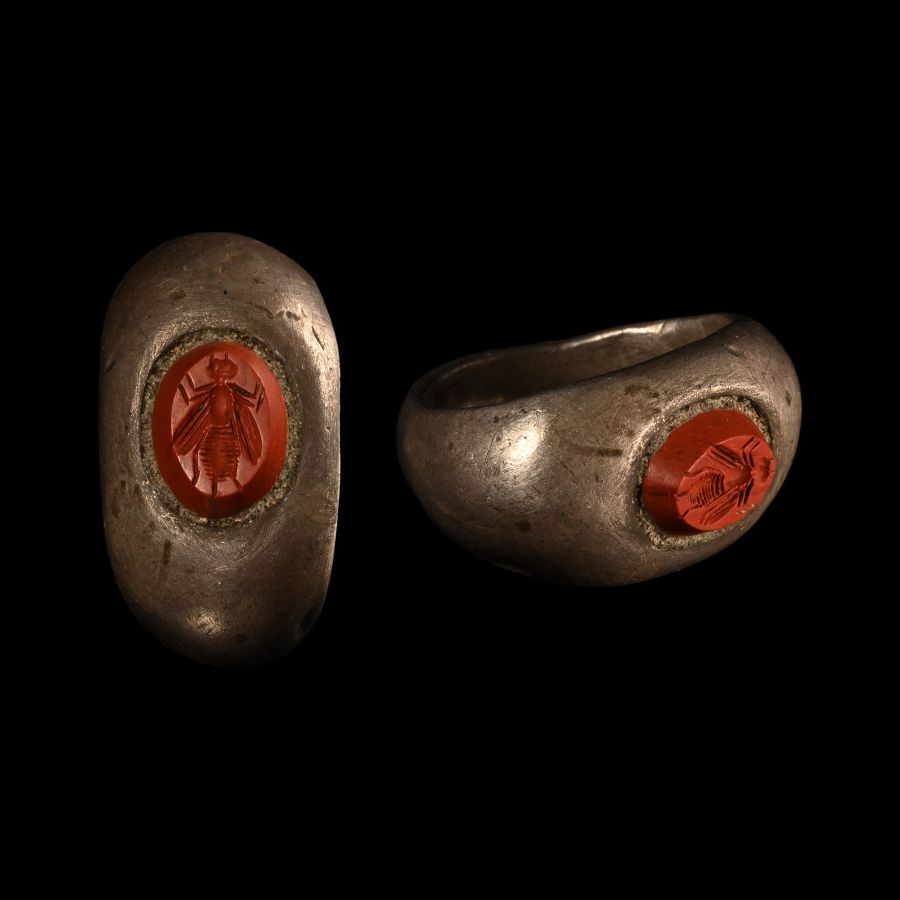
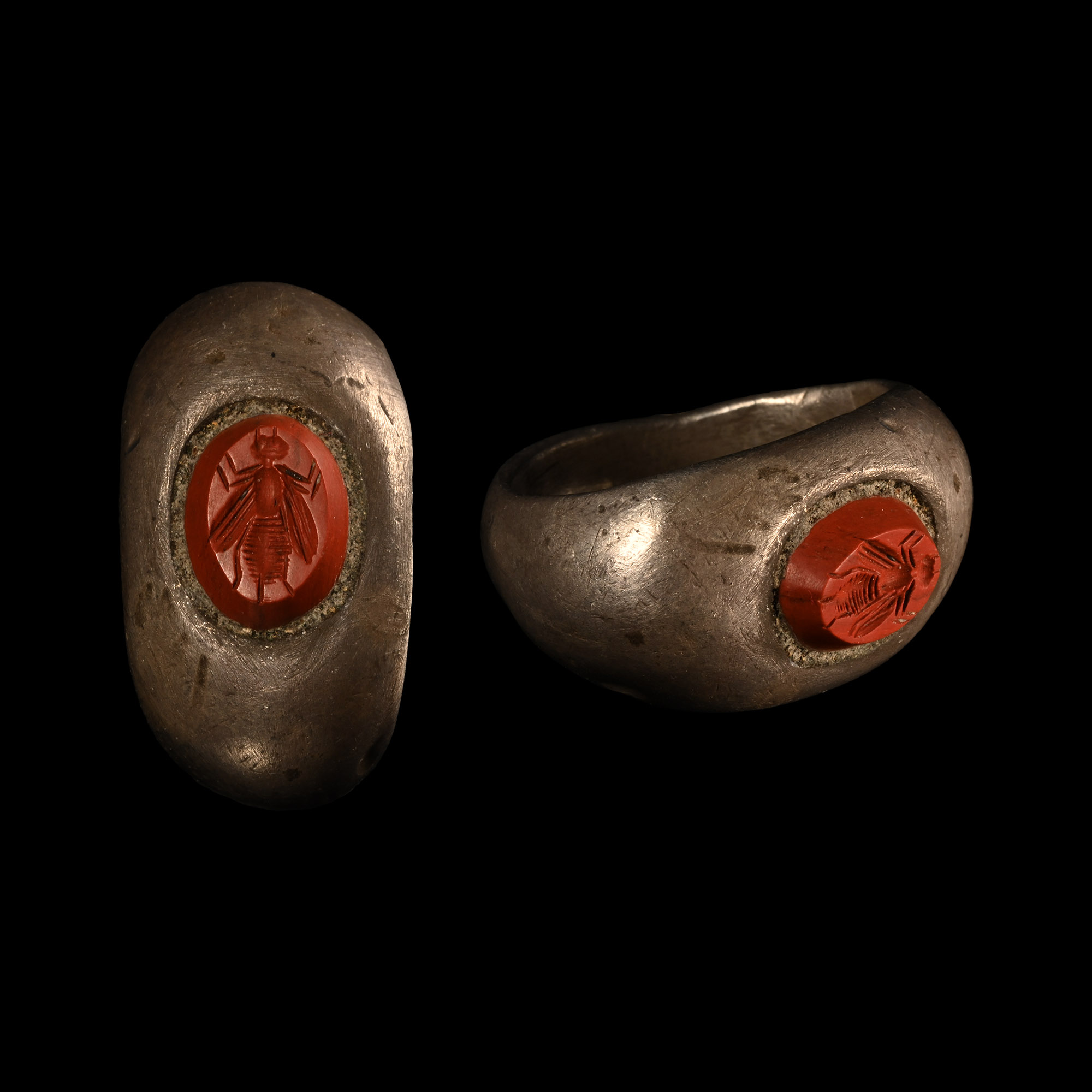
Roman Silver Ring with Fly Gemstone
2ND-3RD CENTURY A.D. AND LATER
1 in. (17.26 grams, 26.69 mm overall, 19.90 mm internal diameter (approximate size British P, USA 7 1/2, Europe 16.23, Japan 15)).
With later rounded plaque and inset jasper stud with intaglio fly motif.
ProvenanceAcquired on the UK art market in the 1980s.
From an East Anglian private collection.
Cf. Ruseva-Slokoska, L., Roman Jewellery, Sofia, 1991, item 194, for type.
CONDITIONTimeLine Auctions follows a vetting process to ensure the authenticity and legality of all items, reinforcing our commitment to integrity and responsible trading. Each antiquity, antique, and coin lot undergoes thorough examination by a vetting committee of at least ten external specialists, professional trade association members, scientists, and archaeologists: Our Vetting Process
AUCTIONS:
TimeLine is a leading auction house specialising in antiquities, ancient art, collectables, natural history, coins, medals, and books. Our auctions offer museums, collectors, historians, and enthusiasts the opportunity to acquire unique and historically significant pieces.
-
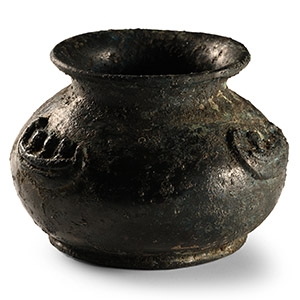
Roman Bronze Vessel with Galleys
2nd-3rd century A.D.Sold for (Inc. bp): £247
Squat jar with concentric rings to the base, flared rim to the mouth three high-relief galley images to the shoulder. 166 grams, 43 mm high
Ex German art market, 2000s. Acquired from an EU collector living in London. From the collection of Surrey, UK, gentleman.
The vase evokes a scene of maritime or river trade, usually linked to navigation on the Rhine or on the great rivers of Roman Gaul. In particular, the shape of the ship and the three people only half visible on its deck closely resemble the famous relief of the wine merchants of Neumagen-Dhron. The small jar was probably for domestic toilette use. -
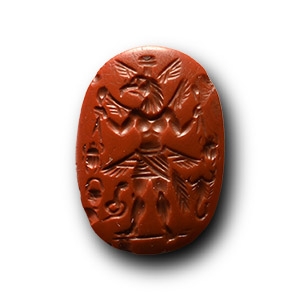
Late Roman Gnostic Carnelian Gemstone
4th-7th century A.D.Sold for (Inc. bp): £1,235
Bifacial ellipsoid insert with lip to one face; obverse depicting a kilted figure with avian head and with wings on his head, shoulders and hips holding symbols and flanked by a scorpion, scarab, serpent and other items; reverse with lion-headed serpent, surrounding enigmatic legend 'XAYMNOMNABMXMXIM'; supplied with a museum-quality impression of each face. 1.92 grams, 22 mm
From the property of late Mr SM, London, UK, 1969-1999. -
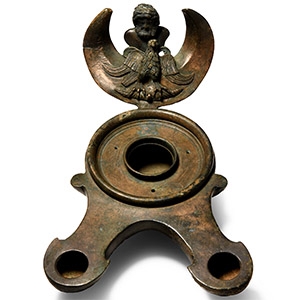
Very Large Roman Bronze Oil Lamp with Jupiter and Eagle
3rd-4th century A.D.Sold for (Inc. bp): £8,450
With a rounded body and double nozzle with volutes; the body flat with engraved volutes, raised rim and basal ring; to the rear a large crescent with Jupiter (Greek Zeus) to the centre and his eagle with spread wings before him; the god depicted with thick locks and voluminous beard, the eagle with detailed plumage and finely detailed face; accompanied by a custom-made display stand. 1.67 kg, 25.7 wide (3.08 kg total,18 cm high including stand)
Old private British collection, pre-1965. Property of a gentleman; acquired in the UK before 2000. Accompanied by a copy of an old black and white photograph. Accompanied by an academic report by Dr Raffaele D’Amato. This lot has been checked against the Interpol Database of stolen works of art and is accompanied by search certificate number no.12034-215425.
Here Jupiter is represented with his attributes connected with the crescent of goddess Luna. According to Bailey, all lamps in the category to which the map belongs, were intended for suspension. Lamps with multiple nozzles gave more light and thus were suitable for lighting large spaces.
