
Loading, please wait...
LOT 0759
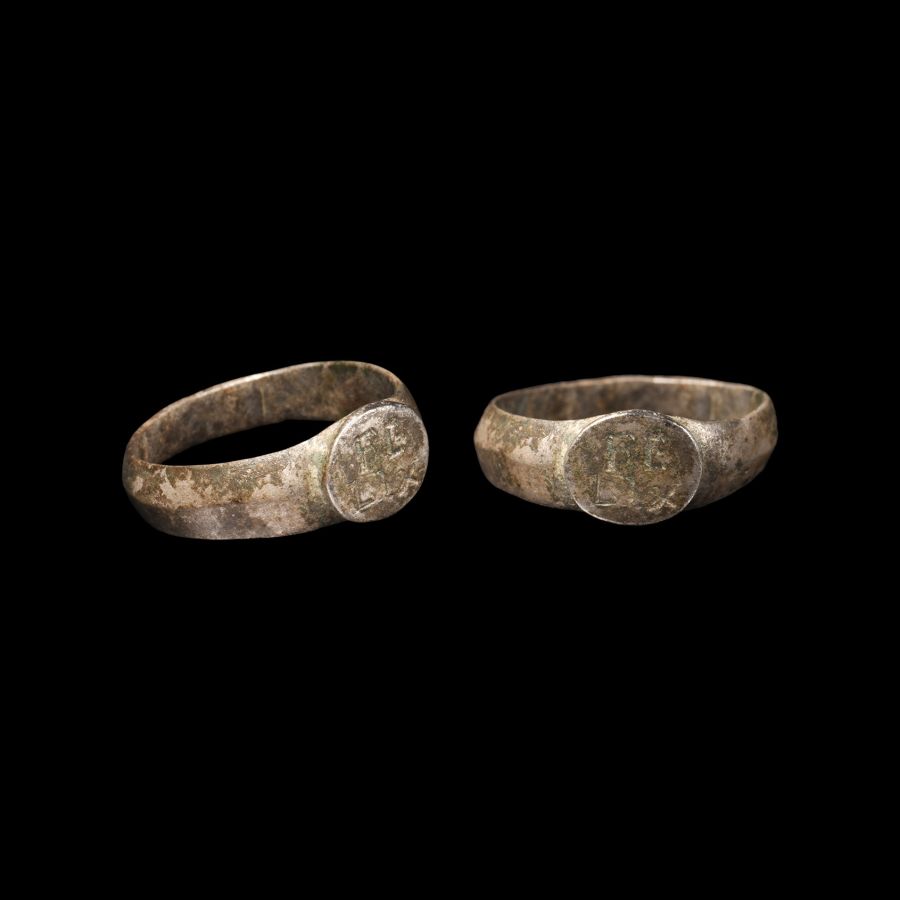
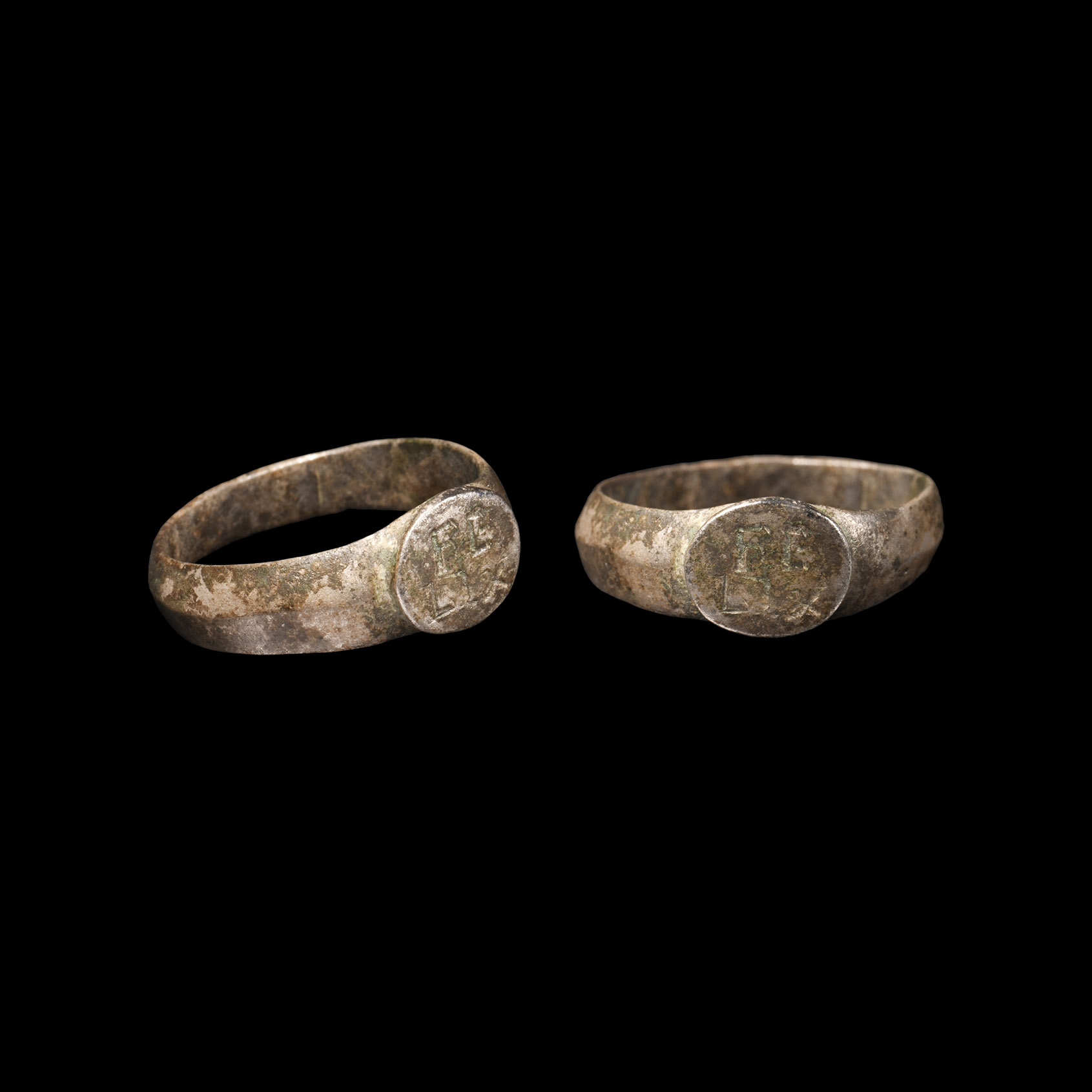
Roman Silver Ring with FELIX
1ST CENTURY A.D.
3/4 in. (3.39 grams, 21.24 mm overall, 16.82 mm internal diameter (approximate size British M 1/2, USA 6 1/4, Europe 13.09, Japan 12)).
Carinated hoop, stud bezel with incised with the Roman name 'FE/LIX'.
ProvenanceAcquired on the EU art market around 2000.
From the collection of a North American gentleman.
Cf. Chadour, A.B., Rings. The Alice and Louis Koch Collection, volume I, Leeds, 1994, item 185.
CONDITIONTimeLine Auctions follows a vetting process to ensure the authenticity and legality of all items, reinforcing our commitment to integrity and responsible trading. Each antiquity, antique, and coin lot undergoes thorough examination by a vetting committee of at least ten external specialists, professional trade association members, scientists, and archaeologists: Our Vetting Process
AUCTIONS:
TimeLine is a leading auction house specialising in antiquities, ancient art, collectables, natural history, coins, medals, and books. Our auctions offer museums, collectors, historians, and enthusiasts the opportunity to acquire unique and historically significant pieces.
-
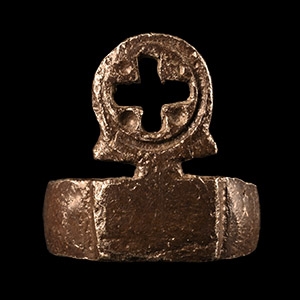
Roman Silver Key-Ring
4th-5th century A.D.Sold for (Inc. bp): £117
Comprising a flat-section hoop and rectangular panel, short shank and disc-shaped head with cruciform void and pellets in the interstitial quadrants. 3.98 grams, 17.81 mm overall, 15.08 mm internal diameter (approximate size British H 1/2, USA 4, Europe 6.81, Japan 6)
Acquired 1960s-1990s. Late Alison Barker collection, a retired London barrister. -
.jpg)
Roman Enamelled Bronze Miniature Votive Altar
3rd-4th century A.D.Sold for (Inc. bp): £293
Formed with four out-turned legs and sub-square top with knop to each corner and central circular void, rectangular panel to each side face with arched lower edge and alternating foliate and geometric polychrome enamelled design. 22.8 grams, 34 mm
Fine condition.
Found Cambridgeshire, pre 2000. -
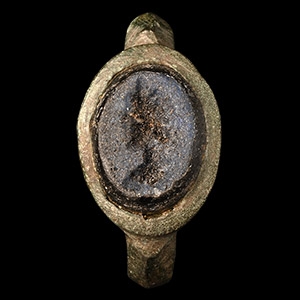
Roman Bronze Ring with Sol Invictus
Circa 2nd-3rd century A.D.Sold for (Inc. bp): £117
Composed of a carinated hoop and oval bezel set with a glass intaglio crowned bust facing left. 3.72 grams, 21.78 mm overall, 18.22 mm internal diameter (approximate size British K, USA 5 1/4, Europe 9.95, Japan 9)
Acquired 1990s-early 2000s. East Anglian private collection.
The portrait could be interpreted as wearing a radiated crown, thus an image of Sol Invictus, common in gems for rings of the 3rd century A.D., where the young face of the Sun-Helios is often visible in profile, looking to the left, with the radiate crown on his head. The cult of Sol Invictus was favoured by the Illyrian emperors and elevated in Rome by Aurelian to one of the premier divinities of the Empire.
