
Loading, please wait...
LOT 0606
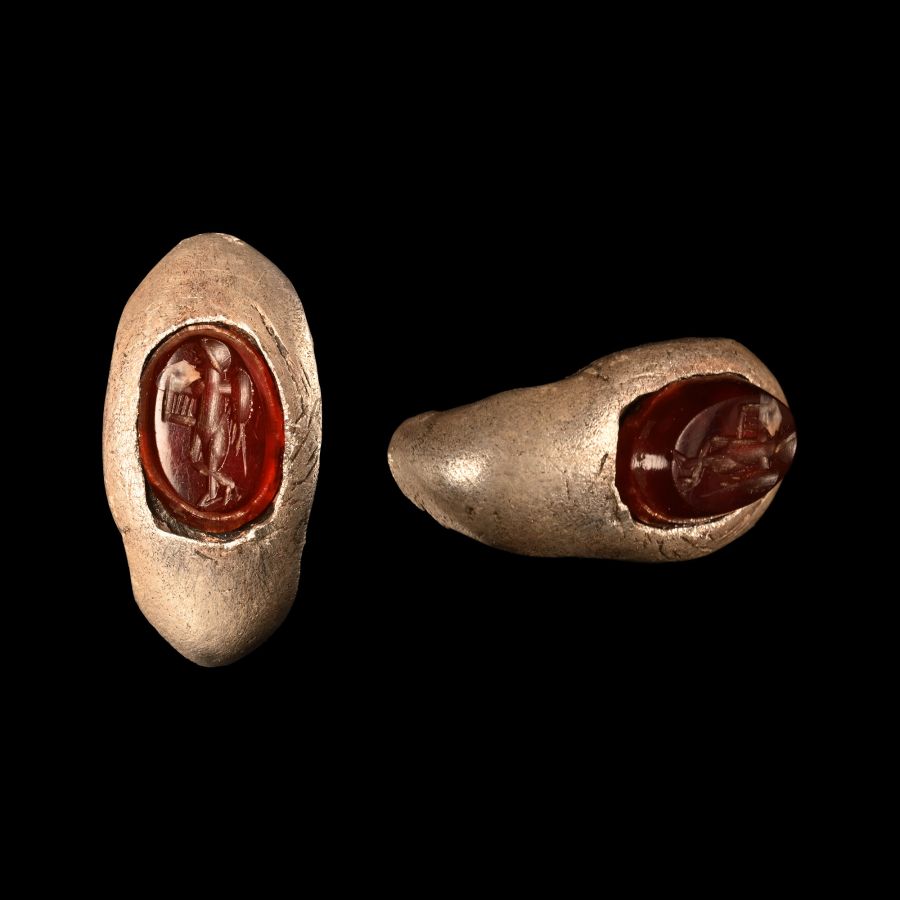
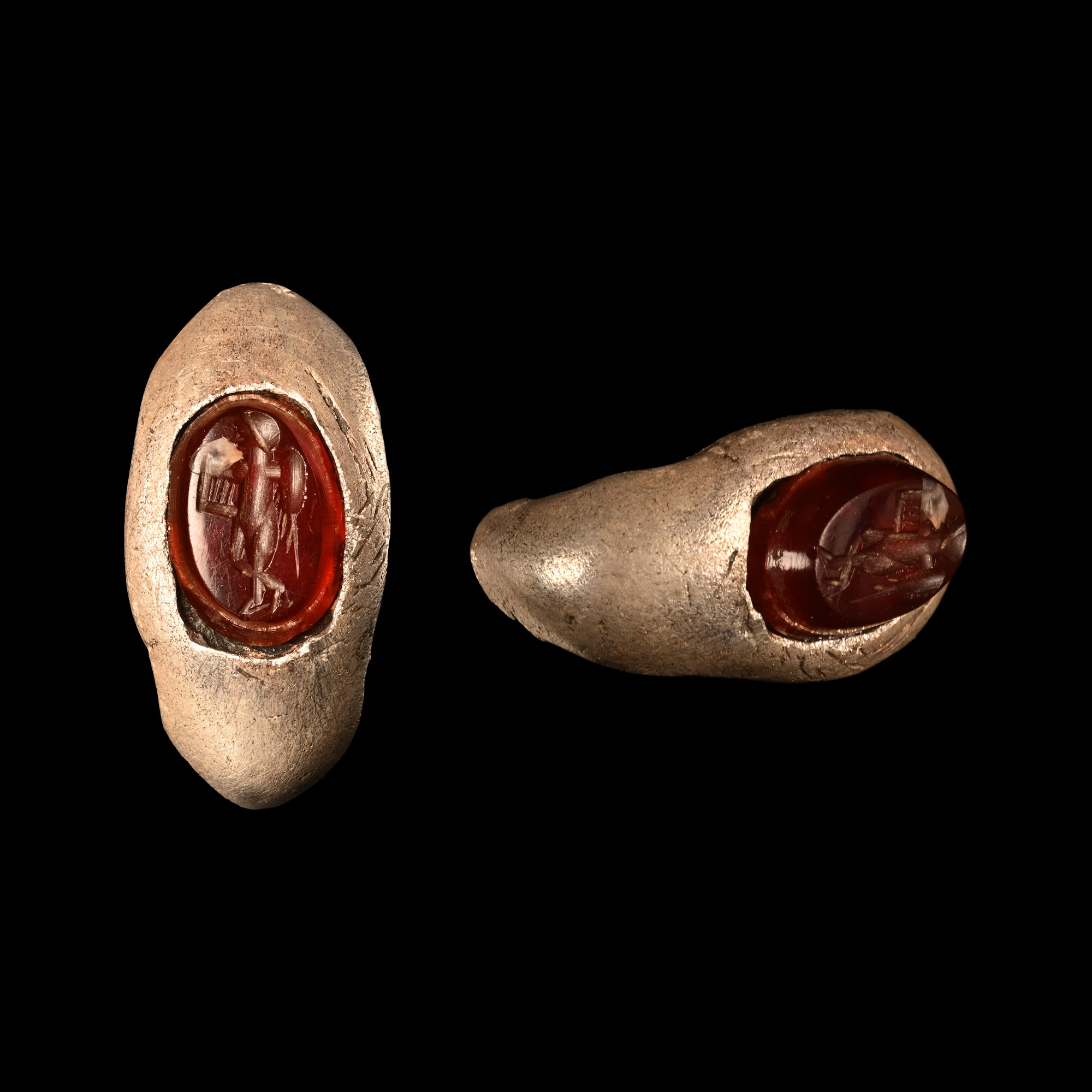
Roman Silver Ring with Eros Gemstone
2ND-3RD CENTURY A.D.
1 in. (8.18 grams, 24.38 mm overall, 16.87 mm internal diameter (approximate size British I 1/2, USA 4 1/2, Europe 8.07, Japan 7)).
With broad plaque, inset carnelian gemstone with intaglio winged Eros, possible marriage.
ProvenanceEx German art market, 2000s.
Acquired from an EU collector living in London.
From the collection of Surrey, UK, gentleman.
TimeLine Auctions follows a vetting process to ensure the authenticity and legality of all items, reinforcing our commitment to integrity and responsible trading. Each antiquity, antique, and coin lot undergoes thorough examination by a vetting committee of at least ten external specialists, professional trade association members, scientists, and archaeologists: Our Vetting Process
AUCTIONS:
TimeLine is a leading auction house specialising in antiquities, ancient art, collectables, natural history, coins, medals, and books. Our auctions offer museums, collectors, historians, and enthusiasts the opportunity to acquire unique and historically significant pieces.
-
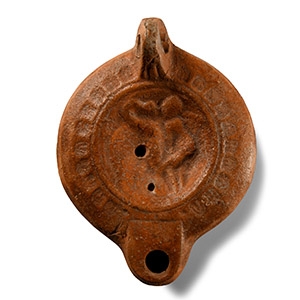
Roman Oil Lamp with Leda and The Swan
2nd century A.D.Estimate: £200 - 300 (+bp*)
Opening Bid: £100
A Roman North African terracotta oil lamp with grooved ring handle; discus decorated with the mythological scene depicting Leda and the swan embracing. 77 grams, 10.3 cm
Dr Suzanne Gozlan, thence by descent. Suzanne Gozlan (1921-2022), a doctor of History and Archaeology, served as a professor at the Ecole Normale d'Instituteurs de Chartres and lectured at the University of Paris 4 Sorbonne. Property of a Bristol, UK, gentleman.
In Greek mythology, Leda was the wife of King Tyndareus and queen of Sparta. According to the myth, Zeus, the king of the gods, was captivated by Leda's beauty and appeared before her in the form of a swan. He then either raped or seduced her and impregnated her. The same night, Leda slept with her husband who also impregnated her, as a result of these two unions she laid two eggs, each containing one set of twins. According to later Greek mythology Leda bore Helen (of Troy) and Polydeuces, children of Zeus, while at the same time bearing Castor and Clytemnestra, children of her husband. -
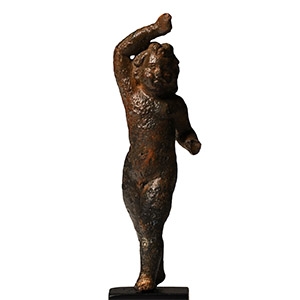
Roman Bronze Statuette of a Putto
1st-2nd century A.D.Sold for (Inc. bp): £520
Modelled in the round, standing nude with one arm raised above the head and the other bent, probably from a larger ensemble of figures; mounted on a custom-made display stand. 104 grams total, 10.9 cm including stand
From a collection acquired on the UK art market from various auction houses and collections mostly before 2000. From an important Cambridgeshire estate; thence by descent.
The figure lacks the small dorsal wings which are normally present on a putto, although the curled locks of hair are typical of the type. During the Roman imperial period, children were widely represented in the art of both the public and private spheres. Images of both mortal and divine children appeared in the artworks and furnishings of the home, on the tomb monuments and burial containers associated with the funerary realm. -
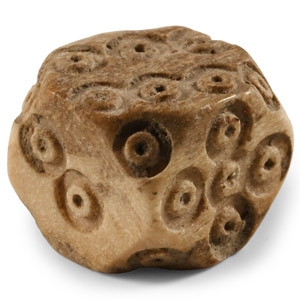
Roman Bone Gaming Dice
1st-4th century A.D.Sold for (Inc. bp): £130
Cuboid with chamfered corners each with a ring-and-dot motif, reserved pellet marks disposed 1:6, 2:4, 3:5. 1.7 grams, 10 mm
Acquired from Red House Antiques, York, UK, in 2006. Ian Wilkinson collection, Nottinghamshire, UK.
