
Loading, please wait...


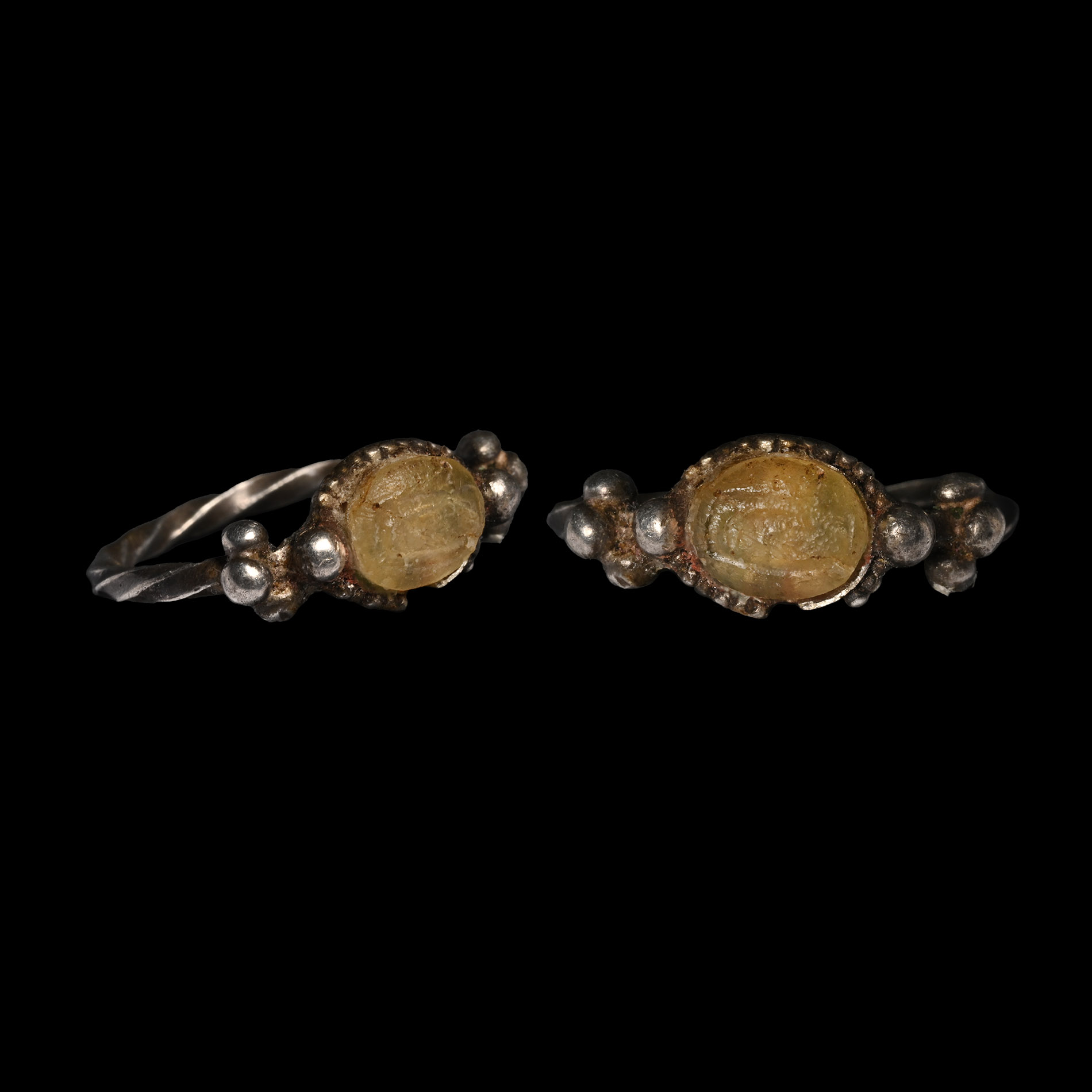
LOT 0954
Roman Silver Ring with Cabochon
4TH-5TH CENTURY A.D.
3/4 in. (2.39 grams, 21.87 mm overall, 18.10 mm internal diameter (approximate size British M 1/2, USA 6 1/4, Europe 13.09, Japan 12)).
Formed as a twisted square-section shank with granule clusters to the shoulders, ellipsoid plaque with beaded wire cell and inset aqua glass cabochon with incuse rectangle motif. [No Reserve]
ProvenanceUK private collection before 2000.
Acquired on the UK art market.
Property of a London gentleman.
TimeLine Auctions follows a vetting process to ensure the authenticity and legality of all items, reinforcing our commitment to integrity and responsible trading. Each antiquity, antique, and coin lot undergoes thorough examination by a vetting committee of at least ten external specialists, professional trade association members, scientists, and archaeologists: Our Vetting Process
AUCTIONS:
TimeLine is a leading auction house specialising in antiquities, ancient art, collectables, natural history, coins, medals, and books. Our auctions offer museums, collectors, historians, and enthusiasts the opportunity to acquire unique and historically significant pieces.
-
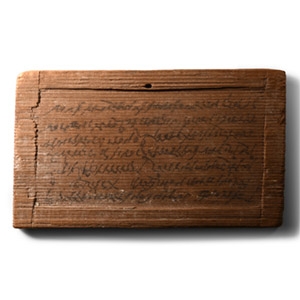
Roman Inked Wooden Legal Document
Late 4th century A.D.Sold for (Inc. bp): £3,120
With a recessed panel on one side and scored frame with securing hole to one long side; seven lines of inked text in Roman cursive containing the record of a legal document in a formulaic legal language; two part-lines of cursive text to reverse; supplied with two monochrome photographs of the tablet displaying the text to advantage. 19.91 grams, 12.5 x 7.5 cm
From an important London collection since 1975. Accompanied by a collection of two 1970s photographs of the the tablet. -
.jpg)
Roman Votive Terracotta Hand Group
Circa 1st century A.D.Sold for (Inc. bp): £124
Each moulded with finger detailing to one face; or from children's dolls. 23 grams total, 34-53 mm
Ex German art market, 2000s. Acquired from an EU collector living in London. From the collection of Surrey, UK, gentleman. -
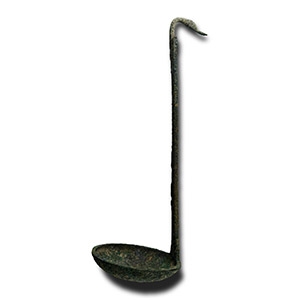
Roman Bronze Duck-Headed Ladle
1st-3rd century A.D.Sold for (Inc. bp): £520
With broad bowl and inturned rim, D-section handle, with one remaining hooked duck-head finial. 208 grams, 26.5 cm
Private collection of Mr S.A., Switzerland, 1990s, thence by descent.
