
Loading, please wait...
LOT 1004
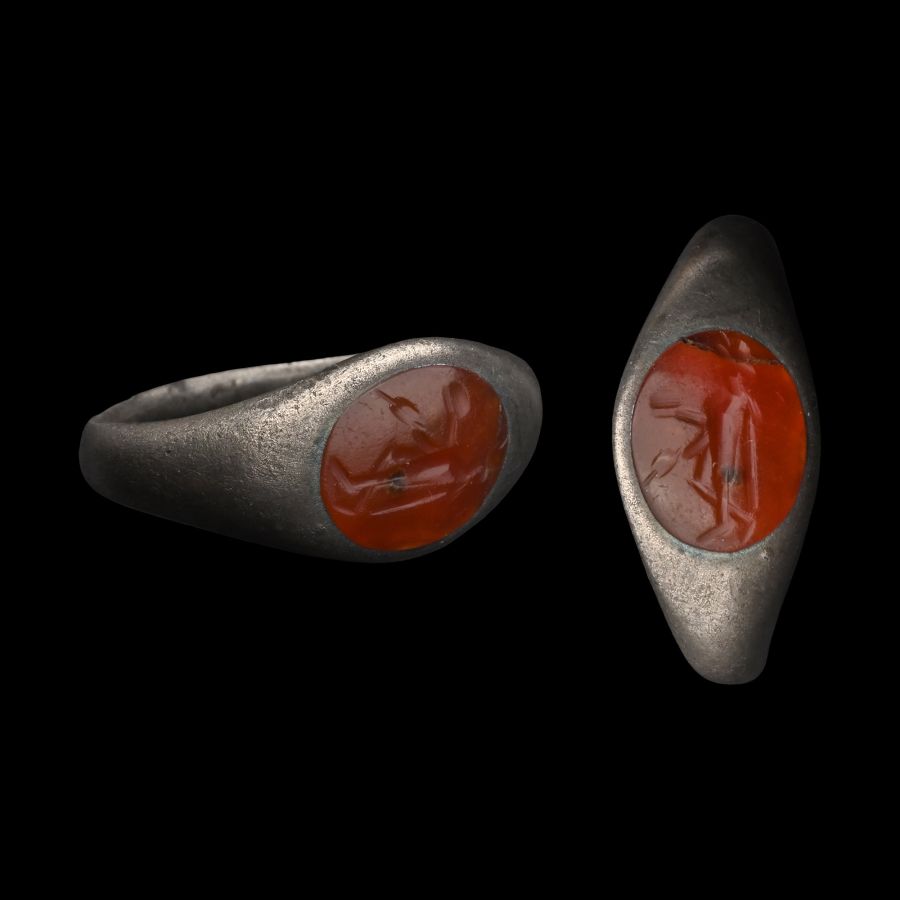
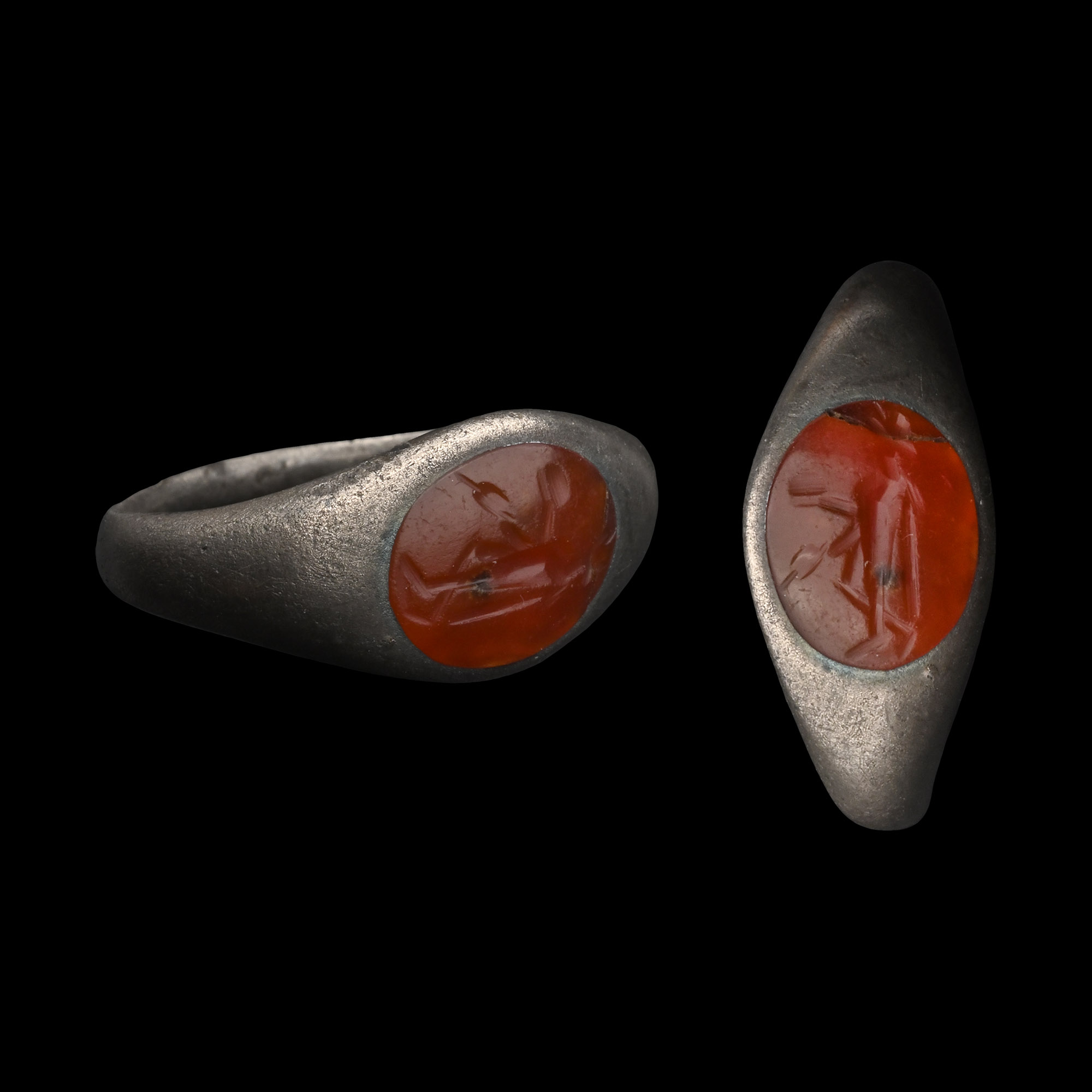
Roman Silver Ring with Apollo Gemstone
CIRCA 2ND CENTURY A.D.
7/8 in. (4.53 grams, 22.48 mm overall, 17.58 mm internal diameter (approximate size British H, USA 3 3/4, Europe 6.18, Japan 6)).
A round-section hoop expanding to broad shoulders, flat plaque with inset carnelian cloison, intaglio image of Apollo (Sol), cloaked, advancing with a patera in each hand. [No Reserve]
ProvenanceFrom an important collection of jewellery formed over 40 years by a German collector.
LiteratureCf. Ruseva-Slokoska, L., Roman Jewellery, Sofia, 1991, item 189.
CONDITIONTimeLine Auctions follows a vetting process to ensure the authenticity and legality of all items, reinforcing our commitment to integrity and responsible trading. Each antiquity, antique, and coin lot undergoes thorough examination by a vetting committee of at least ten external specialists, professional trade association members, scientists, and archaeologists: Our Vetting Process
AUCTIONS:
TimeLine is a leading auction house specialising in antiquities, ancient art, collectables, natural history, coins, medals, and books. Our auctions offer museums, collectors, historians, and enthusiasts the opportunity to acquire unique and historically significant pieces.
-
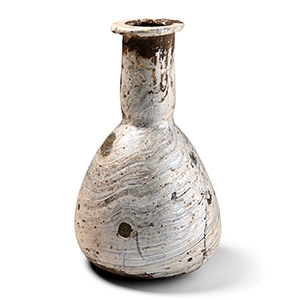
Roman Iridescent Glass Flask
Circa 2nd century A.D.Sold for (Inc. bp): £247
Comprising a tall conical body and a short tubular neck with everted rim, silvery iridescence covering most of the surfaces. 143 grams, 13 cm
Acquired Christie's, London, 6 May, 1982, no.14 (part). From a private Wiltshire, UK, collection. Accompanied by a copy of the relevant Sotheby's catalogue pages. -
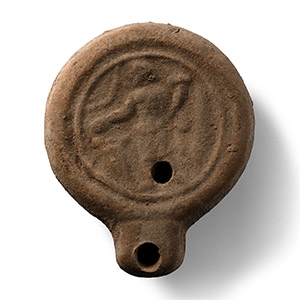
Roman Terracotta Oil Lamp with Minerva Standing
2nd century A.D.Sold for (Inc. bp): £59
Discoid in plan with short nozzle, broad shoulder, discus with frieze depicting a standing female figure with head turned to her right, holding a cornucopia in her left hand, objects in the field; accretion to underside. 73 grams, 93 mm
Acquired on the UK art market before 2000. Property of an Essex, UK, gentleman. -
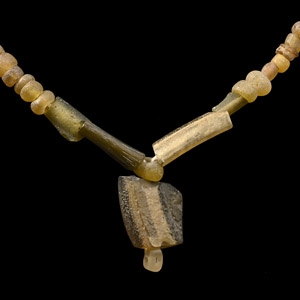
Roman Yellow Glass Bead Necklace String
1st-4th century A.D. and laterSold for (Inc. bp): £20
Restrung designer necklace string of tubular, annular and other types. 23.3 grams, 38.3 cm
London, UK, collection, 2000s.
