
Loading, please wait...
LOT 0107
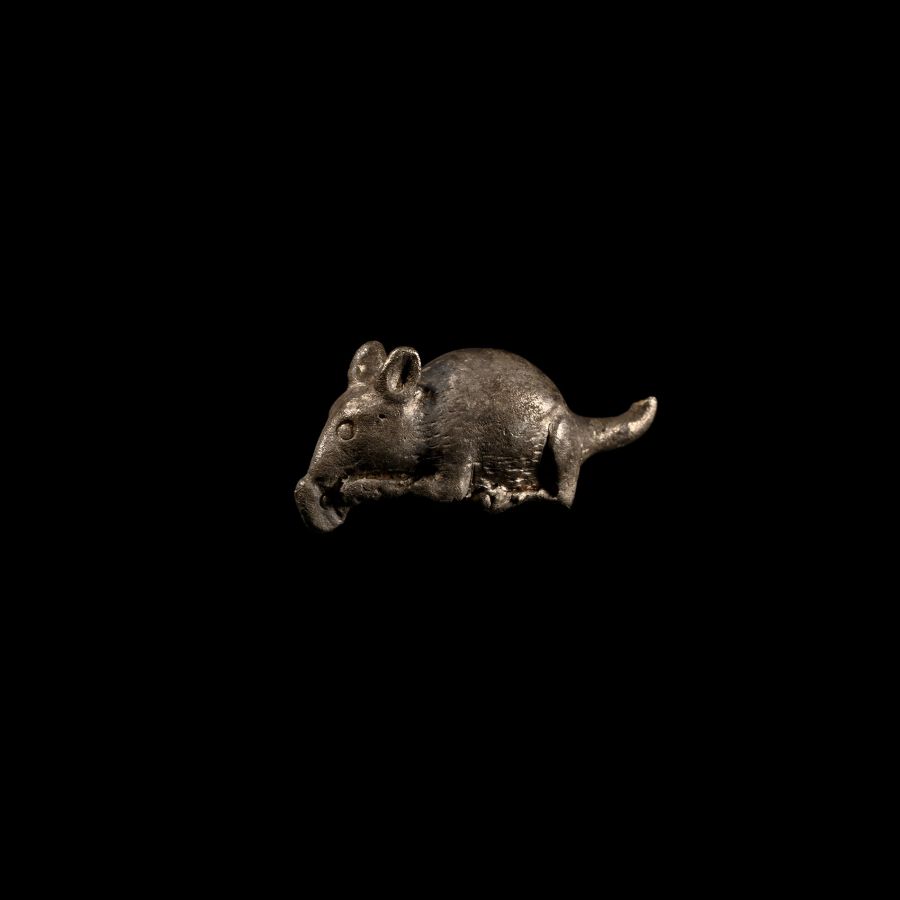
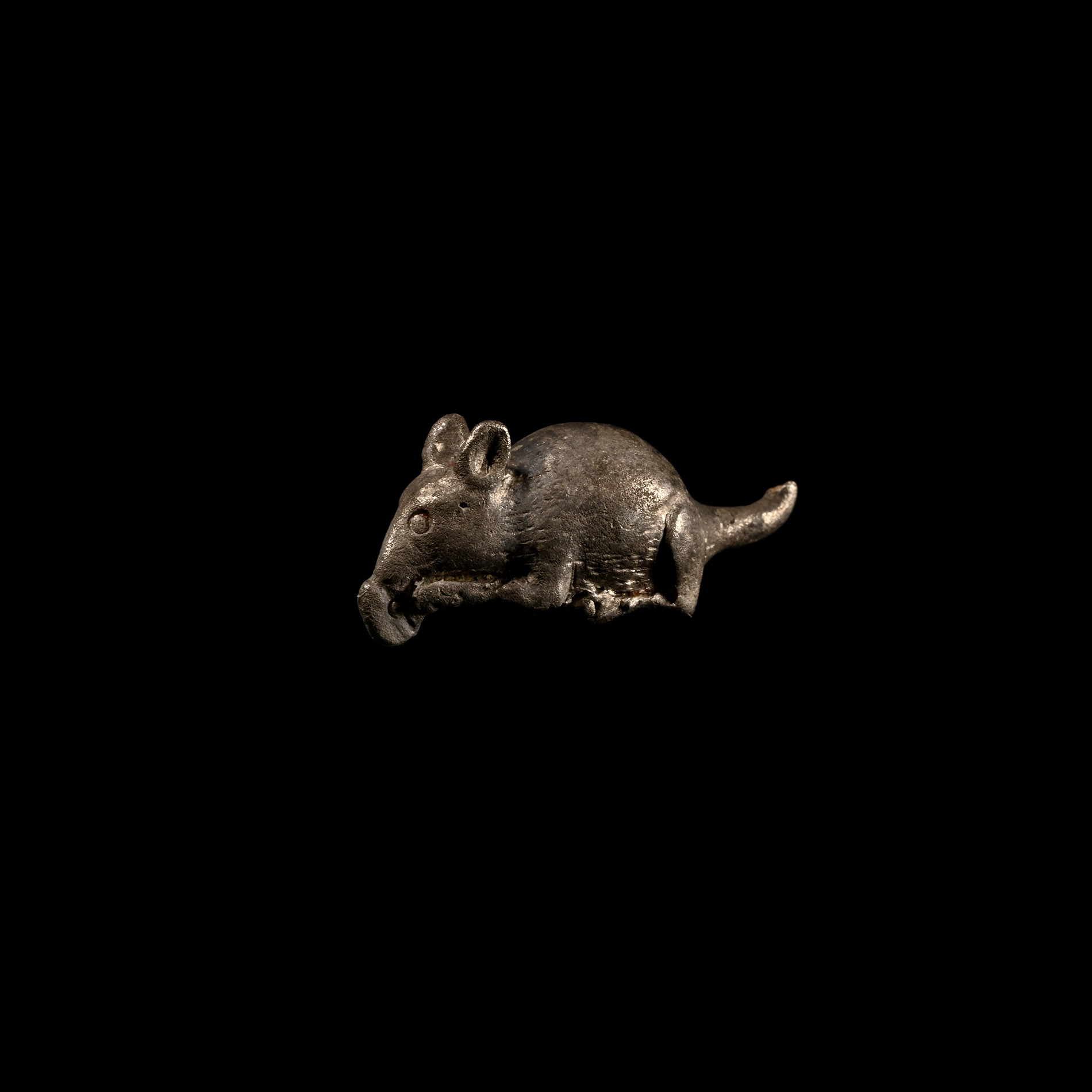
Roman Silver Mouse Figure
2ND-3RD CENTURY A.D.
1 in. (7.74 grams, 27 mm).
Shown with semi-naturalistic detailing in a crouching posture, eating a nut held in its front paws.
Provenance‘The Ancient Menagerie Collection’ formerly the property of a Cambridgeshire lady, collected since the 1990s and acquired from auctions and dealers throughout Europe and the USA, now ex London collection.
LiteratureCf. Christies, London, A Peaceable Kingdom: The Leo Mildenberg Collection of Ancient Animals, 26th-27th October, 2004, p.184 and p.203, for similar.
CONDITIONTimeLine Auctions follows a vetting process to ensure the authenticity and legality of all items, reinforcing our commitment to integrity and responsible trading. Each antiquity, antique, and coin lot undergoes thorough examination by a vetting committee of at least ten external specialists, professional trade association members, scientists, and archaeologists: Our Vetting Process
AUCTIONS:
TimeLine is a leading auction house specialising in antiquities, ancient art, collectables, natural history, coins, medals, and books. Our auctions offer museums, collectors, historians, and enthusiasts the opportunity to acquire unique and historically significant pieces.
-
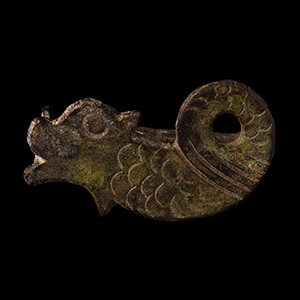
Roman Bronze Hippocamp Brooch
2nd century A.D.Sold for (Inc. bp): £143
Complete with pin-lugs, pin and catchplate to the reverse; stylised scale detailing. 10.7 grams, 40 mm
Acquired before 1980. Ex property of a London, UK, collector. -
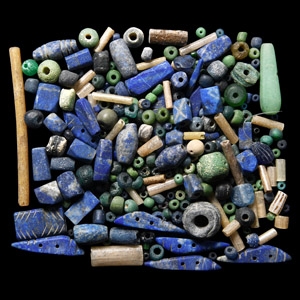
Roman Mixed Bead Group
2nd-5th century A.D. or laterSold for (Inc. bp): £65
Composed mainly of polychrome glass, faience, lapis lazuli and other beads of various sizes and types, including tubular, annular, spherical, ribbed and other types. 67 grams total, 2-68 mm
Ex W.J. collection, 1990s. -
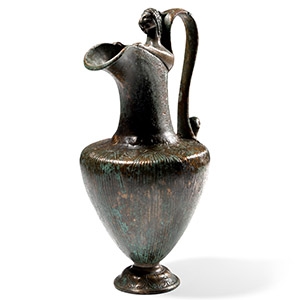
Roman Bronze Oinochoe with Lion Protome
1st century B.C.-1st century A.D.Sold for (Inc. bp): £4,680
The conical body decorated with overlapping petal-shaped panels, tapering neck with a wide spout, high arching handle with acanthus leaves, bust of a youthful male with long hair below (possibly Bacchus) the upper part terminating with a lion protome with the extended forelegs resting on the rim of the vessel, the high flaring foot possibly added later. 797 grams, 22.5 cm high
Excellent condition
Private collection, Rosenheim, Germany, 1960s. Accompanied by an academic report by Dr Raffaele D’Amato. This lot has been checked against the Interpol Database of stolen works of art and is accompanied by search certificate no.11734-201200.
Considering the primary function of oinochoe as drinking jugs, the images decorating them were often related to the god of wine, Bacchus, here probably represented as young Dionysus accompanied by a lion.
