
Loading, please wait...
LOT 0744
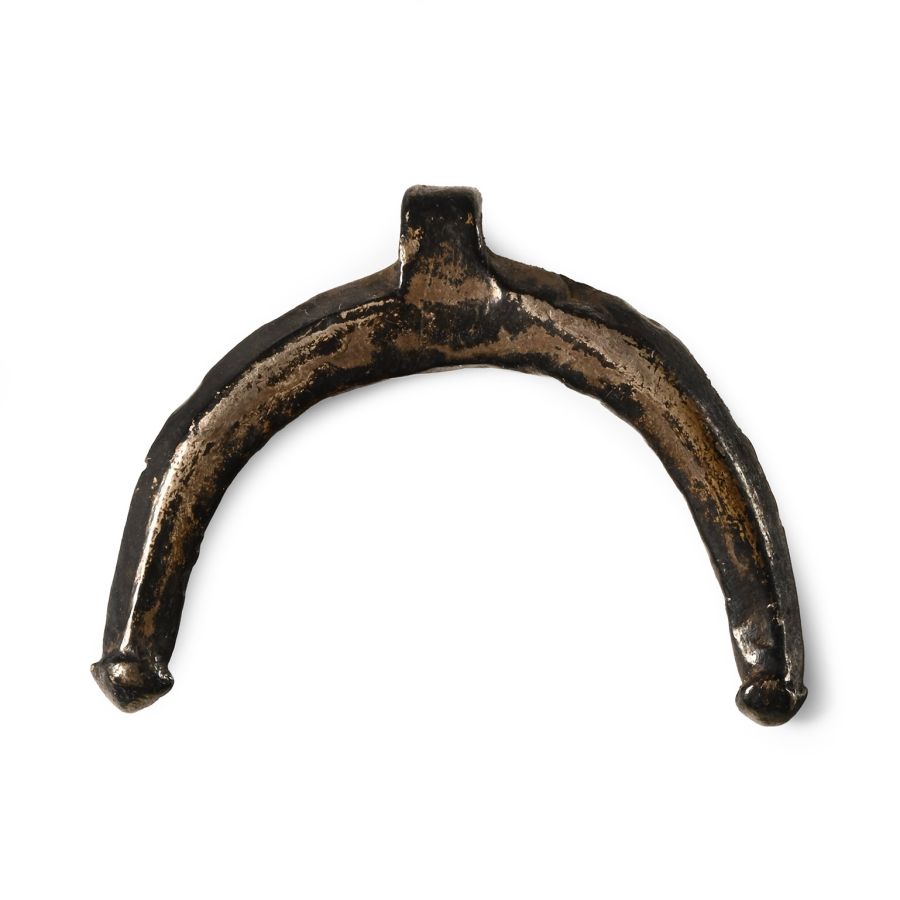
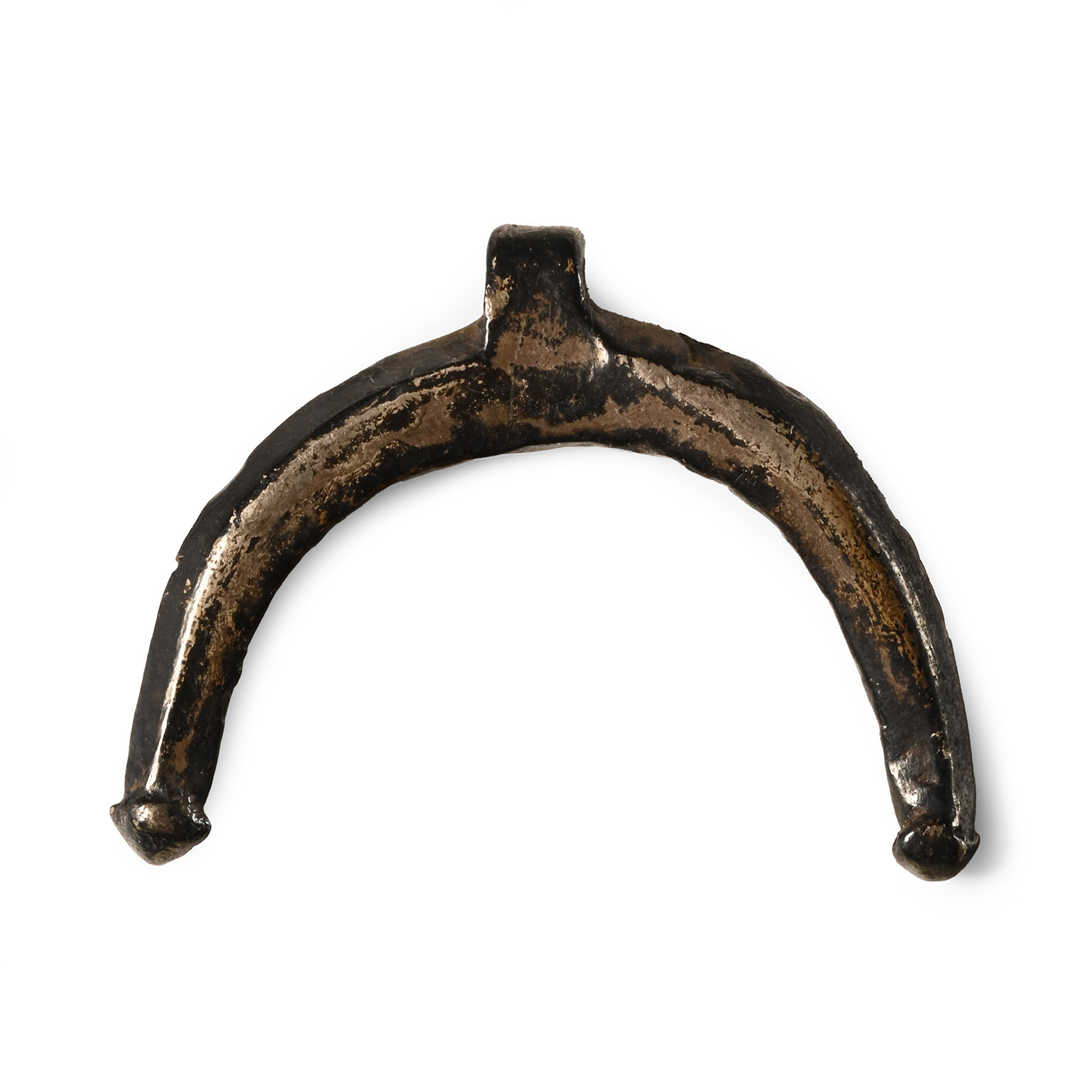
Roman Silver Lunar Pendant
1ST-4RD CENTURY A.D.
1 in. (2.84 grams, 27 mm).
Square-section crescent with suspension loop to the apex, bulb finials. [No Reserve]
ProvenanceFrom the collection of C. Sullivan, London, UK, 1990s.
CONDITIONTimeLine Auctions follows a vetting process to ensure the authenticity and legality of all items, reinforcing our commitment to integrity and responsible trading. Each antiquity, antique, and coin lot undergoes thorough examination by a vetting committee of at least ten external specialists, professional trade association members, scientists, and archaeologists: Our Vetting Process
AUCTIONS:
TimeLine is a leading auction house specialising in antiquities, ancient art, collectables, natural history, coins, medals, and books. Our auctions offer museums, collectors, historians, and enthusiasts the opportunity to acquire unique and historically significant pieces.
-
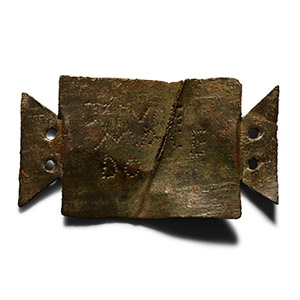
Roman Bronze Punched Tabula Ansata for Titus of Legio V Macedonica
2nd-3rd century A.D.Sold for (Inc. bp): £780
Sheet bronze appliqué with lateral tabs pierced for attachment, pointillé legend 'T[I] V LE[GIO] / MACE / DO [NICA]' translating to: Titus, member of the Legio V Macedonica. 5.56 grams, 54 mm
Ex British private collection, acquired 1980s. with Art Ancient, 2016. Property of a North London collector.
These tabulae ansatae with pointillé decoration were used for votive inscriptions to the gods, offered on the occasion of a vow made during a situation of danger or an invocation of help to the gods. They were often used in the military field, as appliques to indicate the ownership of the weapons. A particularly important example is the one found in Carnuntum dedicated to Jupiter Dolichenus, offered by the centurion Titius Moderatus of the Legio XI Gemina. In our case the inscription could refer to a certain Titus, member of the Legio V Macedonica. -
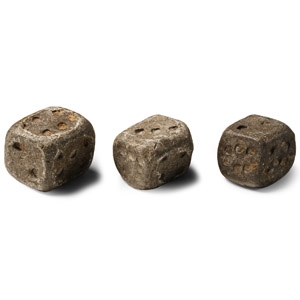
Large Roman Lead Gaming Dice Group
1st-4th century A.D.Sold for (Inc. bp): £130
Cuboid and rectangular types with impressed point markings irregularly disposed 1:4, 3:6, 3:5; 1:2, 3:5, 4:6; 2:2, 5:5, 3:6. 79 grams total, 14-17 mm
From the important private collection of dice and gaming pieces of Colin Narbeth, London, UK, collection no.27. -
.jpg)
Gemstone with Sacrifice Scene
Roman, 1st century A.D. or laterEstimate: £400 - 600 (+bp*)
Opening Bid: £222
Ellipsoid carnelian gemstone with intaglio scene of a kilted figure sacrificing a goat beside a tree; supplied with a museum-quality impression. 0.40 grams, 12 mm
From a Swiss collection, 1980s onwards. Property of a North London, UK, gentleman.
