
Loading, please wait...
LOT 0591
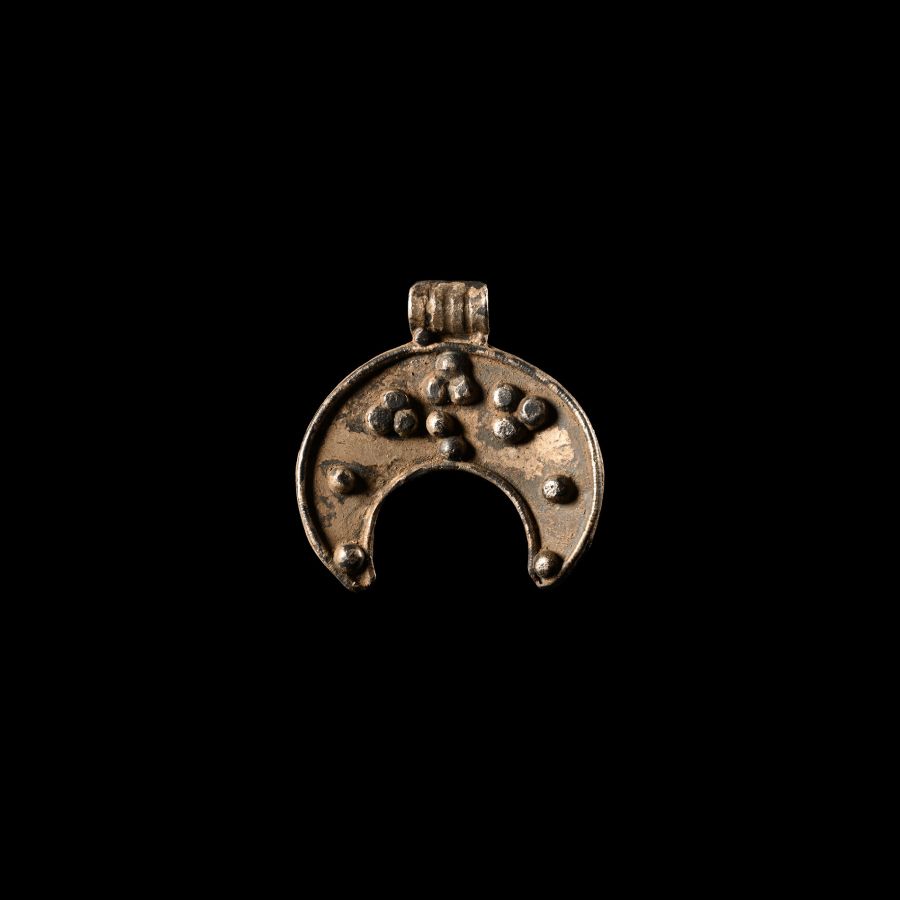
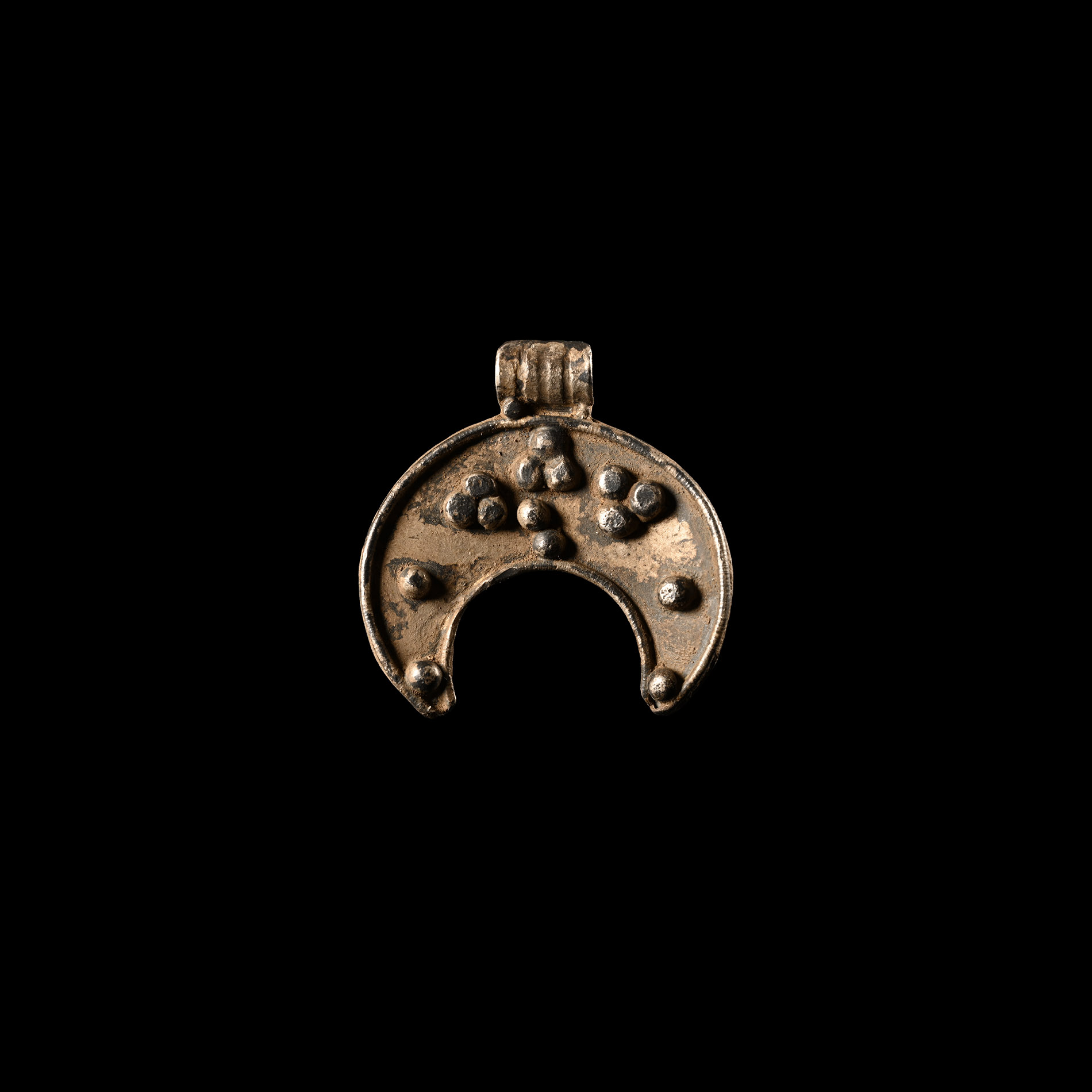
Roman Silver Lunar Pendant
CIRCA 1ST CENTURY A.D.
1 1/4 in. (7.46 grams, 31 mm).
Decorated with silver granules and with a gusseted suspension loop to the top edge.
ProvenanceAcquired on the London art market, 1980s-1990s.
CONDITIONTimeLine Auctions follows a vetting process to ensure the authenticity and legality of all items, reinforcing our commitment to integrity and responsible trading. Each antiquity, antique, and coin lot undergoes thorough examination by a vetting committee of at least ten external specialists, professional trade association members, scientists, and archaeologists: Our Vetting Process
AUCTIONS:
TimeLine is a leading auction house specialising in antiquities, ancient art, collectables, natural history, coins, medals, and books. Our auctions offer museums, collectors, historians, and enthusiasts the opportunity to acquire unique and historically significant pieces.
-
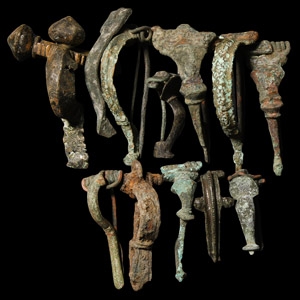
Roman Bronze Brooch Collection
1st-4th century A.D.Sold for (Inc. bp): £208
Including P-shaped, knee, trumpet-derivative, crossbow and other types, some with restored pins. 120 grams total, 33-57 mm
Acquired on the German art market around 2000. From the collection of a Surrey, UK, gentleman. -
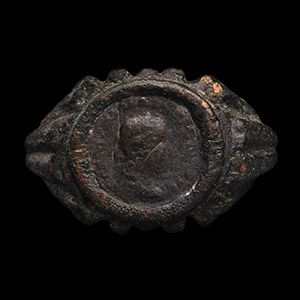
Roman Bronze Ring with Portrait
3rd century A.D.Estimate: £200 - 300 (+bp*)
Opening Bid: £80
Hoop composed of angled and fluted shoulders and an oval bezel displaying a portrait bust in profile right, in relief. 34.93 grams, 38.63 mm overall, 22.43 mm internal diameter (approximate size British O 1/2, USA 7 1/4, Europe 15.61, Japan 15)
Acquired 1990s-early 2000s. East Anglian private collection. -
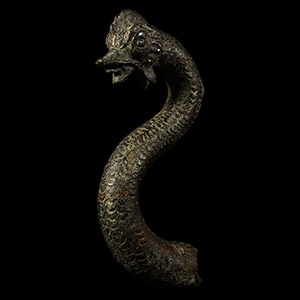
Large Roman Bronze Basilisk
4th century A.D.Estimate: £500 - 700 (+bp*)
Opening Bid: £278
The upper body, neck and head of a mythical basilisk (cockatrice), modelled in the round with the body of a serpent and head of a cockerel, the body with a tapering round-section profile, stylised detailing to the head. 260 grams, 88 mm
‘The Ancient Menagerie Collection’ formerly the property of a Cambridgeshire lady, collected since the 1990s and acquired from auctions and dealers throughout Europe and the USA, now ex London collection.
The basilisk, known from the Renaissance onwards as a cockatrice, was a Graeco-Roman mythical two-legged dragon or serpent-like creature with a cock's head. It had the reputed ability to kill people by either looking at them, touching them, or sometimes breathing on them. According to legend a cockatrice would die instantly upon hearing a rooster crow, and having a cockatrice looking at itself in a mirror was one of the few sure ways to kill it.
