
Loading, please wait...
LOT 0875
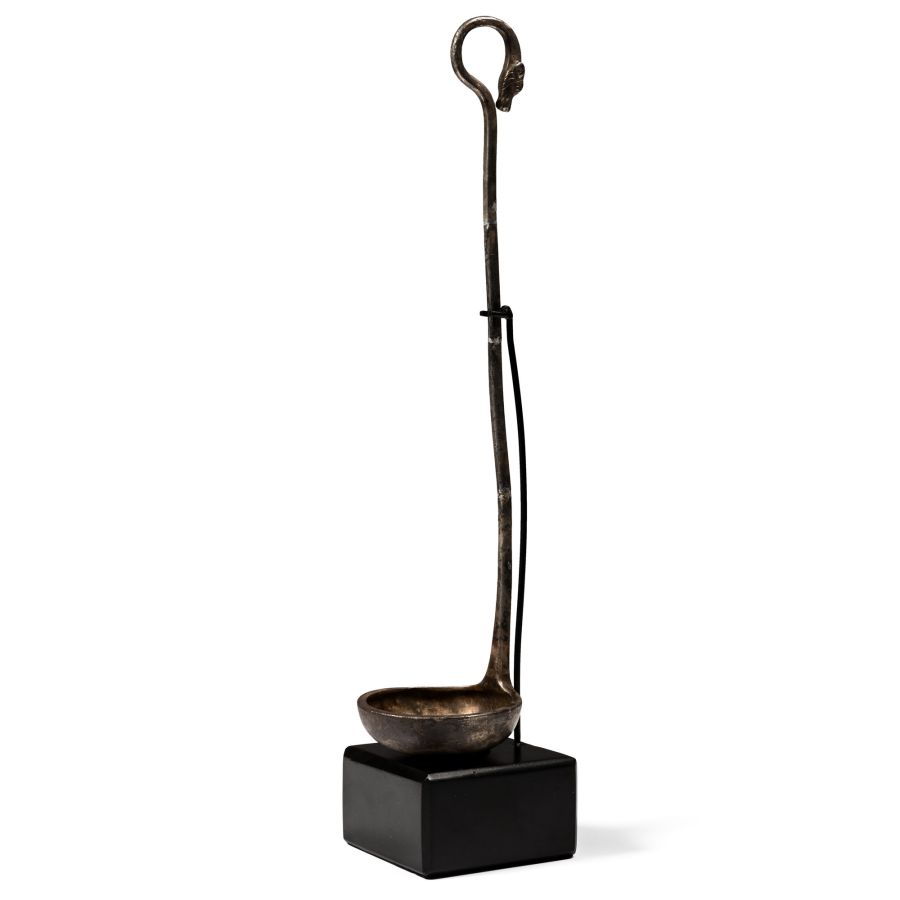
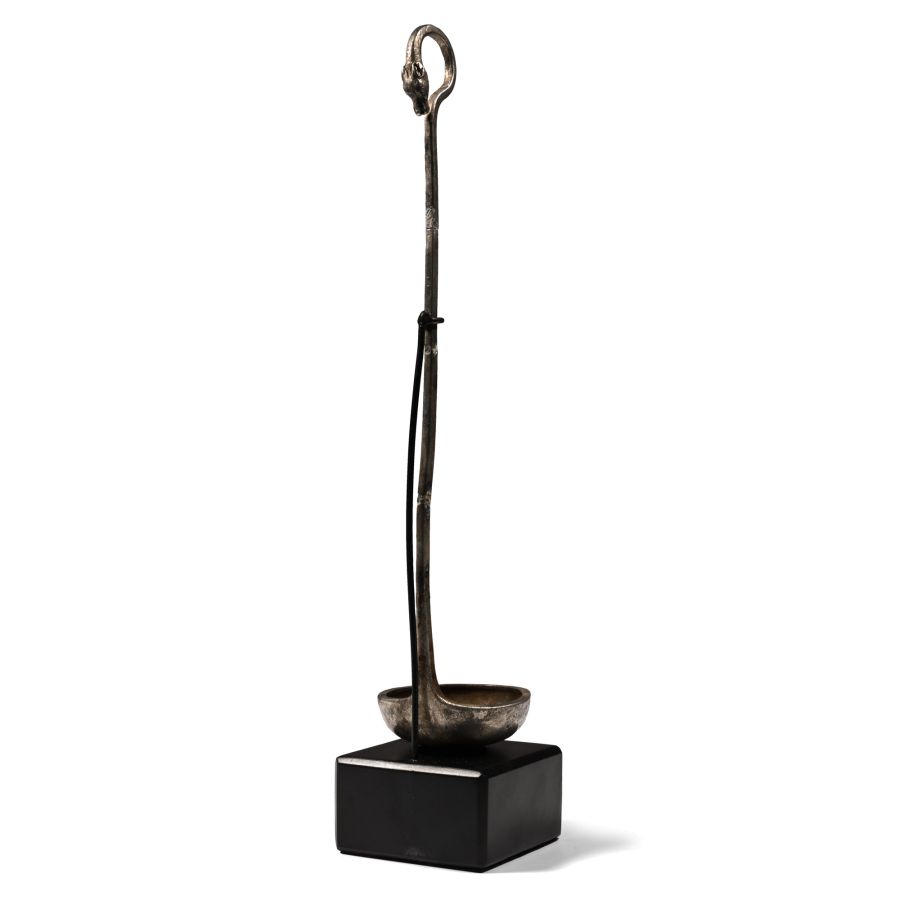
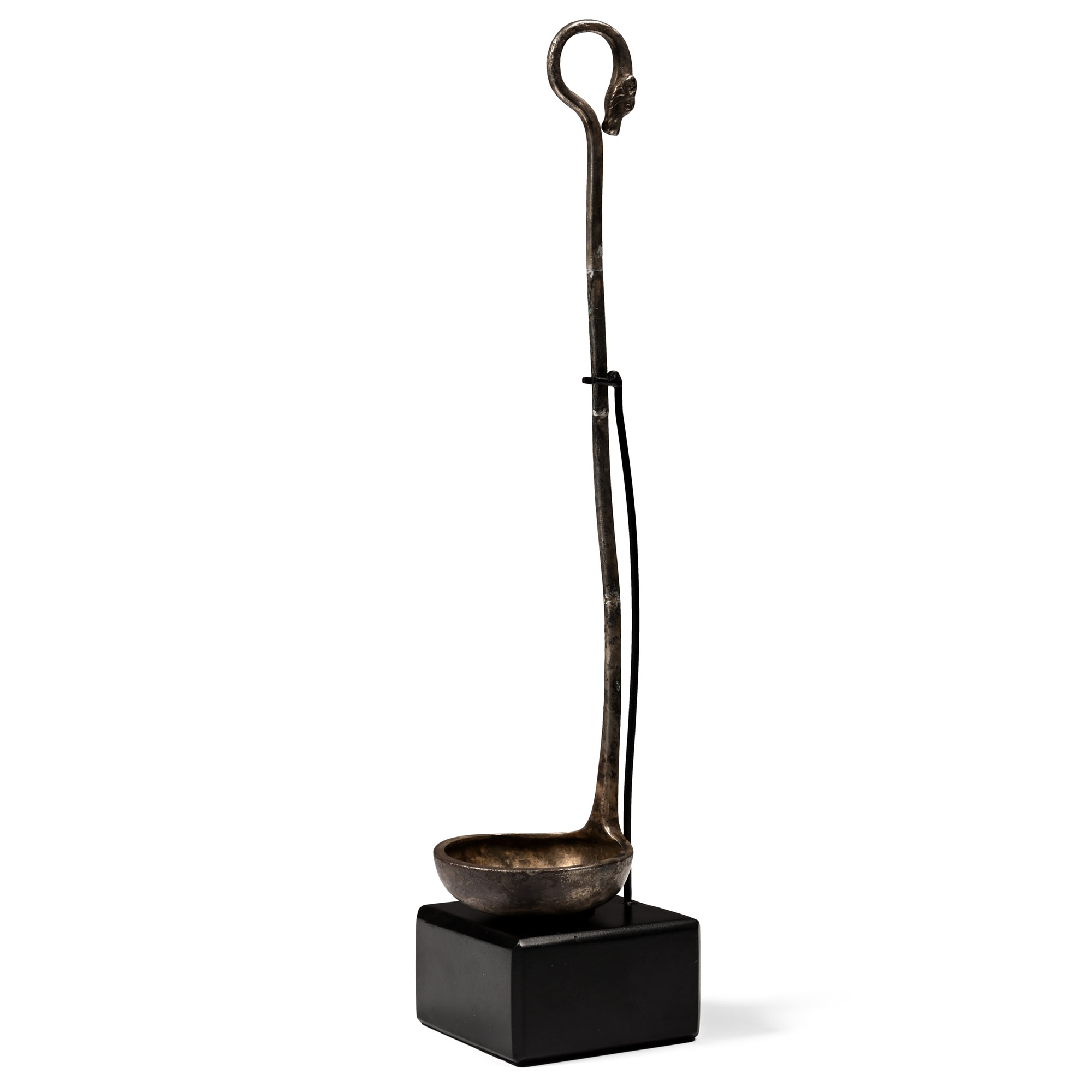
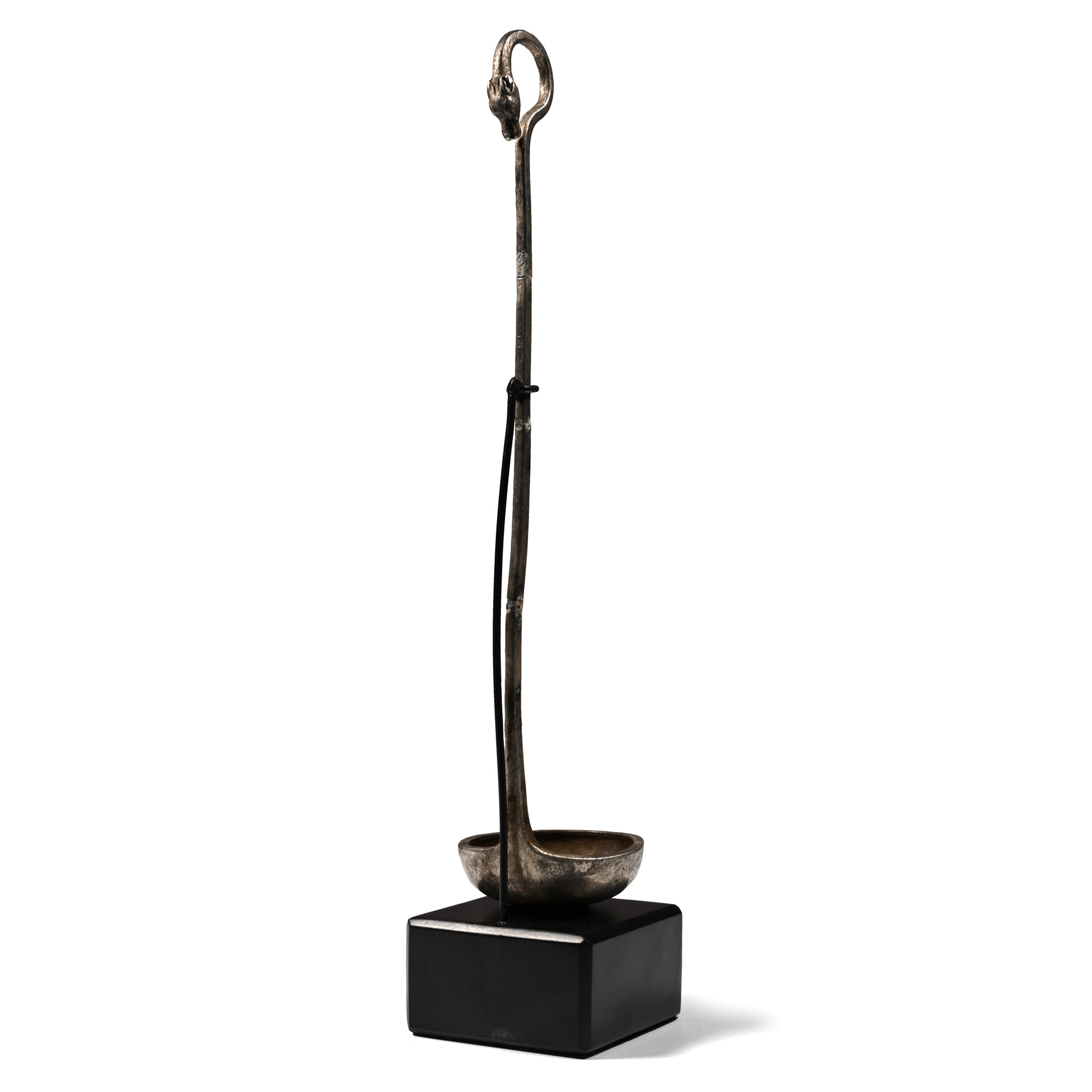
Roman Silver Ladle with Beast Finial
1ST-3RD CENTURY A.D.
8 7/8 in. (10 in.) (70 grams, 22.5 cm (317 grams total, 25.5 cm including stand)).
With broad bowl and in-turned rim, square-section long handle looped at the end with a beast-head finial; repaired and mounted on a custom-made display stand.
ProvenanceAcquired in the mid 1980s-1990s.
Private collection, Switzerland, thence by descent.
Private collection, since the late 1990s.
Cf. Tassinari, S., La Vaisselle de Bronze, Romaine et Provinciale, au Musée des Antiquités Nationales, XXIXe supplément de Gallia, Paris, 1975, items 40-3.
CONDITIONTimeLine Auctions follows a vetting process to ensure the authenticity and legality of all items, reinforcing our commitment to integrity and responsible trading. Each antiquity, antique, and coin lot undergoes thorough examination by a vetting committee of at least ten external specialists, professional trade association members, scientists, and archaeologists: Our Vetting Process
AUCTIONS:
TimeLine is a leading auction house specialising in antiquities, ancient art, collectables, natural history, coins, medals, and books. Our auctions offer museums, collectors, historians, and enthusiasts the opportunity to acquire unique and historically significant pieces.
LOT 0875
Roman Silver Ladle with Beast Finial
Estimate £800 - 1,000€930 - 1,160 (for guidance only)$1,080 - 1,350 (for guidance only)
-
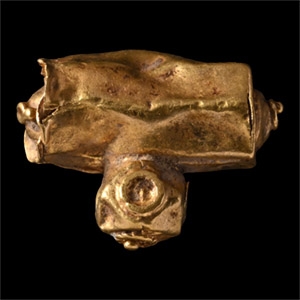
Roman Gold Amulet Case
5th-6th century A.D.Sold for (Inc. bp): £124
Cylindrical body with domed finials with applied pellets, cornerless cube-shaped suspension loop with applied pellet and filigree annulets. 0.78 grams, 14 mm
Ex property of a late Japanese collector, 1970-2000s. This lot is accompanied by an illustrated lot declaration signed by the Head of the Antiquities Department, Dr Raffaele D'Amato.
Assessing the typology and chronology of such amulet capsules is very difficult, and precise dating is usually impossible, especially since the context of the find is often unknown, as in this case. According to Schienerl, prismatic, usually hexagonal amulet capsules only appear in the 2nd or 3rd century, while the use of amulets in the Eastern Roman Empire ceased after the 7th century. -
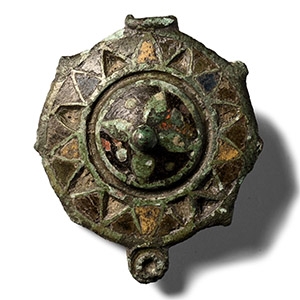
Roman Enamelled Bronze Umbonate Plate Brooch
2nd century A.D.Sold for (Inc. bp): £72
Discoid plate brooch with slightly domed body and central boss, lateral lugs; surface divided into cloisonné cells for addition of enamel ornament; remains of catch to reverse. 9.39 grams, 37 mm
Ex DRG Coins and Antiquities, Bishops Stortford, Essex, UK. From the private collection of a West London, UK, gentleman, formed since the early 2000s. Accompanied by a hand written dealer's ticket. -
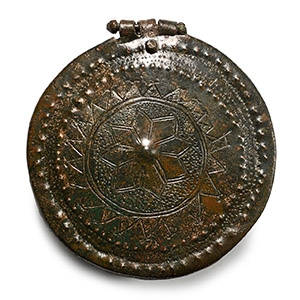
Late Roman Hinged Lidded Pyxis
4th-5th century A.D.Sold for (Inc. bp): £468
Sheet-bronze two-part pyxis with carinated sidewall to the base, lid with reserved octofoil on a pounced field, concentric pointillé rings; working hinge mechanism. 64 grams, 86 mm
Acquired in the 1990s. Ex Abelita family collection. This lot is accompanied by an illustrated lot declaration signed by the Head of the Antiquities Department, Dr Raffaele D'Amato.
Although pyxides were originally made of wood, as their name suggests, the term soon came to refer, in the Graeco-Roman world, to round containers used for both medicinal and domestic purposes. From the time of the Achaeans to the end of the Roman Empire, we find pyxides made of horn, ivory, bronze, silver, and gold. Women used them to store their ointments, makeup, and toiletries. A pyxis used for medical purposes was called a loculus, while the name pyxidicula designated a container for eye drops, and a tripuxium was a pyxis containing extracts from three different containers.
