
Loading, please wait...
LOT 0826
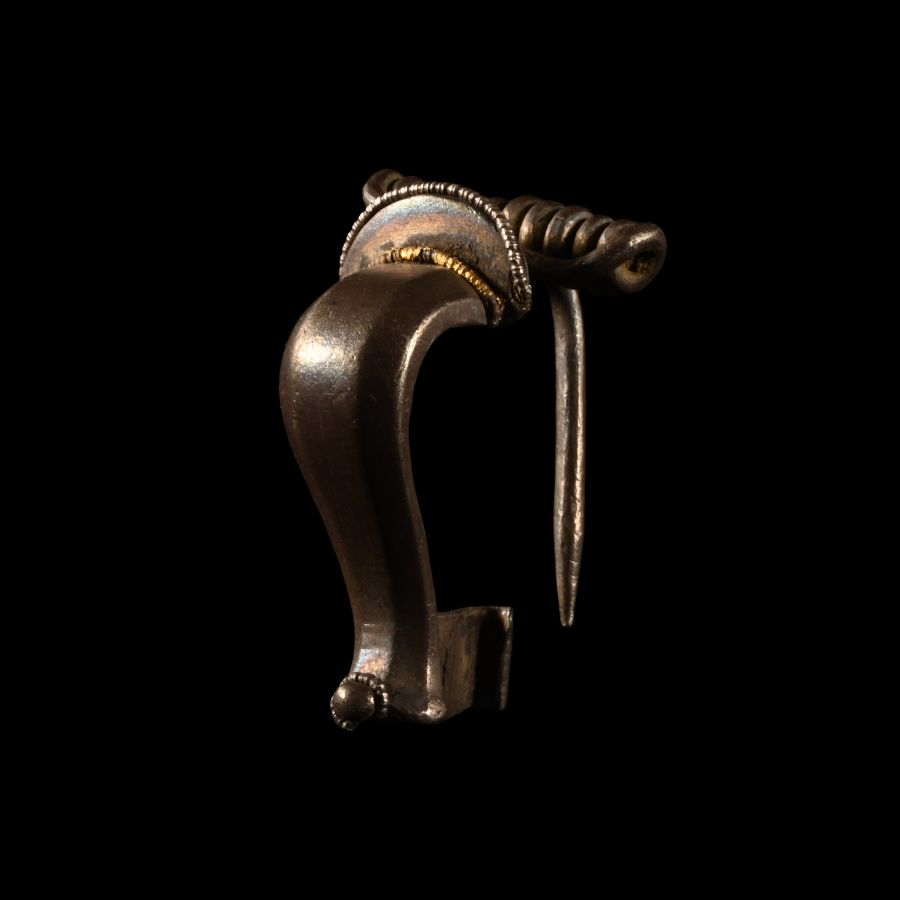
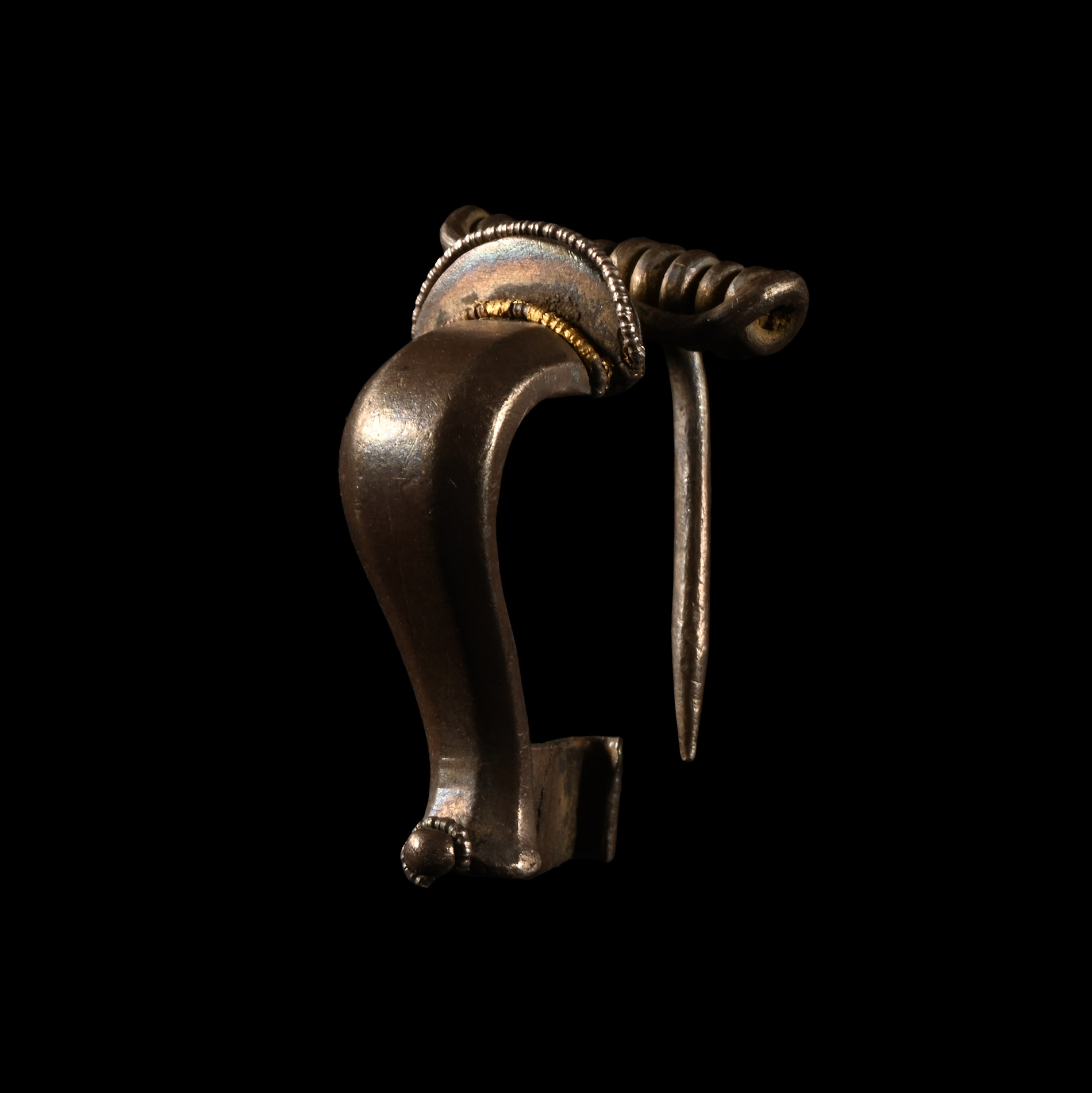
Roman Silver Knee Brooch
2ND CENTURY A.D.
1 in. (6.99 grams, 28 mm).
With transverse bar, D-shaped headplate, facetted piriform body, knop finial, extended catch and hinged pin to the reverse. [No Reserve]
ProvenanceEx property of an Austrian private collector since the 1970s.
LiteratureCf. Mackreth, D.F., Brooches in Late Iron Age and Roman Britain, Oxford, 2011, item 7513.
CONDITIONTimeLine Auctions follows a vetting process to ensure the authenticity and legality of all items, reinforcing our commitment to integrity and responsible trading. Each antiquity, antique, and coin lot undergoes thorough examination by a vetting committee of at least ten external specialists, professional trade association members, scientists, and archaeologists: Our Vetting Process
AUCTIONS:
TimeLine is a leading auction house specialising in antiquities, ancient art, collectables, natural history, coins, medals, and books. Our auctions offer museums, collectors, historians, and enthusiasts the opportunity to acquire unique and historically significant pieces.
-
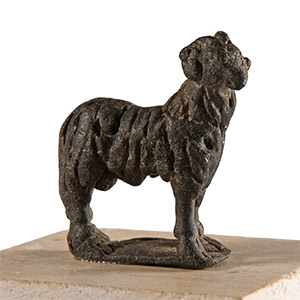
Roman Bronze Ram Statuette
1st-3rd century A.D.Sold for (Inc. bp): £143
Modelled in the round, standing on an irregular base, with shaggy coat and coiled horns; mounted on a custom-made stand. 99 grams, 50 mm including stand
From a collection acquired on the UK art market from various auction houses and collections mostly before 2000. From an important Cambridgeshire estate; thence by descent. -
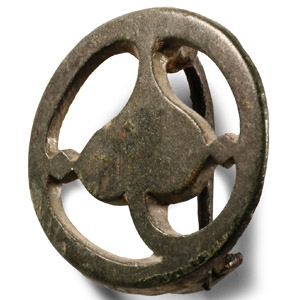
Roman Bronze Plate Brooch with Vine Leaf
Circa 2nd century A.D.Sold for (Inc. bp): £46
Complete with pin lug, pin and catchplate to reverse. 10 grams, 29 mm
Acquired prior to 2000. Ex private collection, Cambridgeshire, UK. -
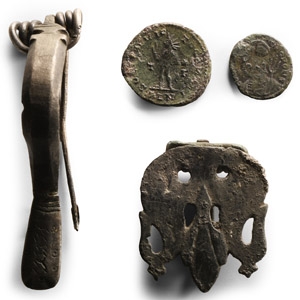
Roman Silver and Bronze Artefact and Coin Group
1st-4th century A.D.Sold for (Inc. bp): £39
Mixed group including a vine-leaf plate brooch, repaired P-shaped bow brooch, and silver coin of Constantine and another. 39.1 grams total, 17-69 mm
From a Suffolk collection. Property of a Scottish collector, acquired in 2013.
