
Loading, please wait...
LOT 0110
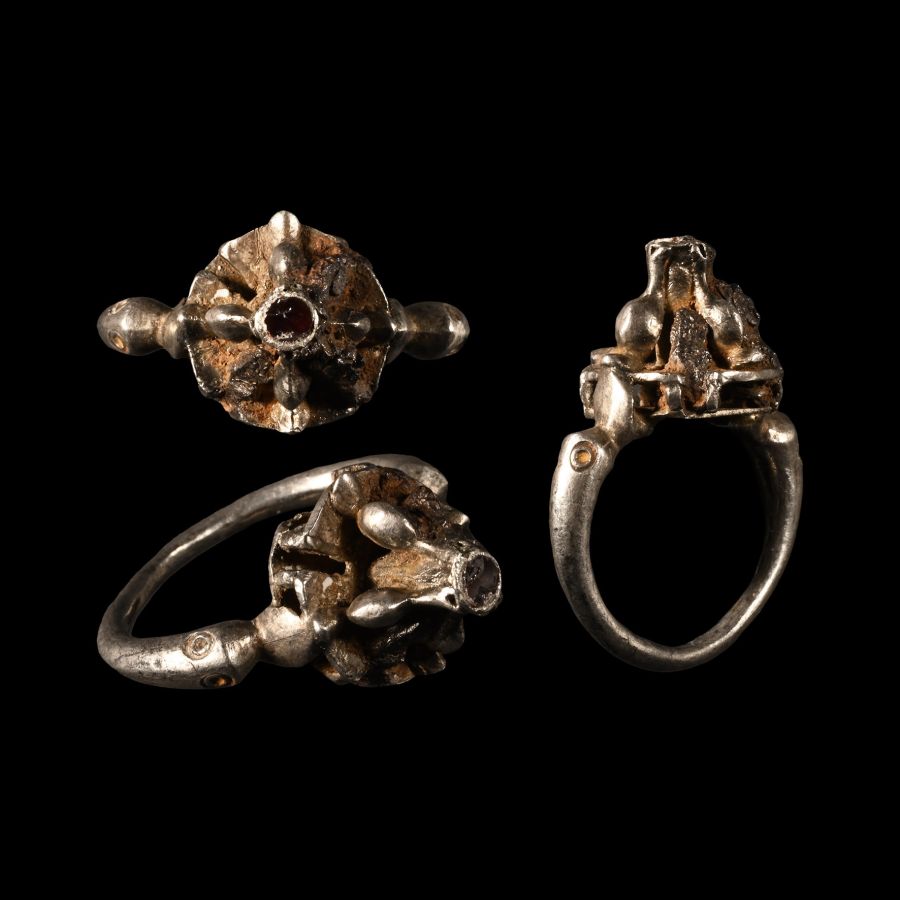
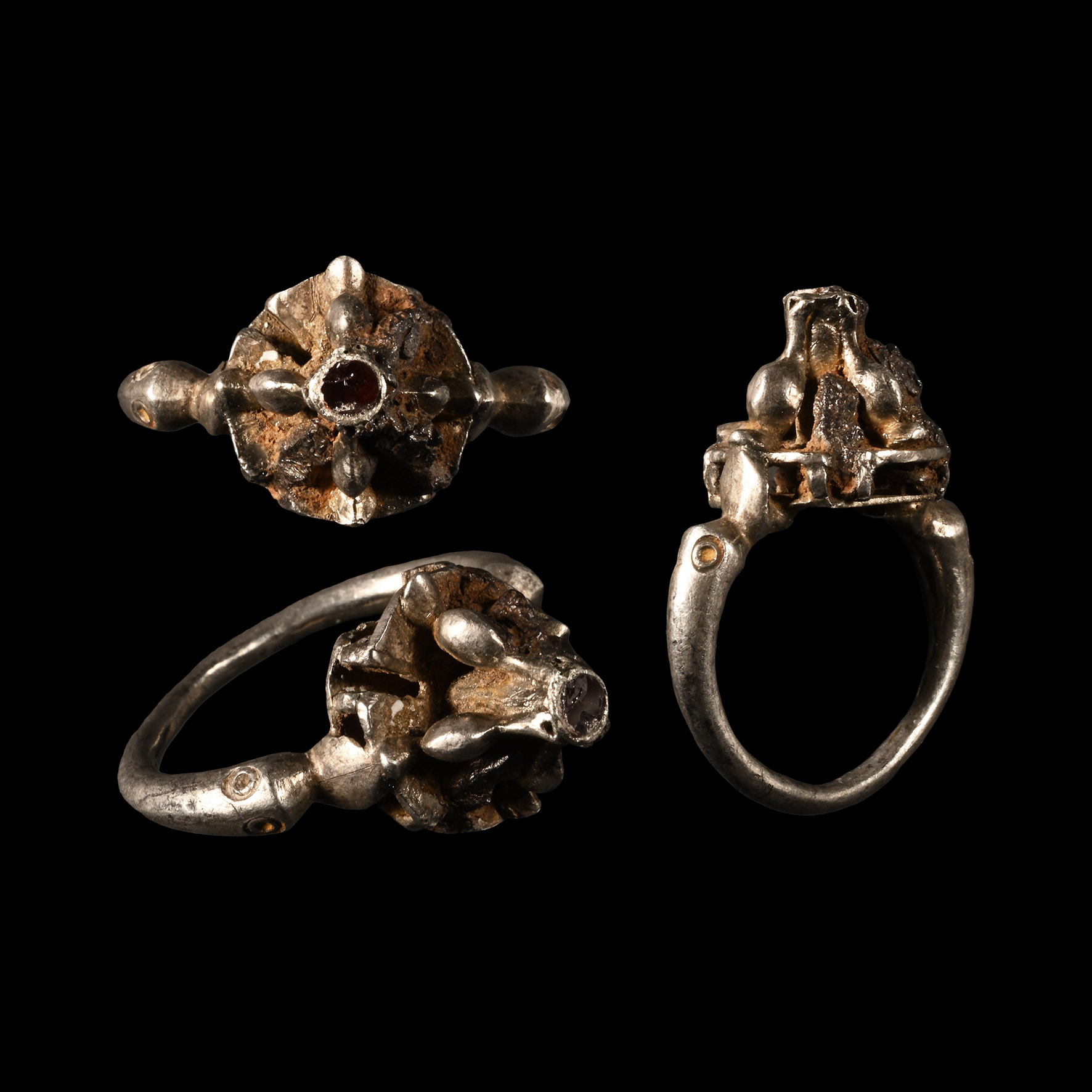
Roman Silver Key Ring with Dolphins
3RD-4TH CENTURY A.D.
1 1/4 in. (7.13 grams, 31.06 mm overall, 19.89 mm internal diameter (approximate size British N, USA 6 1/2, Europe 13.72, Japan 13)).
The hoop formed with dolphin-head shoulders supporting an openwork tiered bezel with four outward-facing dolphins on a disc, their tails joining to form a tube with inset garnet cloison; possibly originally a key-ring with the tune forming a mandrel.
ProvenanceEx Cotswold collection, UK, 1990s.
Accompanied by a copy of a statement of opinion from Striptwist Ltd, a London-based company run by precious metal specialist Dr Jack Ogden, reference number 221202.
TimeLine Auctions follows a vetting process to ensure the authenticity and legality of all items, reinforcing our commitment to integrity and responsible trading. Each antiquity, antique, and coin lot undergoes thorough examination by a vetting committee of at least ten external specialists, professional trade association members, scientists, and archaeologists: Our Vetting Process
AUCTIONS:
TimeLine is a leading auction house specialising in antiquities, ancient art, collectables, natural history, coins, medals, and books. Our auctions offer museums, collectors, historians, and enthusiasts the opportunity to acquire unique and historically significant pieces.
LOT 0110
Roman Silver Key Ring with Dolphins
Estimate £600 - 800€700 - 930 (for guidance only)$810 - 1,080 (for guidance only)
-
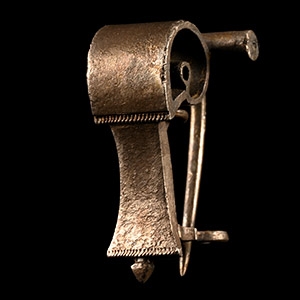
Roman Military Silver Knee Brooch
2nd century A.D.Sold for (Inc. bp): £325
Of 'knee type pattern' incorporating a 90 degree bend, the front plate with additional edge-notched decoration, complete with original pin. 16 grams, 34.7 mm
Ex Ancient Art, Eastpole Farm House, London, N14, early 2000s. From the private collection of Antony John Scammell (1937-2019). Accompanied by a copy of a certificate of authenticity from Ancient Art, London, UK. -
.jpg)
Large Roman Marble Bull's Head Sculpture
Circa 2nd century B.C.- 2nd century A.D.Sold for (Inc. bp): £2,080
Life-size bull's head (bucranium) on a rectangular field with flattened upper face and small ledge overhang; modelled in the half-round with detailed eyes, muzzle and dewlap, plain background; tooled texture to the forehead and dewlap; Eastern Empire. 98 kg, 51 cm
From a collection acquired on the UK art market from various auction houses and collections mostly before 2000. From an important Cambridgeshire estate; thence by descent. Accompanied by an academic report by Dr Raffaele D’Amato. This lot has been checked against the Interpol Database of stolen works of art and is accompanied by search certificate number no.12081-213373.
The bucranium was used as a prominent motif on the exterior of Graeco-Roman temples where it replaced the use of genuine severed heads from the sacrificial rites. Garlands were draped over the heads on feast-days and occasions of special religious observance. The flattened upper face suggests an architectural use, perhaps as a corbel. -
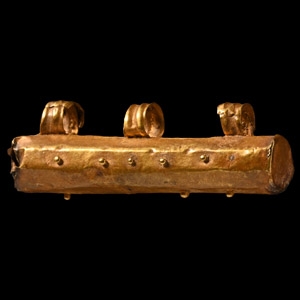
Late Roman Gold Amulet Case Pendant
Circa 4th-5th century A.D.Sold for (Inc. bp): £442
Octagonal-section tubular pendant with ribbed suspension loops. 2.95 grams, 34 mm
From the property of the late Mr SM, London, UK, 1969-1999.
