
Loading, please wait...
LOT 0967
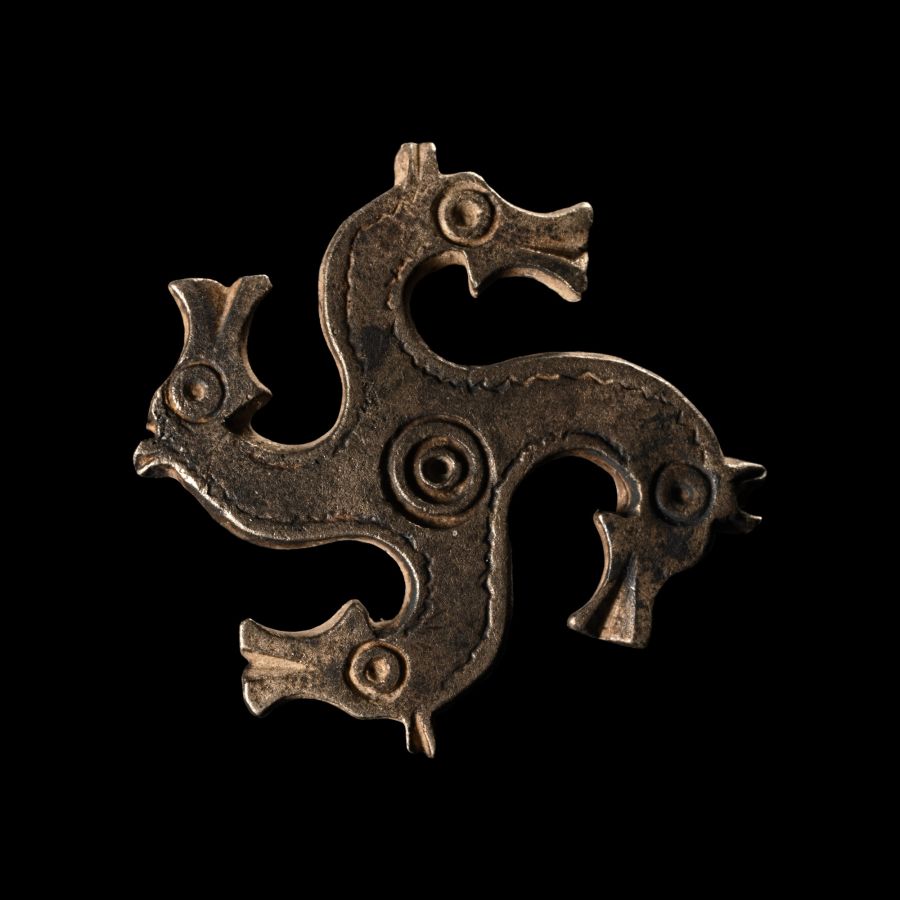
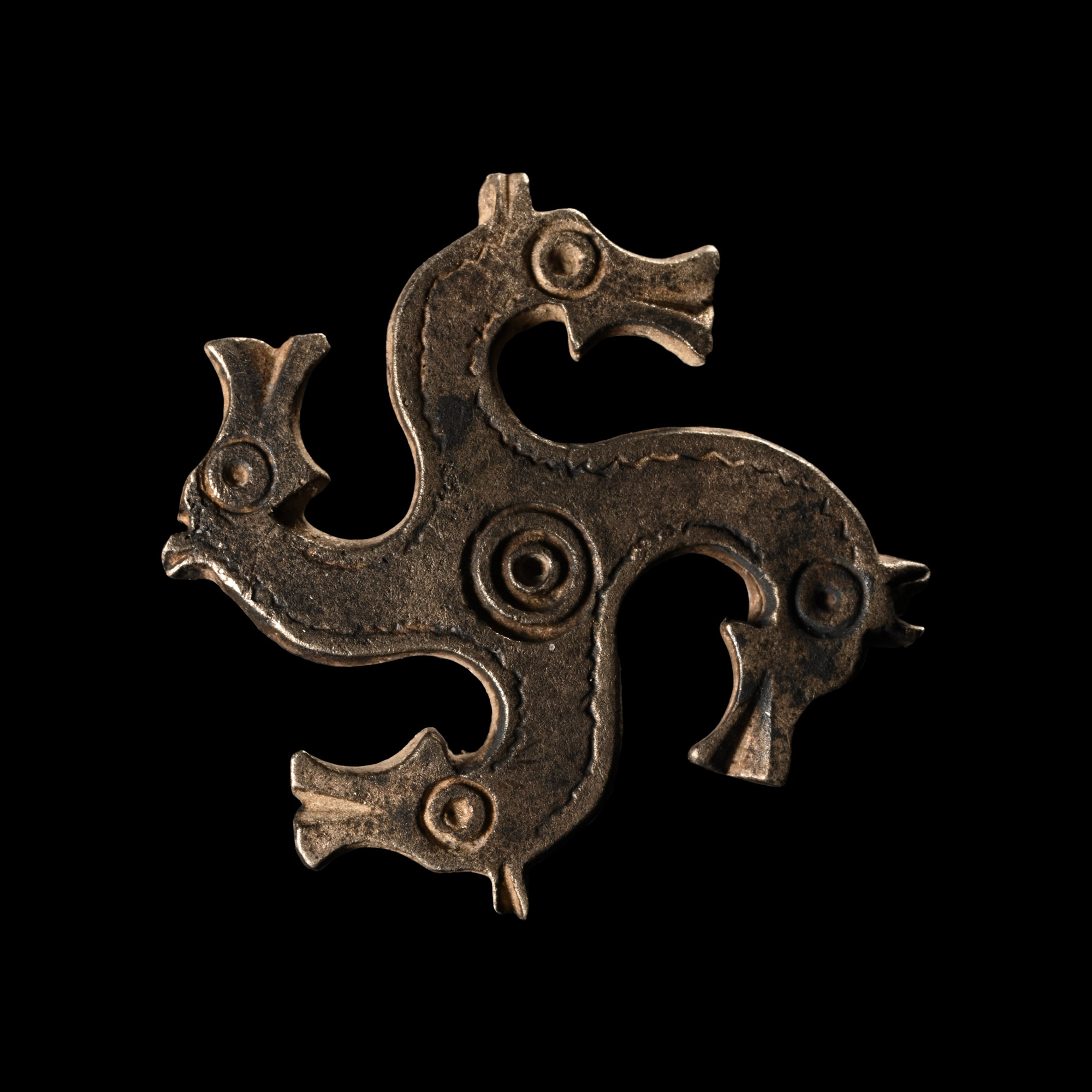
Roman Silver Horse Head Whorl Brooch
3RD-4TH CENTURY A.D.
1 1/2 in. (10.8 grams, 37 mm).
A swastika-shaped fibula with horse-head decoration, each head with punched ring-and-dot eye, a similar motif to the centre, catchplate and pin hinge to verso. [No Reserve]
ProvenanceProperty of the vendor's grandfather, thence by family descent, circa 1985.
From the private collection of a New York, USA gentleman.
Cf. Petcu, R., ‘Swastika-shaped fibulae with horse-head decorations (Almgren 232) from the Roman period in Dobrudja (Moesia Inferior)’ in Studia Antiqua et Archaeologica, 25(1); pp.113-122, fig.4.
FootnotesIn the 3rd century A.D., several examples of fibulae in the shape of four horses’ heads forming a swastika (type Almgren 232) seem to be related to the creation of the Illyrian cavalry corps in Roman army. Many examples of these military fibulae were found in ancient Roman Dacia (Romania), in Roman Illyricum and Moesia.
CONDITIONTimeLine Auctions follows a vetting process to ensure the authenticity and legality of all items, reinforcing our commitment to integrity and responsible trading. Each antiquity, antique, and coin lot undergoes thorough examination by a vetting committee of at least ten external specialists, professional trade association members, scientists, and archaeologists: Our Vetting Process
AUCTIONS:
TimeLine is a leading auction house specialising in antiquities, ancient art, collectables, natural history, coins, medals, and books. Our auctions offer museums, collectors, historians, and enthusiasts the opportunity to acquire unique and historically significant pieces.
-
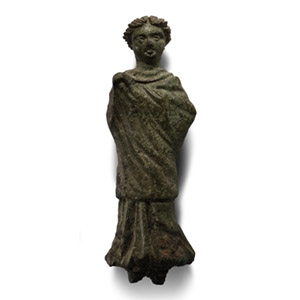
Etruscan Bronze Robed Figure
3rd-2nd century B.C.Estimate: £1,000 - 1,400 (‡+bp*)
Opening Bid: £500
Female with hair drawn up in a chignon, palla wrapped tightly around the upper body hiding the right arm bent with the hand at the shoulder, lower hem of robe flared; fixing lug to underside. 86 grams, 71 mm
Acquired in the mid 1980s-1990s. Private collection, Switzerland, thence by descent. Private collection, since the late 1990s.
This is a figurine of a deity of difficult interpretation representing an ex-voto. This typology is widespread in the votive offerings of Etrusco-Roman sanctuaries, and by analogy with various statuettes could represent Ceres or Pomona. -
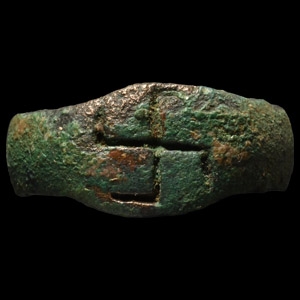
Roman Bronze Ring with Gammadion
2nd-3rd century A.D.Sold for (Inc. bp): £104
With a wide flat-section hoop expanding to an oval bezel, intaglio motif of a gammadion. 3.26 grams, 22.00 mm overall, 19.00 mm internal diameter (approximate size British O 1/2, USA 7 1/4, Europe 15.61, Japan 15)
Private collection formed since the 1940s. UK art market. Property of an Essex, UK, gentleman. -
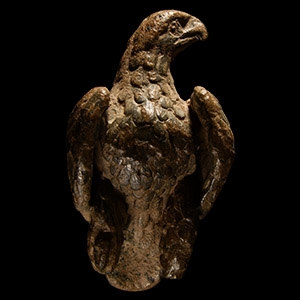
Roman Bronze Figure of an Eagle
Circa 2nd century A.D.Sold for (Inc. bp): £2,600
Naturalistically modelled in the round, standing with wings folded against the body, head turned left, feather detailing and recessed circular eyes; feet absent. 111 grams, 62 mm
Acquired in Europe before 2001. This lot has been checked against the Interpol Database of stolen works of art and is accompanied by search certificate number no.11857-206794.
