
Loading, please wait...
LOT 0925
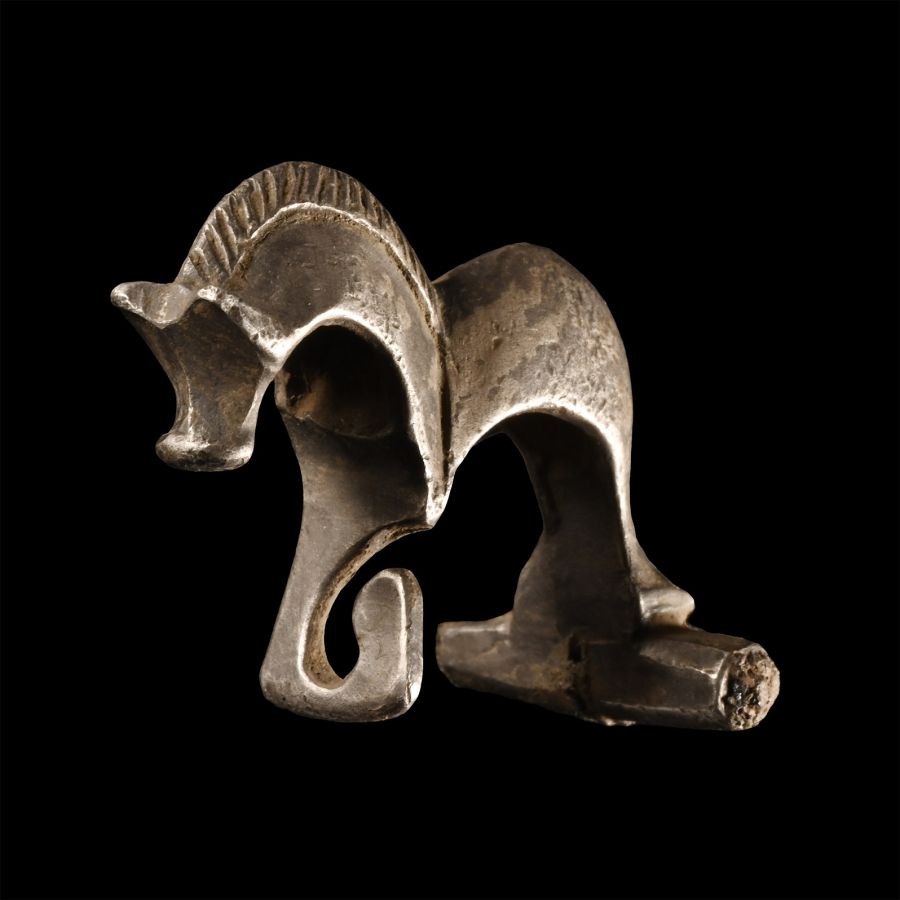
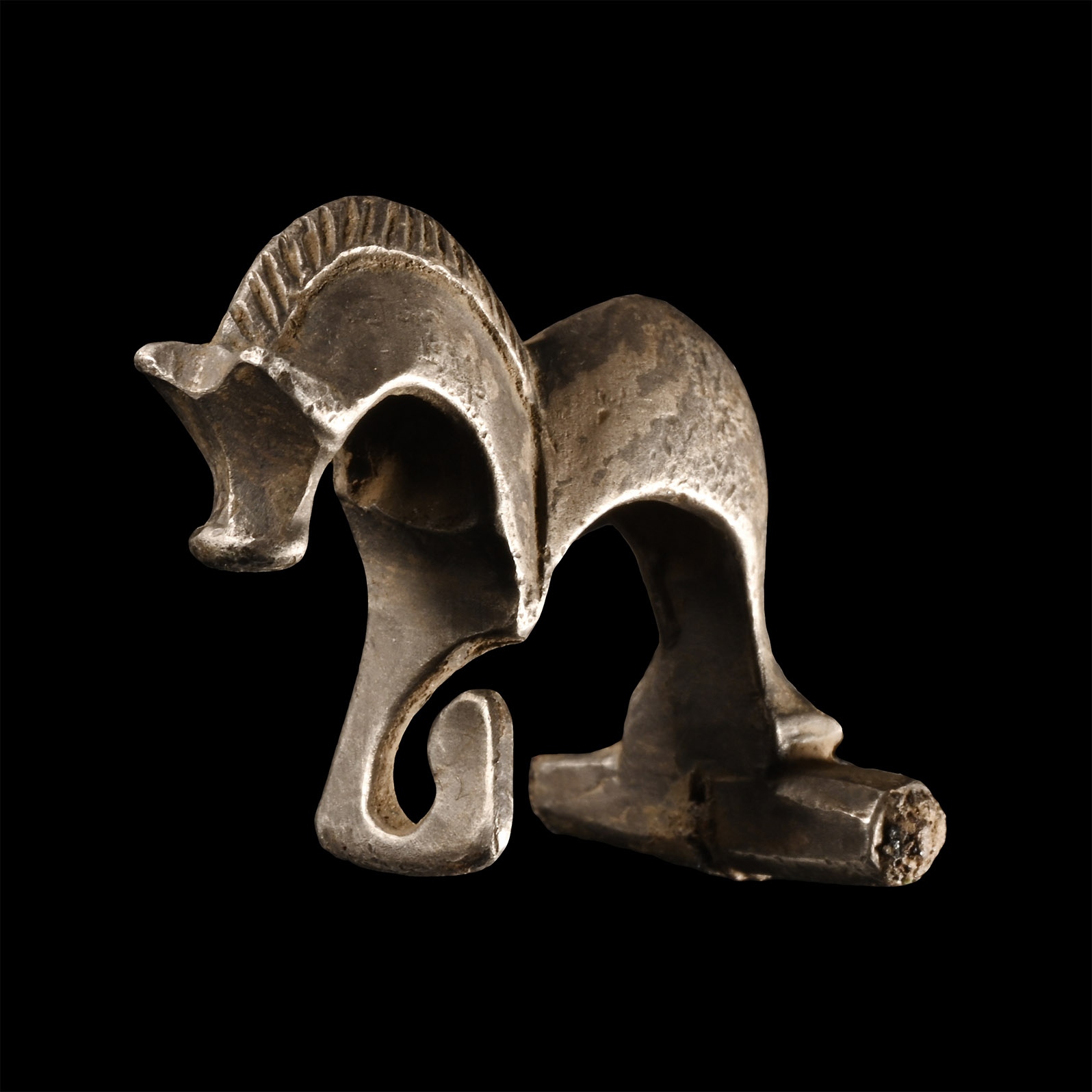
Roman Silver Horse Brooch
1ST-2ND CENTURY A.D.
1 1/2 in. (16.5 grams, 37 mm).
Zoomorphic bow brooch with hexagonal-section head and hinge for the pin, bow forming the horse's body and smaller bow for the neck with hatched mane; catch formed by the forelegs.
ProvenanceAcquired on the London art market in the late 1980s-1990s.
From the family collection of an East London, UK, gentleman.
Cf. Heeren, S. & van der Feijst, L., Fibulae uit de Lage Landen. Beschrijving, Analyse en Interpretatie van een Archeologische Vondstcategorie, Amersfoort, 2017, plate 26, item 28.
CONDITIONTimeLine Auctions follows a vetting process to ensure the authenticity and legality of all items, reinforcing our commitment to integrity and responsible trading. Each antiquity, antique, and coin lot undergoes thorough examination by a vetting committee of at least ten external specialists, professional trade association members, scientists, and archaeologists: Our Vetting Process
AUCTIONS:
TimeLine is a leading auction house specialising in antiquities, ancient art, collectables, natural history, coins, medals, and books. Our auctions offer museums, collectors, historians, and enthusiasts the opportunity to acquire unique and historically significant pieces.
-
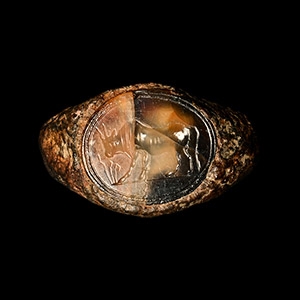
Roman Iron Ring with Sardonyx Gemstone with Bull
1st-2nd century A.D.Sold for (Inc. bp): £2,470
Slender hoop expanding to a broad bezel, inset sardonyx cloison intaglio depicting a grazing bull on a baseline. 7.58 grams, 25.56 mm overall, 17.84 mm internal diameter (approximate size British J 1/2, USA 5, Europe 9.32, Japan 9)
Acquired in London in 1994. European private collection. This lot has been checked against the Interpol Database of stolen works of art and is accompanied by search certificate no.12067-211915. -
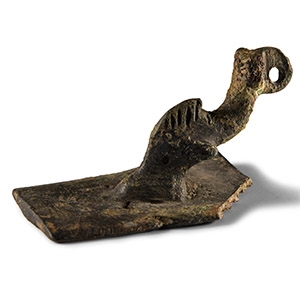
Roman Bronze Mount with Dolphin
1st-3rd century A.D.Estimate: £200 - 300 (‡+bp*)
Opening Bid: £100
Fragment of a vessel with integral dolphin modelled in the round with hatched fins, pellet eyes, looped tail for attachment of a cord or light chain. 94 grams, 72 mm
Acquired in Europe in 1990. European private collection. -
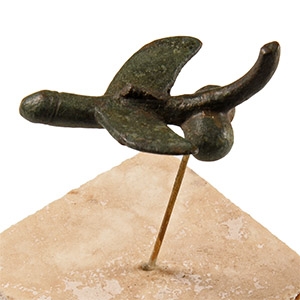
Roman Bronze Flying Phallus
2nd-3rd century A.D.Sold for (Inc. bp): £234
Amuletic model phallus with swept lateral wings; mounted on a custom-made stand. 99 grams total, 67 mm high including stand
From a collection acquired on the UK art market from various auction houses and collections mostly before 2000. From an important Cambridgeshire estate; thence by descent.
