
Loading, please wait...

LOT 0873
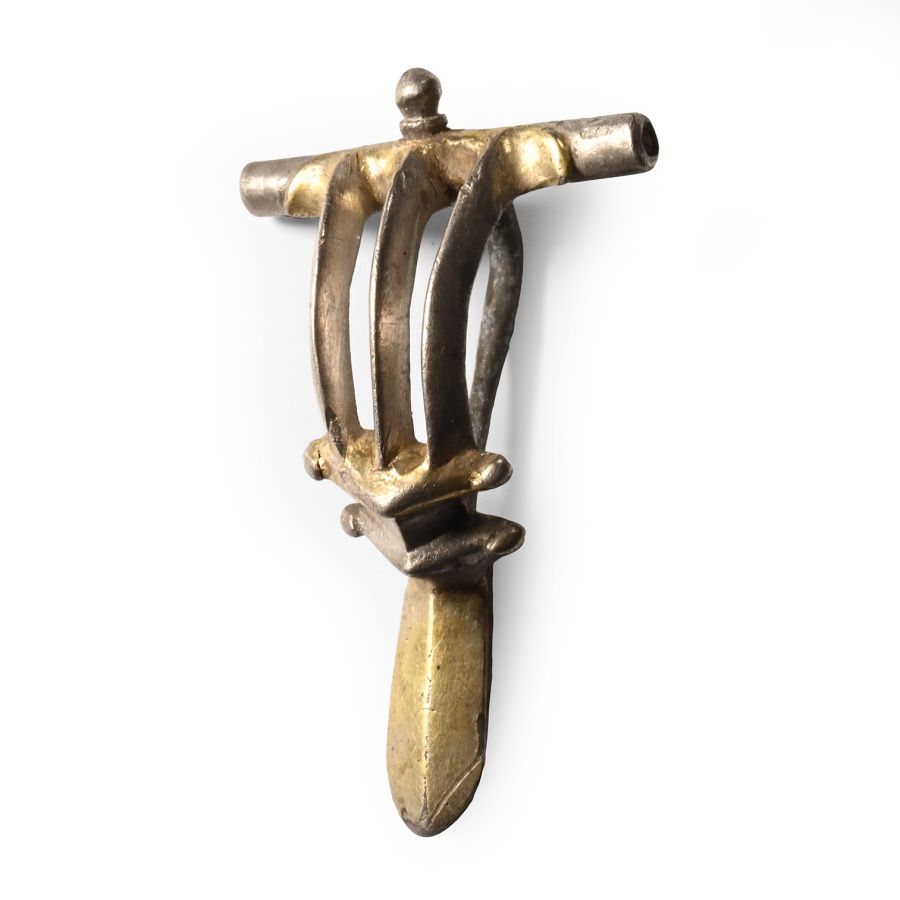
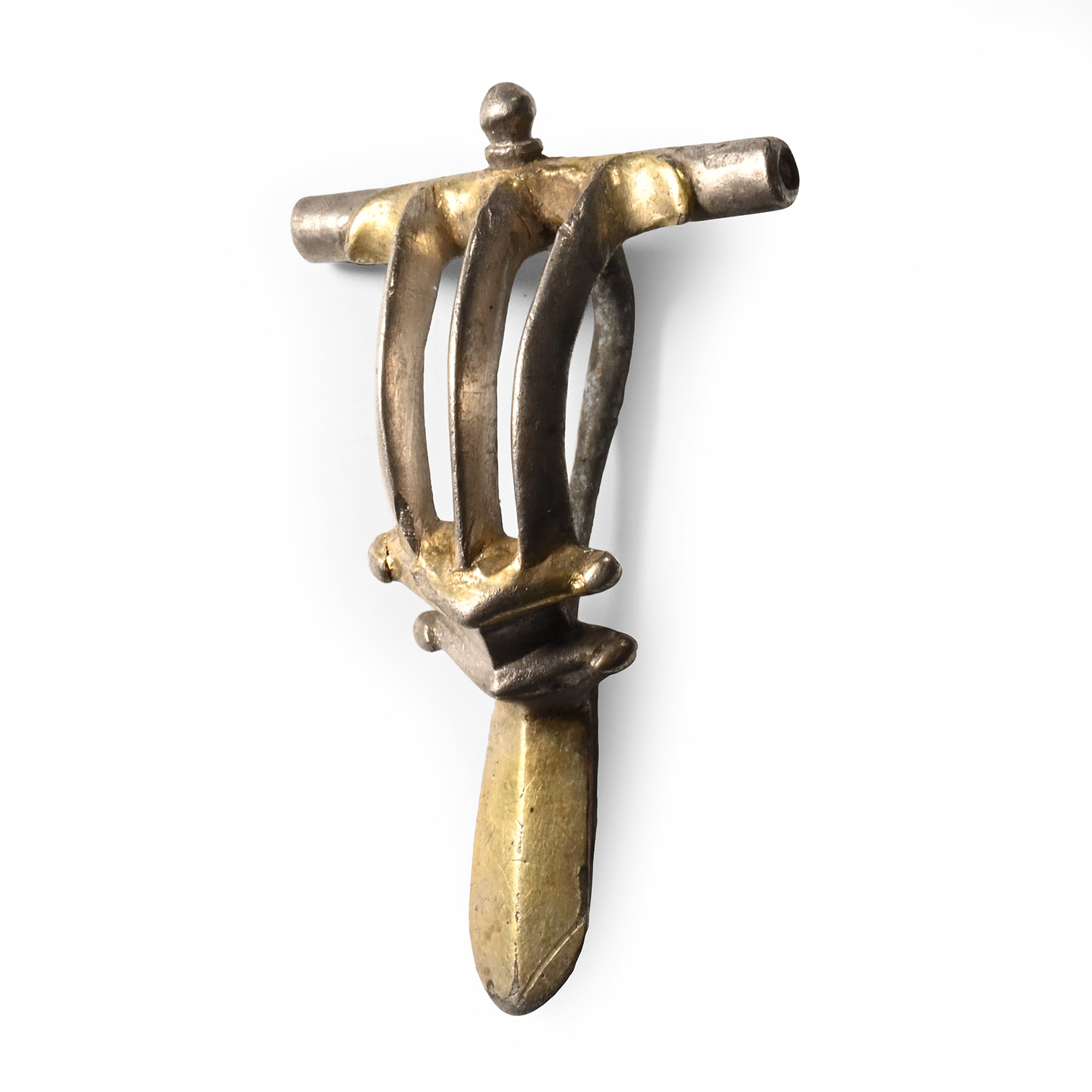
Roman Silver-Gilt Triple Bow Brooch
2ND CENTURY A.D.
1 7/8 in. (11.8 grams, 47 mm).
P-shaped bow brooch with crossbar and knop above, bow in three parallel bars, triangular-section waisted foot and carinated leaf-shaped finial; hinged pin and catch to reverse.
ProvenanceEx German art market, 2000s.
Acquired from an EU collector living in London.
From the collection of Surrey, UK, gentleman.
Cf. Bayley, J. & Butcher, S., Roman Brooches in Britain: A Technological and Typological Study based on the Richborough Collection, London, 2004, item 259, for type.
CONDITIONTimeLine Auctions follows a vetting process to ensure the authenticity and legality of all items, reinforcing our commitment to integrity and responsible trading. Each antiquity, antique, and coin lot undergoes thorough examination by a vetting committee of at least ten external specialists, professional trade association members, scientists, and archaeologists: Our Vetting Process
AUCTIONS:
TimeLine is a leading auction house specialising in antiquities, ancient art, collectables, natural history, coins, medals, and books. Our auctions offer museums, collectors, historians, and enthusiasts the opportunity to acquire unique and historically significant pieces.
-
Roman Marble Head of Tyche
Circa 1st-2nd century A.D.Sold for (Inc. bp): £416
Carved in the round with soft features and dignified expression, the hair dressed in a chignon, modius above. 657 grams, 12 cm
The Great House collection, Kegworth, N.W. Leicestershire, UK. Acquired at auction 40-50 years ago; specific sale details not recorded. -
.jpg)
Roman Bronze Mars Rider Statuette
2nd-3rd century A.D.Sold for (Inc. bp): £221
Modelled in the round, nude male with legs in straddling pose, left hand thrust forward and right arm raised with hand open; head exaggerated with shoulder-length hair and crested helmet. 35.6 grams, 60 mm
From a collection acquired on the UK art market from various auction houses and collections mostly before 2000. From an important Cambridgeshire estate; thence by descent.
The pseudo-Corinthian or Apulo-Corinthian helmet, here represented on the head of the divinity, was originally a legionary helmet, then became, in the Late Consular Age, an officer's helmet, then a typical attribute of military commanders and then of the war god, Mars. However, this statuette of Mars has strong Celtic connotations, as evidenced by the torques around the neck and the warrior god's hair. -
Roman Sheet-Gold Phalera Cover with Imperial Bust
4th-6th century A.D.Sold for (Inc. bp): £338
Discoid ornamental appliqué with raised border enclosing an imperial bust in profile, shown bearded and wearing a diadem and a military cloak. 4.78 grams, 64 mm
Acquired in the early 1990s. From the collection of a London antiquarian. Accompanied by an academic report by Dr Raffaele D'Amato.
The subject is represented as an Imperator or a field general, recalling the image of a victorious emperor. Such iconography was widely in use in the late Roman Empire, and even adopted on the coins of Gothic rulers of Ostrogothic Italy.
