
Loading, please wait...
LOT 0088
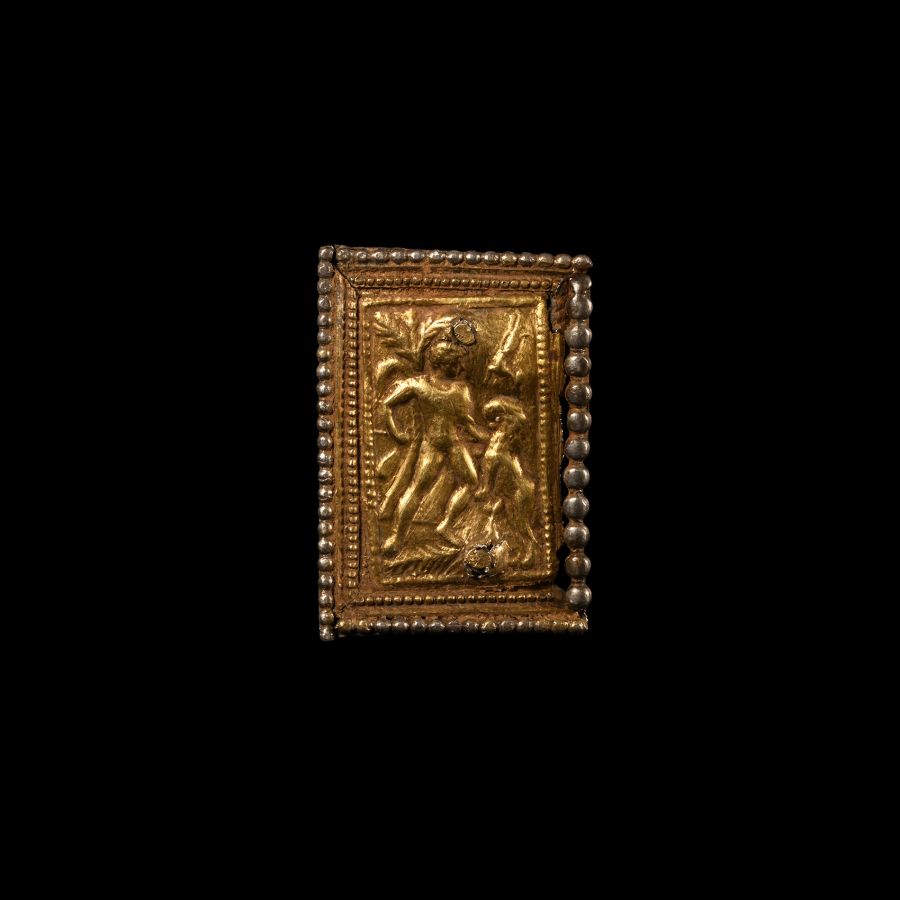
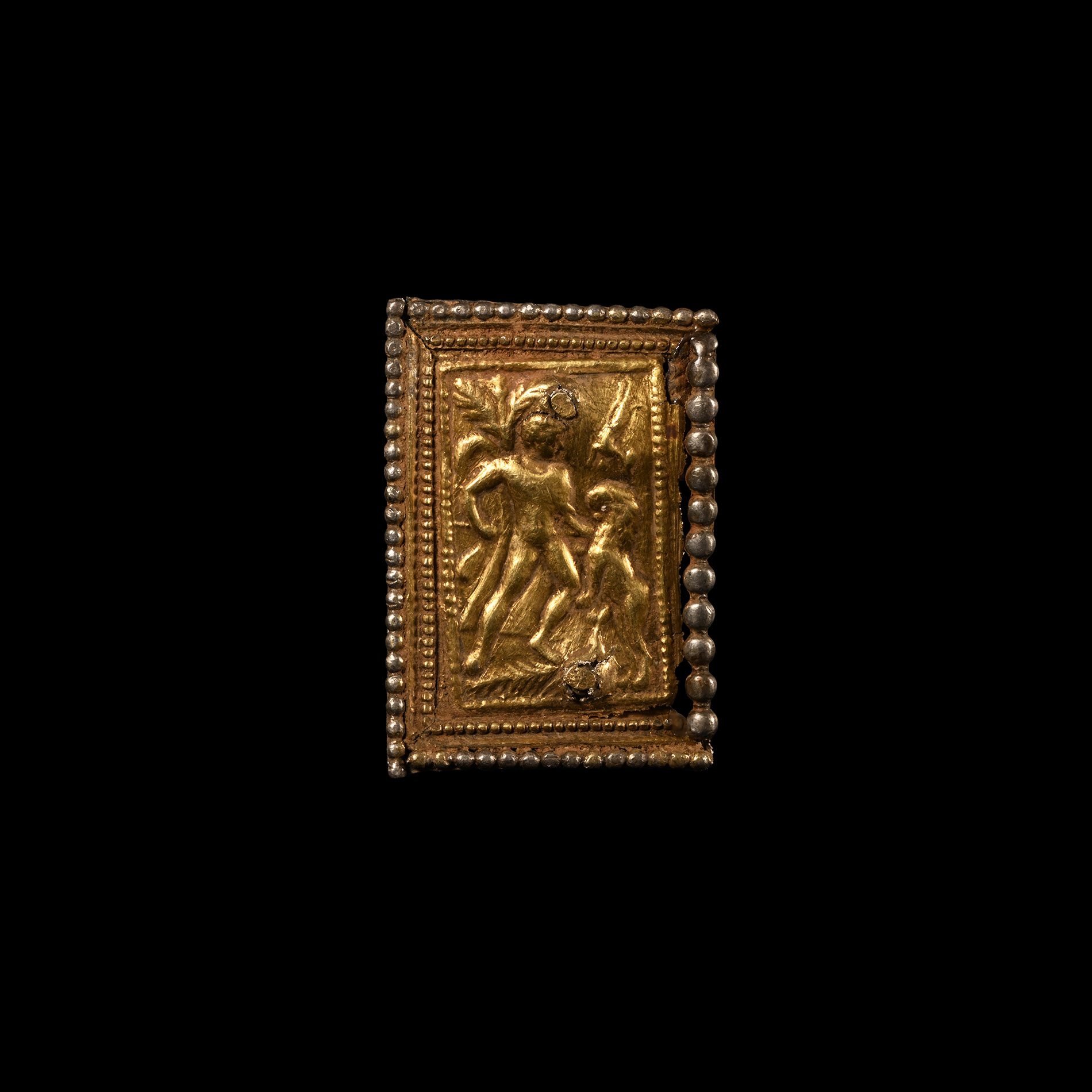
Roman Silver-Gilt Military Belt Plate with Hercules Killing the Nemean Lion
4TH CENTURY A.D.
2 x 1 7/8 in. (5 1/8 x 5 1/8 in.) (234 grams total, 53 x 37 mm (13 x 13 cm including frame)).
Comprising a repoussé panel with the nude hero wearing a mantle and killing the beast, a palm of victory underneath his feet, a dog attacking the lion from above, foliage around the scene; two fixing studs to the reverse; accompanied by a frame.
ProvenanceAcquired 1980-2015.
Ex Abelita family collection.
See Sommer, M., Die Gürtel und Gürtelbeschläge des 4. und 5. Jahrhunderts im römischen Reich, Bonner Hefte zur Vorgeschichte, 22, Bonn, 1980 (1984), pl.54, 11, for similar; see also The Museum of Fine Arts, Boston, Romans and Barbarians, Boston, 1976, p.75, no.107.
FootnotesThe belt fitting finds parallels with belt parts from Asia Minor, today in the British Museum, inv. EC 252-254. These kind of plates, decorative and engraved with classical scenes, can possibly be dated to the age of Theodosius I. The quality of decoration can support the thesis that they belonged to the officers of the Comitatus (the Imperial mobile army).
CONDITIONTimeLine Auctions follows a vetting process to ensure the authenticity and legality of all items, reinforcing our commitment to integrity and responsible trading. Each antiquity, antique, and coin lot undergoes thorough examination by a vetting committee of at least ten external specialists, professional trade association members, scientists, and archaeologists: Our Vetting Process
AUCTIONS:
TimeLine is a leading auction house specialising in antiquities, ancient art, collectables, natural history, coins, medals, and books. Our auctions offer museums, collectors, historians, and enthusiasts the opportunity to acquire unique and historically significant pieces.
LOT 0088
Roman Silver-Gilt Military Belt Plate with Hercules Killing the Nemean Lion
Sold for (Inc. bp): £910
-
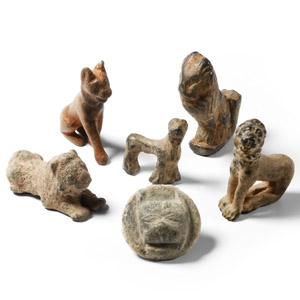
Roman Bronze Lion Collection
1st-4th century A.D.Estimate: £600 - 800 (+bp*)
Opening Bid: £333
Modelled with stylised detailing in various poses, most free-standing; including a roundel carved with a lion's head in relief. 212 grams total, 26-45 mm
‘The Ancient Menagerie Collection’ formerly the property of a Cambridgeshire lady, collected since the 1990s and acquired from auctions and dealers throughout Europe and the USA, now ex London collection. -
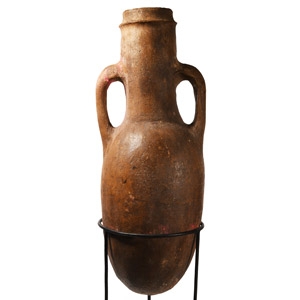
Large Roman Terracotta Amphora
1st-3rd century A.D.Sold for (Inc. bp): £494
Two large strap handles to the shoulders, rounded underside, flange below the rim; with a custom-made display stand. 8.9 kg total, 66 cm high (91 cm high including stand)
Acquired 1970s onwards. Private collection of Michael O'Hara, Cambridgeshire, UK. Ex private collection of Benjamin Hyde-Smith, Hertfordshire, UK. -
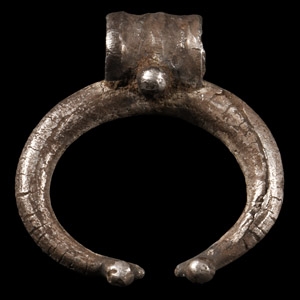
Roman Silver Lunar Pendant
1st century A.D.Sold for (Inc. bp): £91
With ribbed suspension loop, applied granules to the junction and finials. 2.04 grams, 17 mm
From the collection of an EU gentleman formed in the 1990s. Acquired on the UK art market.
