
Loading, please wait...
LOT 0614
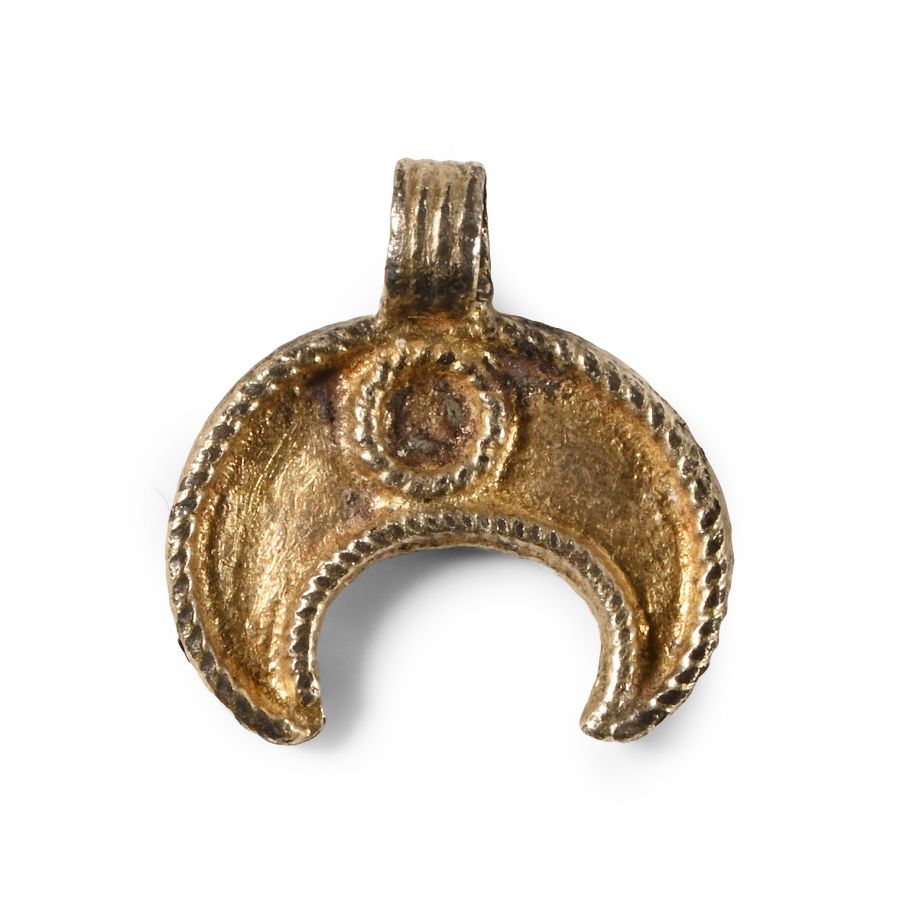
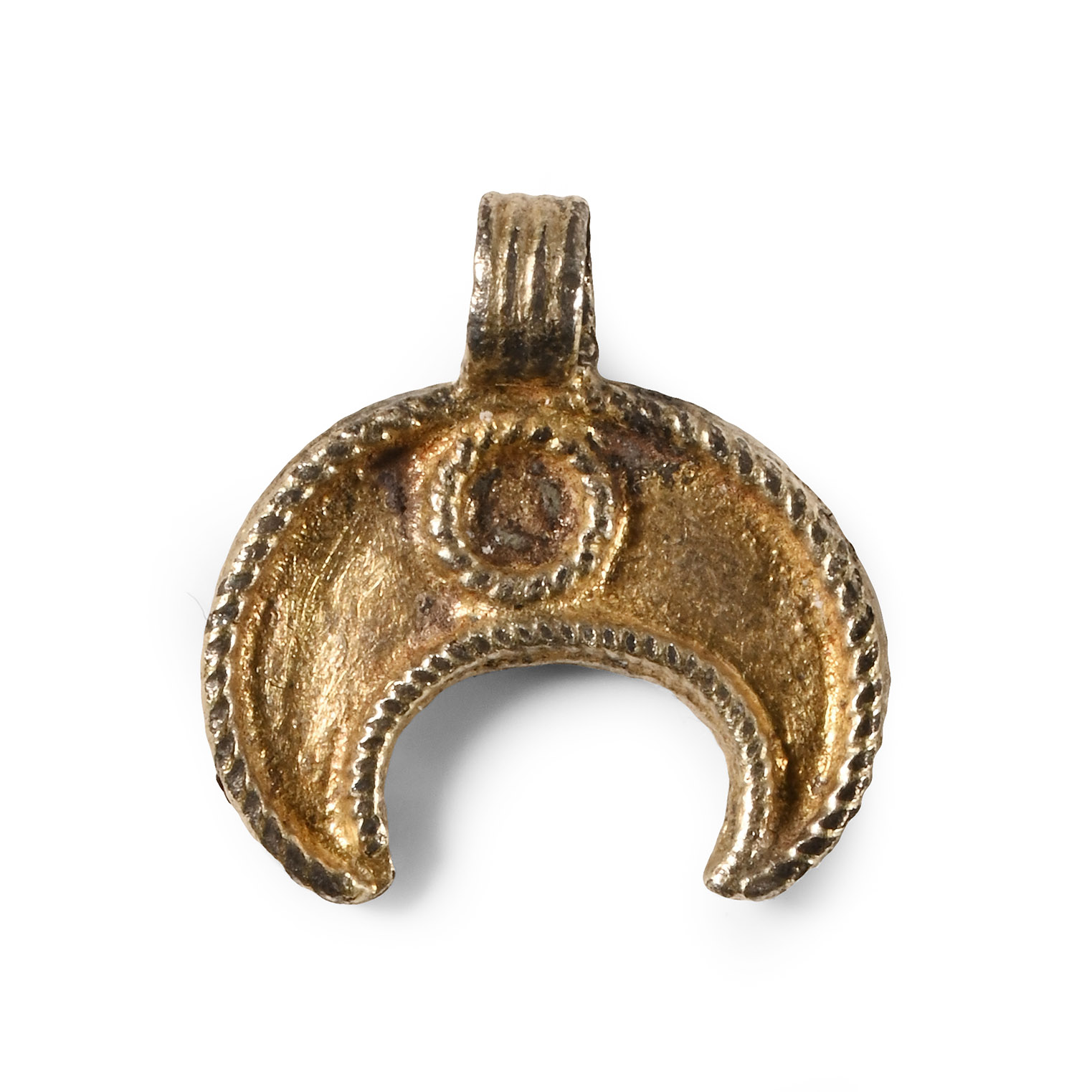
Roman Silver-Gilt Lunar Pendant
2ND-4TH CENTURY A.D.
3/8 in. (0.32 grams, 10 mm).
A miniature pendant with filigree borders and an annulet to both faces, ribbed suspension loop. [No Reserve]
ProvenanceEx German art market, 2000s.
Acquired from an EU collector living in London.
From the collection of Surrey, UK, gentleman.
TimeLine Auctions follows a vetting process to ensure the authenticity and legality of all items, reinforcing our commitment to integrity and responsible trading. Each antiquity, antique, and coin lot undergoes thorough examination by a vetting committee of at least ten external specialists, professional trade association members, scientists, and archaeologists: Our Vetting Process
AUCTIONS:
TimeLine is a leading auction house specialising in antiquities, ancient art, collectables, natural history, coins, medals, and books. Our auctions offer museums, collectors, historians, and enthusiasts the opportunity to acquire unique and historically significant pieces.
-

Roman and Other Bead Necklace
1st-4th century A.D. and laterSold for (Inc. bp): £78
Restrung designer necklace composed of stone and glass beads of tubular, biconvex, polyhedral and other types, large biconvex bead as centrepiece. 19 grams, 38 cm
Acquired on the London, UK, art market in the 1990s. Ex London, UK, gallery. -
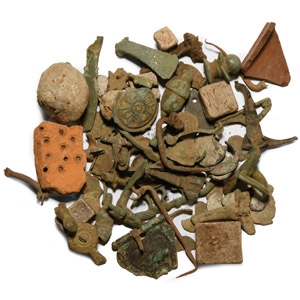
Roman Artefact Group
1st-4th century A.D.Sold for (Inc. bp): £59
Including lead weights, acorn finial, Colchester-type bow brooch and other items. 547 grams total, 7-53 mm
Found Cambridgeshire, UK. -
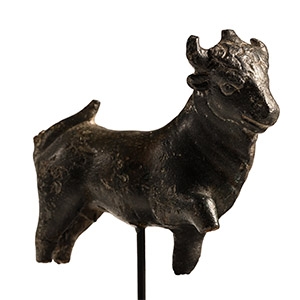
Roman Bronze Bull Statuette
2nd century A.D.Sold for (Inc. bp): £364
Modelled in advancing pose with one foreleg raised and tail looped over onto the rump, head erect with suggestion of an ornamental plate or garland on the brow; mounted on a custom-made display stand. 227 grams total, 86 mm high including stand
From a collection acquired on the UK art market from various auction houses and collections mostly before 2000. From an important Cambridgeshire estate; thence by descent.
After the Roman annexation of Egypt, Egyptian cults such as that of the Apis bull were syncretised, becoming part of a distinctively Egyptian form of Roman polytheism. Representations of prancing Apis bulls, turned either left or right, have been found throughout the Roman Empire.
