
Loading, please wait...
LOT 0143
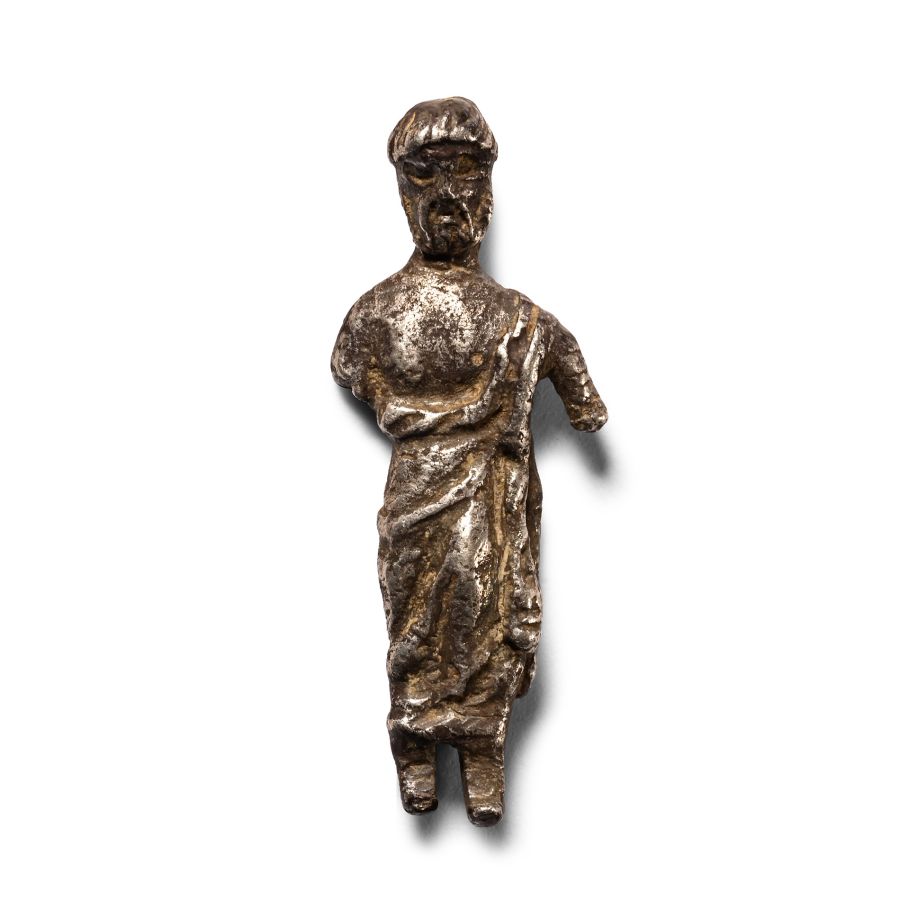
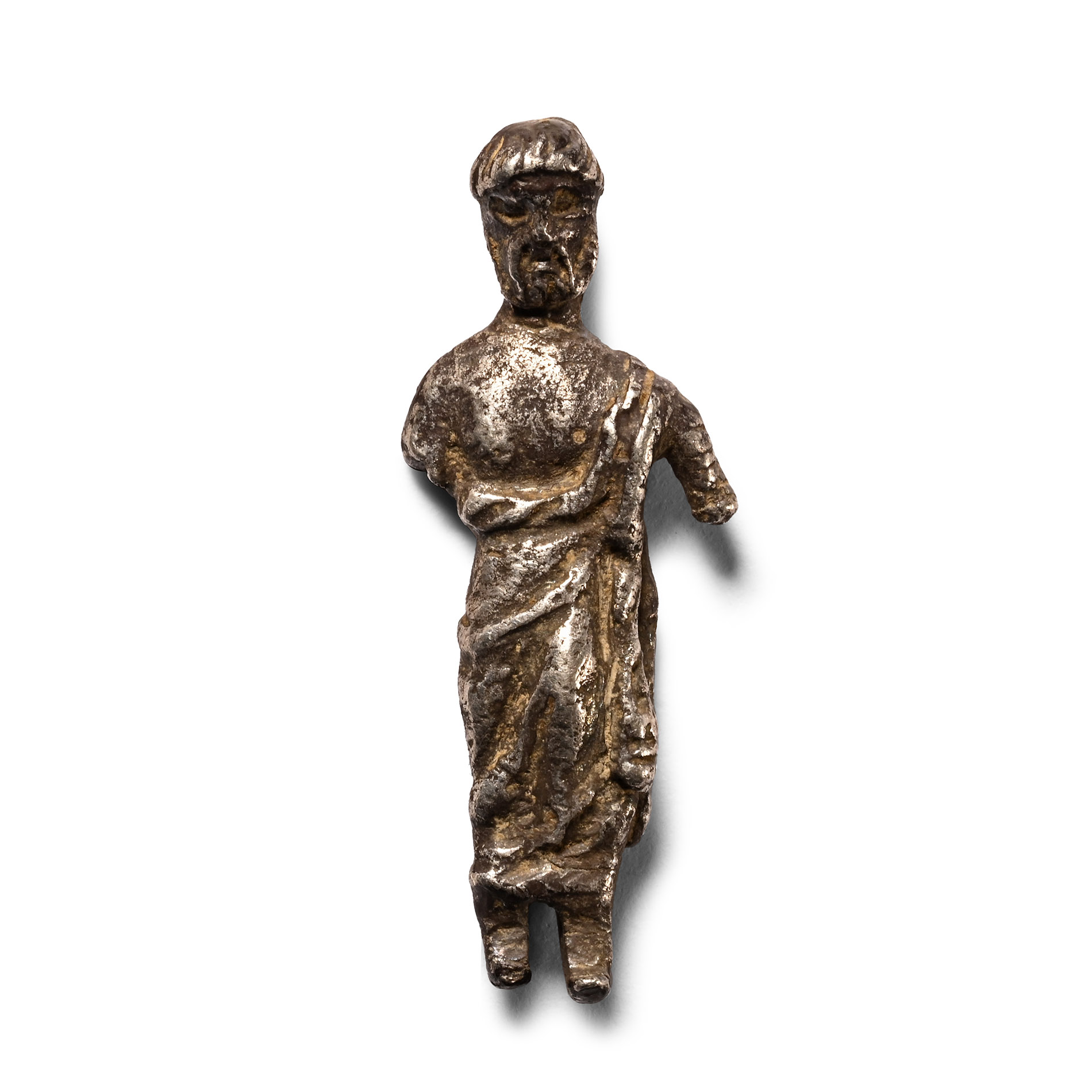
Roman Silver Figure of a Man
1ST-3RD CENTURY A.D.
1 1/2 in. (9.05 grams, 39 mm).
Standing erect wearing a draped toga, bearded and with thick bowl-cut hair.
ProvenanceAcquired in the mid 1980s-1990s.
From the family collection of Mr S.A., Switzerland, thence by descent.
Private collection since the late 1990s.
TimeLine Auctions follows a vetting process to ensure the authenticity and legality of all items, reinforcing our commitment to integrity and responsible trading. Each antiquity, antique, and coin lot undergoes thorough examination by a vetting committee of at least ten external specialists, professional trade association members, scientists, and archaeologists: Our Vetting Process
AUCTIONS:
TimeLine is a leading auction house specialising in antiquities, ancient art, collectables, natural history, coins, medals, and books. Our auctions offer museums, collectors, historians, and enthusiasts the opportunity to acquire unique and historically significant pieces.
LOT 0143
Roman Silver Figure of a Man
Estimate £500 - 700€580 - 810 (for guidance only)$680 - 950 (for guidance only)
-
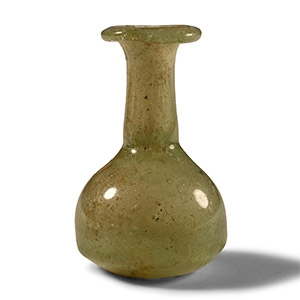
Late Roman Green Glass Vessel
4th-6th century A.D.Sold for (Inc. bp): £98
With squat oblate body, tubular neck with occlusion at the lower end and flared returned rim, pontil base. 44.8 grams, 70 mm
Acquired from Allan Cherry, Bournemouth, UK, 2004. Ian Wilkinson collection, Nottinghamshire, UK. -
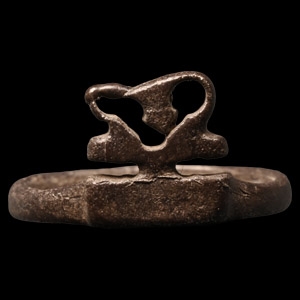
Roman Silver Key Ring with Fretwork Heart
1st century A.D.Estimate: £100 - 140 (+bp*)
Opening Bid: £50
The bezel formed with an openwork vine and leaf motif. 2.11 grams, 18.62 mm overall, 16.39 mm internal diameter (approximate size British L, USA 5 3/4, Europe 11.24, Japan 10)
Acquired 1980-2015. Ex Abelita family collection. -
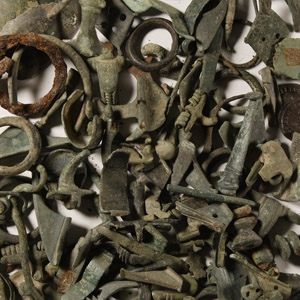
Roman Bronze Artefact Group
1st-4th century A.D.Sold for (Inc. bp): £124
Including bow brooch parts, belt fittings, silver coins, bowl mount and other items. 420 grams total, 5-83 mm
Found Wiltshire, UK, before 1974.
